Medieval Booker

Landmark ◆ Prague

Old Town Hall and the Astronomical Clock

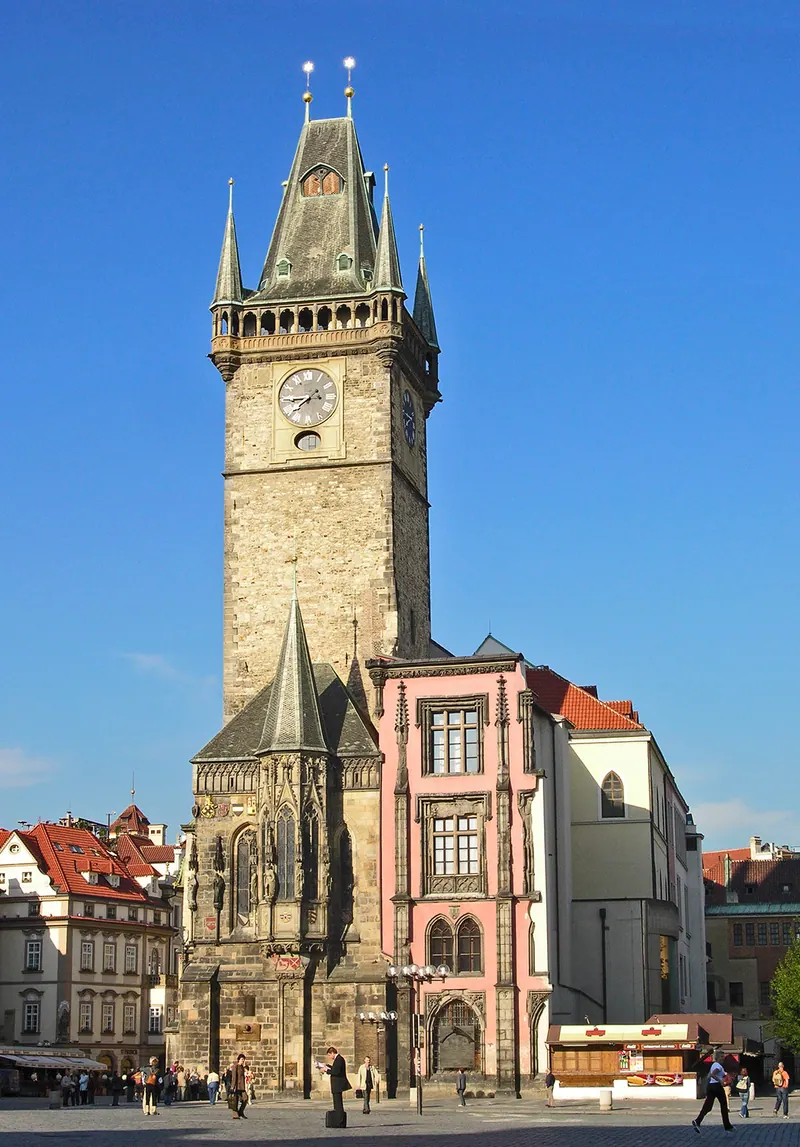
The Old Town's town hall of 1338, with the astronomical clock installed on its south wall in 1410 — the oldest such clock still running. The ticket buys the tower, the historic halls, the Gothic chapel and the Romanesque-Gothic cellars beneath the square.

Where and when

Where
Staroměstské náměstí 1/3, 110 00 Praha 1, Prague, Czechia Open in Google Maps Walking directions
Era
Town hall from 1338; astronomical clock installed 1410
Opening
April–December daily 09:00–20:00; January–March daily 10:00–19:00. Apostles process hourly 09:00–23:00 (as of August 2026)
Price
CZK 350 adult / 230 reduced / 750 family; tower lift +CZK 100; guided circuit including the cellars +CZK 100–150. First hour after opening is 50% off (as of August 2026)
Best time
In the first opening hour for the half-price ticket and an empty tower; the clock itself reads best in low sun from the square.
Good for
Good with childrenWorks in the rain
Official site
prague.eu
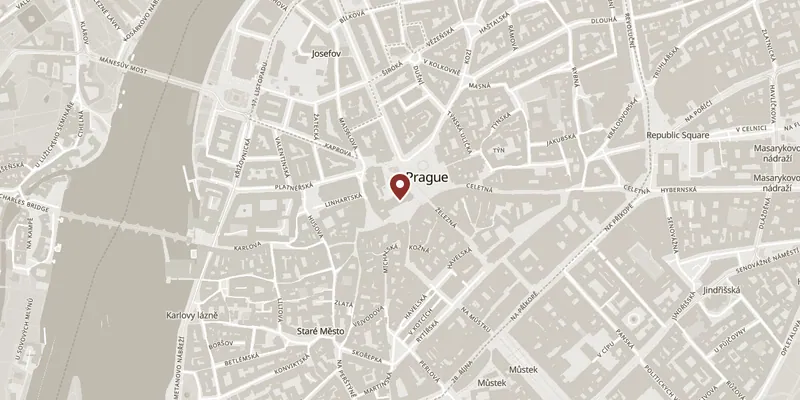
Map showing where Old Town Hall and the Astronomical Clock is
Open in Google Maps Walking directions © MapTiler © OpenStreetMap contributors

Checked

What is Old Town Hall and the Astronomical Clock?

The burghers of the Old Town bought a corner house on the market square in 1338 and turned it into a town hall; they added the tower, the oriel chapel of the Virgin Mary (consecrated 1381), and over the following centuries swallowed four more houses along the north side. The neo-Gothic east wing was shelled and burnt out in the last days of the German occupation in May 1945 and never rebuilt — the gap on the square is a war ruin, not a design.

The astronomical clock was installed in 1410, made by the clockmaker Mikuláš of Kadaň to a design by Jan Šindel, master of astronomy at Charles University; the calendar dial below is a 19th-century replacement by Josef Mánes (the one in place is a copy) and the Apostles above date from later rebuilds. The astrolabe dial is the part worth standing under: it shows the sun and moon against the zodiac, Old Bohemian time on the outer ring of Gothic numerals, and Babylonian unequal hours. The Apostles process on the hour, 09:00 to 23:00. The show itself lasts under a minute and is the least interesting thing about the clock.

The paid visitor route goes up the tower — there is a lift as an extra — to a gallery 42 m up looking straight down on the square’s plan, and takes in the chapel with its view of the clock’s mechanism, the council chamber and the Romanesque and Gothic cellars, which are the ground floors of 12th- and 13th-century houses buried when the Old Town was raised several metres to defend against Vltava floods. That is the single best thing here for anyone interested in what medieval Prague physically was: you walk into a street level that was abandoned around 1300.

Book or arrive at opening: the first hour after opening is half price.
What visitors say

4.7 from 101,353 ratings

  • bledea andrei

    5 out of 5 a month ago

    The Prague Astronomical Clock is truly impressive. It's one of the most beautiful historical landmarks in the city, and seeing it in person is a special experience. The details, craftsmanship, and history behind it are fascinating. The square around it has a wonderful atmosphere, especially when the clock chimes and the small figures come to life. Definitely worth visiting if you're in Prague! ⭐⭐⭐⭐⭐

    Read this review on Google
  • Jeanette Holmer

    5 out of 5 a month ago

    Loved this piece of Prague history. We watched the movement of the clock on the hour and then went early to go up the tower. Catch it before 10 for half price at the ticket counter!! We were lazy and paid for the second lift instead of taking the long climb ourselves. The view was incredible! Plus we followed it up with a tour of the basement. It was so full of history and a unique view of Prague. The large rooms below the houses were amazing. Plus in the heat wave they were much cooler in temperature.

    Read this review on Google
  • Salim Khoso

    5 out of 5 2 months ago

    The Prague Astronomical Clock was easily one of the highlights of my visit to Prague. Even at the end of June, the square was packed with tourists from all over the world, creating an amazing atmosphere full of energy and excitement. I stayed until nighttime to watch the famous hourly show, and it was absolutely worth the wait. As the clock struck the hour, the small windows opened and the historic figures came to life, reminding everyone why this masterpiece has fascinated visitors for centuries. Standing among hundreds of people looking up at the clock was a memorable experience. The surrounding Old Town Square is beautiful, especially in the evening when the buildings are illuminated and the crowds gather to watch the spectacle. The craftsmanship, history, and charm of this medieval clock are truly remarkable. If you are visiting Prague, this is a must-see attraction. Make sure to arrive a little early, find a good spot, and stay for the hourly performance. It is one of those experiences that makes Prague feel magical. I enjoyed it more than I expected and would happily visit again.

    Read this review on Google

Ratings and reviews from Google. See all on Google Maps

Frequently asked questions

How old is the Prague astronomical clock?

The clock was installed in 1410 by Mikuláš of Kadaň to a design by the astronomer Jan Šindel. It is the oldest astronomical clock still in operation.

What time does the astronomical clock chime?

Every hour on the hour from 09:00 to 23:00. The procession of the Apostles lasts well under a minute and is free to watch from the square.

How much does the Old Town Hall tower cost?

CZK 350 for an adult, 230 reduced, 750 family as of August 2026, covering the tower, the chapel and the historic interiors. The first hour after opening is half price; the lift costs CZK 100 extra.

What are the Old Town Hall underground cellars?

The ground floors of Romanesque and early Gothic houses, buried when the Old Town was raised by several metres against Vltava flooding around 1300. They are reached on the guided circuit.

Do I need to book Old Town Hall tickets in advance?

Not usually, but the queue at the box office builds through the day. Buying online or arriving at opening avoids it, and the first opening hour is half price.

Festivals in Prague

Medieval festivals in Prague
Featured
Living History & Museums Music, Feasts & Theatre +1

Karlštejnské vinobraní (Karlštejn Wine Harvest Festival with Emperor Charles IV)

Prague, Czechia

Karlštejn's wine-harvest festival brings Emperor Charles IV, Empress Elizabeth of Pomerania and a court of more than 150 costumed courtiers back to the castle he built 30 km south-west of Prague to guard the imperial crown jewels. Held on the last weekend of September, it combines ceremonial processions up to the castle, mounted knights' tournaments, period music, crafts and tastings of young wine and burčák; the 28th edition is confirmed for 26–27 September 2026.

2026
Family

More places in Prague

Places in Prague
Castle Start here

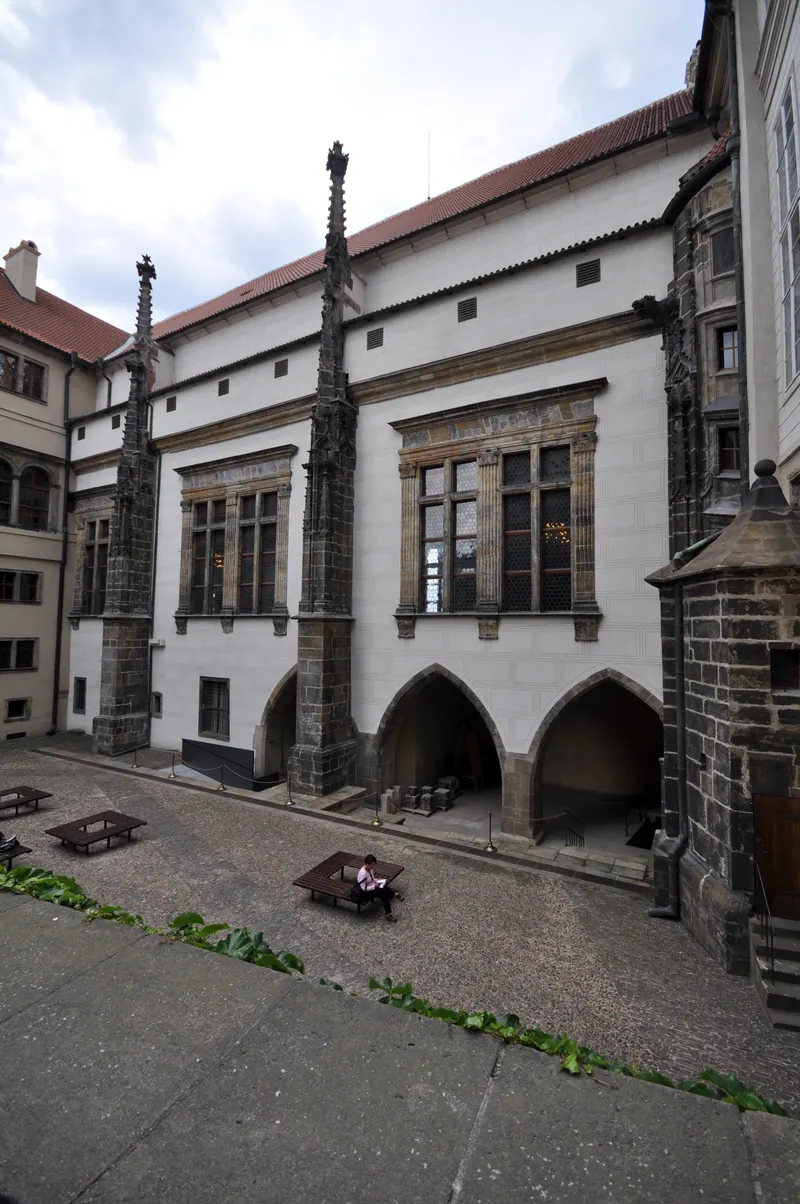
Old Royal Palace and Vladislav Hall

Romanesque core c. 1135; Vladislav Hall 1493–1502 by Benedikt Ried

The medieval seat of the kings of Bohemia at Prague Castle, layered from a Romanesque palace of the 1130s up to Benedikt Ried's Vladislav Hall of 1493–1502 — the largest vaulted secular room in late-medieval Europe, built wide enough to hold tournaments indoors. Find the Riders' Staircase: its vault and shallow treads were made so armoured knights could ride their horses into the hall.

Works in the rain Good with children
Walking directions
Church

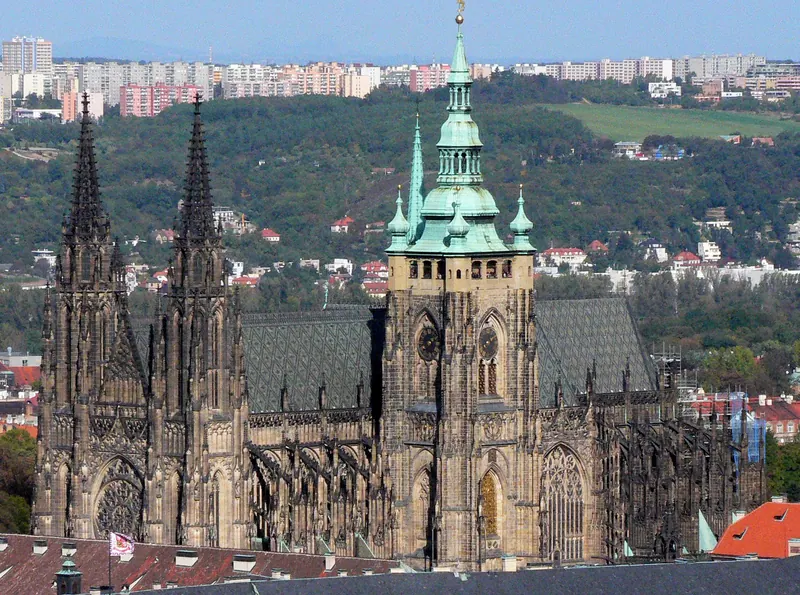
St Vitus Cathedral (the Wenceslas Chapel)

Begun 1344; choir by Matthias of Arras and Peter Parler; west end completed 1929

Begun in 1344 by Matthias of Arras and continued by Peter Parler, the coronation and burial church of the kings of Bohemia. Go for one room: the Chapel of St Wenceslas, walled in over a thousand polished Bohemian gemstones, with the door in its corner that has seven locks and holds the crown jewels behind it.

Works in the rain
Walking directions
Landmark

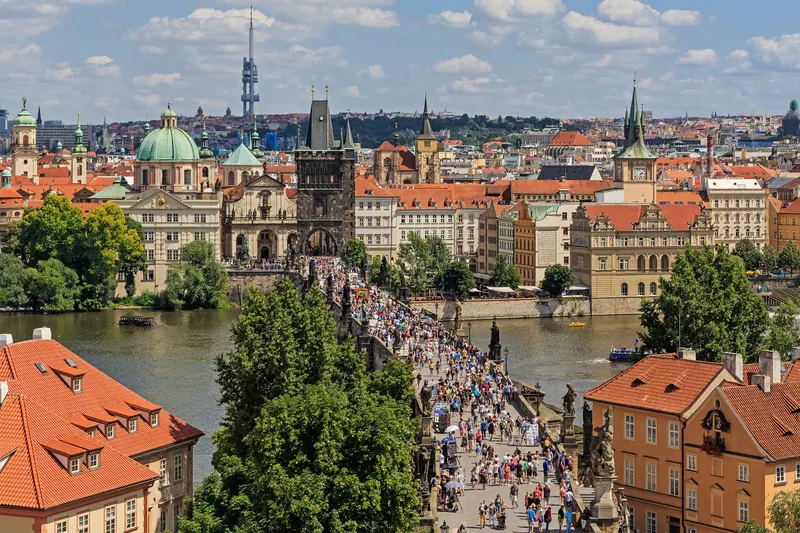
Charles Bridge

Begun 1357 under Charles IV; towers 14th–15th century

The stone bridge Charles IV began in 1357 to replace a flood-wrecked Romanesque crossing, still carrying foot traffic between the Old Town and the castle. Go for the two medieval gate towers at either end and the sculpture on the Old Town tower's east face, not for the statues on the parapet, which are copies.

Free or cheap Best in the evening Good with children
Walking directions
All articles