Medieval Booker

Museum ◆ Prague

Convent of St Agnes of Bohemia

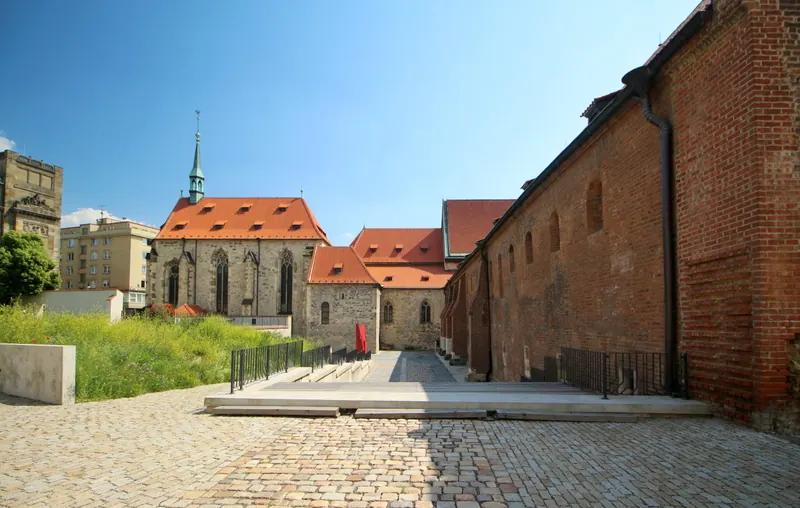
A 1230s Poor Clares convent founded by a Přemyslid princess, now holding the National Gallery's permanent display of medieval art in Bohemia and Central Europe, 1200–1550. It is the one place in Prague where you can look at panel painting and carved wood from the court of Charles IV at eye level, in the building where Přemyslid kings were buried.

Where and when

Where
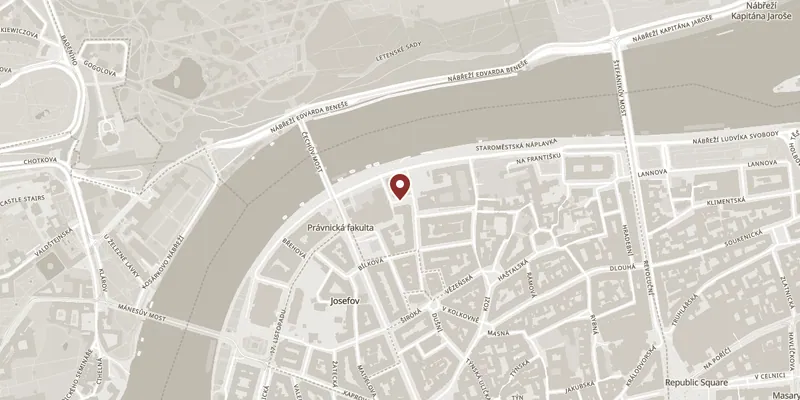
U Milosrdných 17, 110 00 Praha 1 (entrance from Anežská or Na Františku), Prague, Czechia Open in Google Maps Walking directions
Era
Founded early 1230s by St Agnes of Bohemia; collection covers 1200–1550
Opening
Tuesday–Sunday 10:00–18:00, closed Mondays. The garden keeps separate seasonal hours (as of August 2026)
Price
Around CZK 250 adult for the permanent exhibition; under-16s free (as of August 2026 — check the National Gallery site, prices change with temporary shows)
Best time
Weekday mornings. Allow 90 minutes for the medieval galleries alone.
Good for
Works in the rainQuiet corner
Official site
www.ngprague.cz
Map showing where Convent of St Agnes of Bohemia is
Open in Google Maps Walking directions © MapTiler © OpenStreetMap contributors

Checked

What is Convent of St Agnes of Bohemia?

Agnes of Bohemia (about 1211–1282), daughter of King Přemysl Otakar I, turned down marriage offers including one from Emperor Frederick II, took the veil and founded this house in the early 1230s — the first double convent of Poor Clares and Friars Minor north of the Alps. She corresponded with Clare of Assisi. The convent became a Přemyslid burial place and was used for royal ceremonies; it was dissolved in 1782, decayed into workshops and slum housing, and was restored across the 20th century. Agnes was canonised in 1989.

The reason to come is the permanent exhibition Medieval Art in Bohemia and Central Europe 1200–1550, the National Gallery’s medieval collection. This is where the panel paintings from the reign of Charles IV and Wenceslas IV live: work by the Master of Vyšší Brod, the Master of Theodoric (whose panels were painted for the Chapel of the Holy Cross at Karlštejn), the Master of the Třeboň Altarpiece, and the Vyšší Brod and Zlatá Koruna cycles, alongside Bohemian Gothic wood sculpture, Madonnas of the “beautiful style” around 1400, and later German and Austrian work including Cranach and Riemenschneider-circle carving.

Do not skip the architecture on the way through. The convent’s own lapidarium holds architectural fragments, altar plaques and tombstones from the successive building phases, and the early Gothic church of St Saviour and the adjoining chapel are among the earliest Gothic interiors in the city — plain, tall, French-influenced, and about a century older than anything at the castle you will have seen.

It is ten minutes’ walk north of the Old Town Square, on the river side of the Jewish Quarter, and it is reliably the quietest major medieval site in Prague. The cloister garden is free to enter and open on its own seasonal hours.
What visitors say

4.6 from 2,206 ratings

  • Pelin Çağlayan

    5 out of 5 2 months ago

    What a gem of a place! The gardens are so peaceful, especially under summer sun ☀️ The ground level can be visited without a ticket and it is definitely worth a short visit! such an interesting history about the monastery, which then turned into a lodging area and then the reputation of the neighbourhood worsened until a big reformation. St Agnes’ story is also worth researching before visiting the siteℹ️

    Read this review on Google
  • Sylvain

    5 out of 5 2 months ago

    Very impressive. Did the self walking around, which is free. Not sure the guided tour gives much more as lots to read and always the internet full of info.

    Read this review on Google
  • Valerie P.

    5 out of 5 3 months ago

    A little gem inside the city! The museum is inside the monastery, but the ground floor is accessible without a paid ticket. From activities for kids to pure delight of architecture and Czech history, this place really deserve a 5 stars. For music lovers, a concert there is a great experience. The acoustic is to the top. Nice café too. I advise to walk around by evening, when the lights are giving a magical tone to the place.

    Read this review on Google

Ratings and reviews from Google. See all on Google Maps

Frequently asked questions

What is in the Convent of St Agnes?

The National Gallery Prague's permanent exhibition of medieval art in Bohemia and Central Europe, 1200–1550: panel paintings, altarpieces and Gothic wood sculpture, shown in a convent founded in the 1230s.

How much is admission to the Convent of St Agnes?

Around CZK 250 for an adult as of August 2026; visitors under 16 enter free. Combined and temporary-exhibition tickets are priced separately.

Who was Agnes of Bohemia?

A Přemyslid princess (about 1211–1282), daughter of King Přemysl Otakar I, who refused royal marriages, corresponded with Clare of Assisi and founded this Poor Clares convent in the early 1230s. She was canonised in 1989.

Where can I see paintings by the Master of Theodoric in Prague?

In the medieval collection at the Convent of St Agnes. The Master of Theodoric painted the panels for the Chapel of the Holy Cross at Karlštejn for Charles IV; part of that work is held by the National Gallery.

Is the Convent of St Agnes open on Mondays?

No. It opens Tuesday to Sunday, 10:00–18:00, as of August 2026.

Festivals in Prague

Medieval festivals in Prague
Featured
Living History & Museums Music, Feasts & Theatre +1

Karlštejnské vinobraní (Karlštejn Wine Harvest Festival with Emperor Charles IV)

Prague, Czechia

Karlštejn's wine-harvest festival brings Emperor Charles IV, Empress Elizabeth of Pomerania and a court of more than 150 costumed courtiers back to the castle he built 30 km south-west of Prague to guard the imperial crown jewels. Held on the last weekend of September, it combines ceremonial processions up to the castle, mounted knights' tournaments, period music, crafts and tastings of young wine and burčák; the 28th edition is confirmed for 26–27 September 2026.

2026
Family

More places in Prague

Places in Prague
Castle Start here

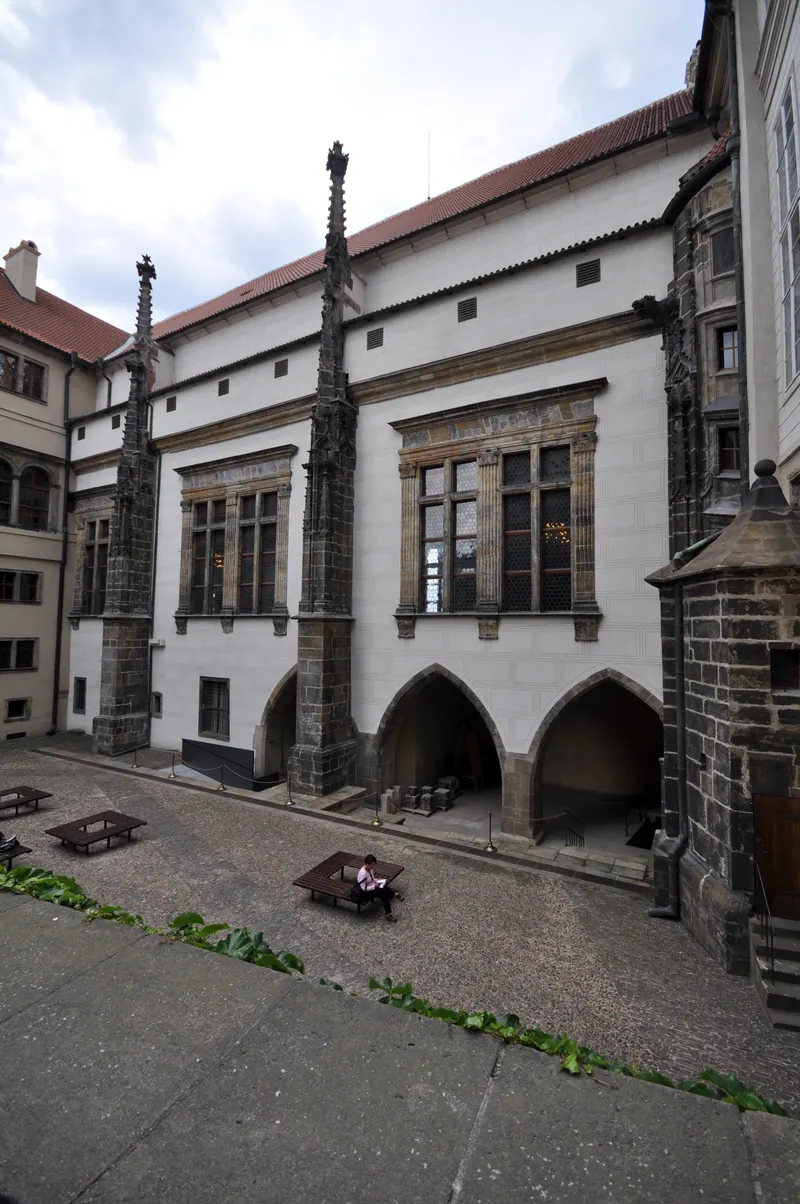
Old Royal Palace and Vladislav Hall

Romanesque core c. 1135; Vladislav Hall 1493–1502 by Benedikt Ried

The medieval seat of the kings of Bohemia at Prague Castle, layered from a Romanesque palace of the 1130s up to Benedikt Ried's Vladislav Hall of 1493–1502 — the largest vaulted secular room in late-medieval Europe, built wide enough to hold tournaments indoors. Find the Riders' Staircase: its vault and shallow treads were made so armoured knights could ride their horses into the hall.

Works in the rain Good with children
Walking directions
Church

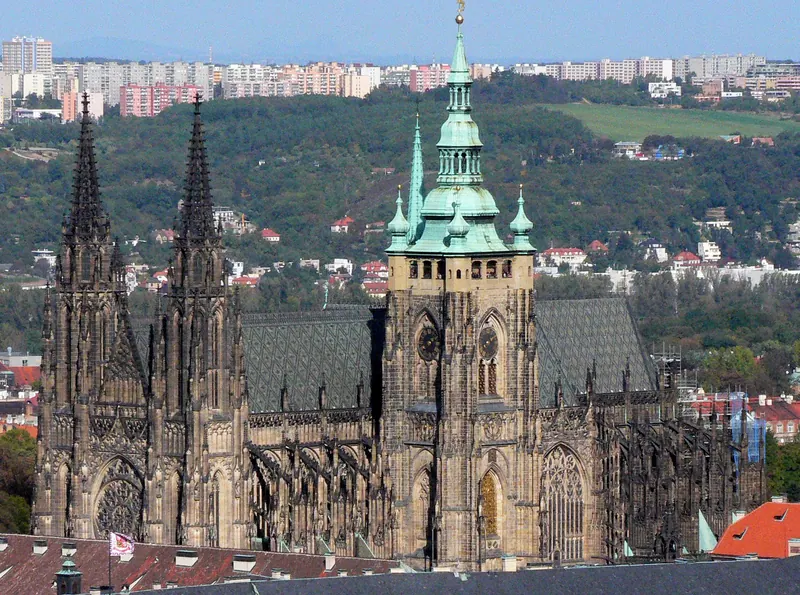
St Vitus Cathedral (the Wenceslas Chapel)

Begun 1344; choir by Matthias of Arras and Peter Parler; west end completed 1929

Begun in 1344 by Matthias of Arras and continued by Peter Parler, the coronation and burial church of the kings of Bohemia. Go for one room: the Chapel of St Wenceslas, walled in over a thousand polished Bohemian gemstones, with the door in its corner that has seven locks and holds the crown jewels behind it.

Works in the rain
Walking directions
Landmark

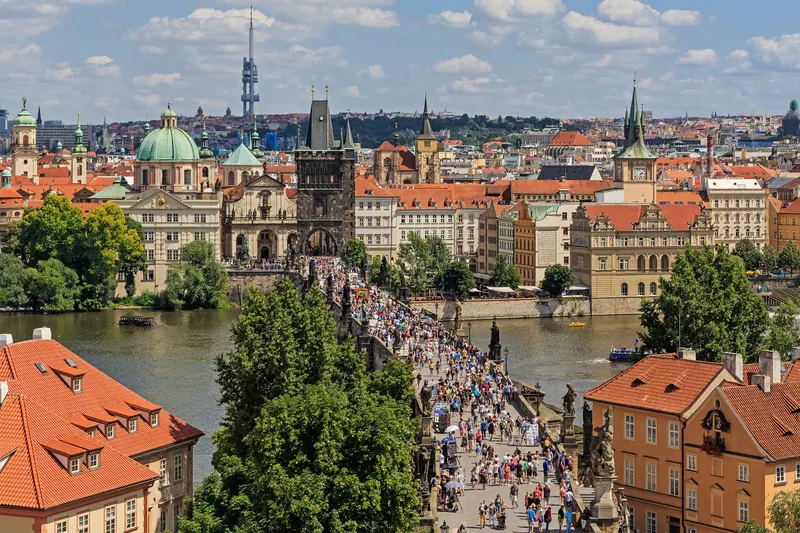
Charles Bridge

Begun 1357 under Charles IV; towers 14th–15th century

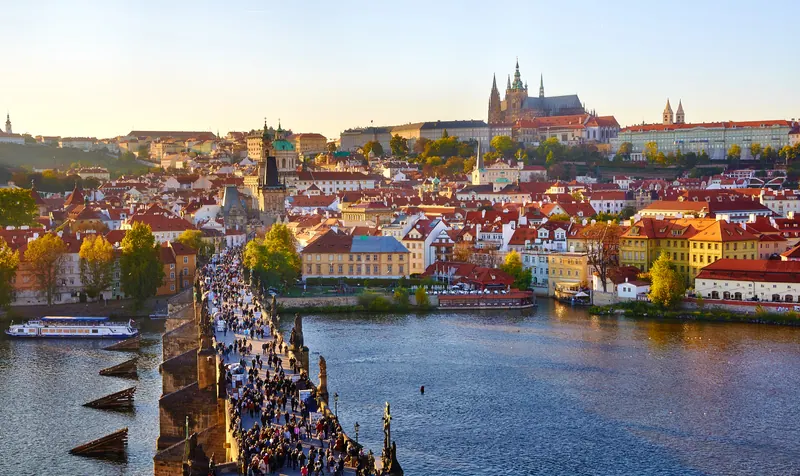
The stone bridge Charles IV began in 1357 to replace a flood-wrecked Romanesque crossing, still carrying foot traffic between the Old Town and the castle. Go for the two medieval gate towers at either end and the sculpture on the Old Town tower's east face, not for the statues on the parapet, which are copies.

Free or cheap Best in the evening Good with children
Walking directions
All articles