Reopened after a long reconstruction, the museum fills about 5,000 m² over four floors with roughly 7,000 objects from the collection of the Military History Institute, in seven chronological sections. Everything before 1740 is in the first of them, and that is the part to give your time to.
The Hussite display is built around a reconstructed vozová hradba — the wagon fort that Jan Žižka’s field armies used to turn infantry with flails and handguns into a formation that could break heavy cavalry. Set into the scene is an original 15th-century chamber gun on a Burgundian carriage. Beside it stands a three-barrelled gun from northern Italy of about 1500 that the museum describes as unique in the world. Earlier cases take in a Roman cavalry sword and a scene of John of Luxembourg arming for battle — he was killed at Crécy in 1346, blind, with his horse tied to his knights’.
The Armoury (Zbrojnice) is a separate gallery of the best craft pieces in the collection: swords and rapiers, helmets, painted shields and parade armour. After it the exhibition moves to Ottoman equipment and then a large Thirty Years’ War section, arranged by arm — artillery, infantry, cavalry.
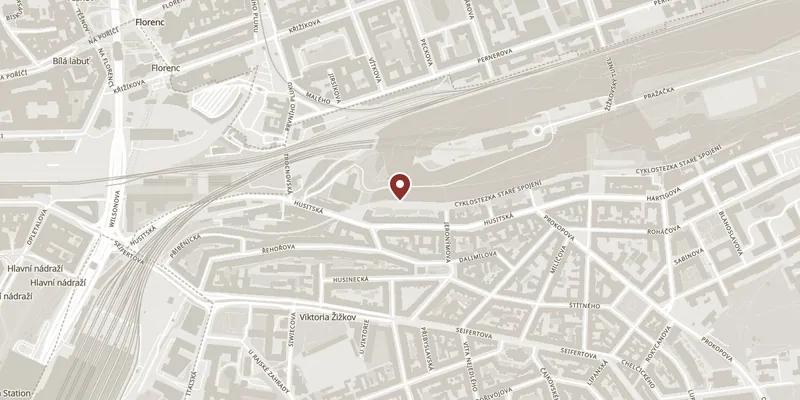
Practically: admission is free, all year, and it is one of the very few substantial museums in Prague that costs nothing. It is open Tuesday to Sunday 10:00–18:00 with last entry at 17:30, and closed on Mondays. It stands at the foot of Vítkov hill in Žižkov — the hill named after Žižka, where the Prague citizens beat a crusading army on 14 July 1420. The Vítkov memorial on the ridge above is 20th-century and a separate visit, but the walk up gives the ground the battle was fought on.
Allow two hours if you only want the pre-1740 floor; the whole museum will take four.