Medieval Booker

Landmark ◆ Kutná Hora

Stone Fountain

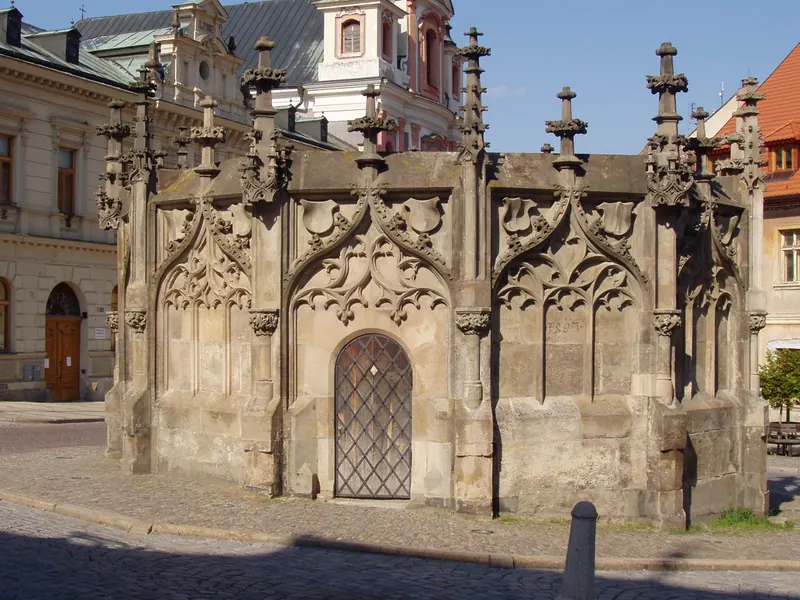
A twelve-sided late-Gothic water tank of 1493–95, built because the town's own mines had ruined its groundwater and drinking water had to be piped in from a spring 2.5 km away. It is not an ornamental fountain and never was — look for the blind tracery, and note that it supplied the town until 1890.

Where and when

Where
Rejskovo náměstí, 284 01 Kutná Hora, Kutná Hora, Czechia Open in Google Maps Walking directions
Era
Built 1493–95, attributed to Matěj Rejsek and now to the mason Brikcí Gauske; largely re-cut by Ludvík Lábler 1887–90
Opening
Outdoors and accessible at any hour, all year (as of August 2026)
Price
Free. It stands in a public square with no ticket and no barrier (as of August 2026)
Best time
Low, raking light in the morning or late afternoon, when the shallow tracery on the twelve faces actually reads.
Good for
Free or cheapQuiet corner
Official site
www.kutnahora.cz
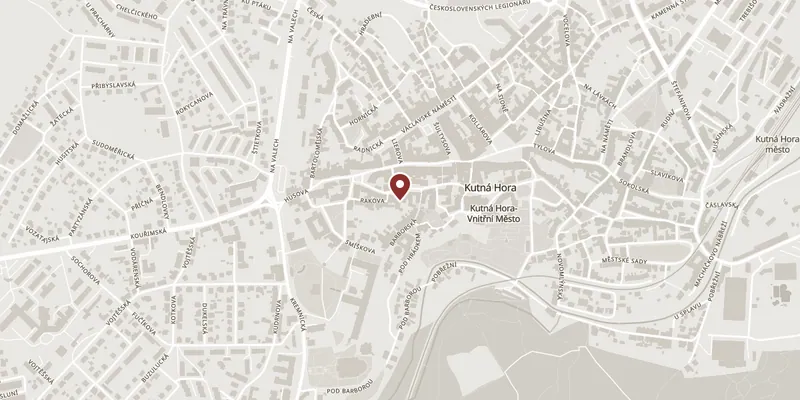
Map showing where Stone Fountain is
Open in Google Maps Walking directions © MapTiler © OpenStreetMap contributors

Checked

What is Stone Fountain?

Kutná Hora had a problem no other rich Bohemian town had: it was sitting on top of its own mines. Centuries of shafts and drainage adits pulled the water table apart and fouled what was left, so the town could not drink from its own ground. Water was piped in through wooden mains several kilometres long — from the Svatovojtěšská spring about 2.5 km away, and from sources around Bylany — and held in covered stone tanks. This is the one that survived.

It was built in 1493–95, paid for by Jan Smíšek of Vrchoviště, the mine owner who rebuilt Hrádek, now the silver museum, and endowed the painted chapel in St Barbara’s. It was long attributed to Matěj Rejsek, which is why the square carries his name; more recent scholarship gives it to the mason Brikcí Gauske. It is a twelve-sided stone prism worked with late-Gothic tracery, blind arcading in a fish-scale pattern, crockets and finials.

Be honest about the stone. Ludvík Lábler’s restoration of 1887–90 replaced most of the damaged carving with copies and did not rebuild the original roof, so what stands is a 15th-century design in largely 19th-century stone, missing its top and the statues it probably carried on brackets. The shape and the purpose are the point: no jet, no basin, no coins — a cistern that pipes filled and townspeople drew from, in continuous use until 1890.

There is nothing to pay and nothing to book. It stands on Rejskovo náměstí, about five minutes’ walk west of the Stone House and ten from the Italian Court, in a small square most day-trippers never turn into. Give it two minutes on the way past and it will explain more about what mining did to this town than any label in a museum.
What visitors say

4.5 from 1,757 ratings

  • Anna K

    5 out of 5 2 months ago

    I gave 5 star, but i want to give 0. BECAUSE THERE IS NO WATER IN THE MIDDLE OF THE CITY HOW SHOULD I ASK WHERE DOES THE WATER COME FROM?

    Read this review on Google
  • Andrey

    5 out of 5 2 months ago

    Fans of the computer game "KSD" will especially enjoy seeing it in person!) It's well digitized there.))

    Read this review on Google
  • Punyaphon Khammee

    5 out of 5 3 months ago

    I don’t understand the negative reviews. It’s a fountain in the middle of the city and it’s so beautiful. Went there twice

    Read this review on Google

Ratings and reviews from Google. See all on Google Maps

Frequently asked questions

Why was the Stone Fountain built in Kutná Hora?

Because mining had wrecked the town's groundwater. Drinking water was piped in wooden pipes from a spring about 2.5 km away and stored in covered stone tanks; this one served the town until 1890.

How old is the Stone Fountain?

It was built in 1493–95 for the mine owner Jan Smíšek of Vrchoviště. It was long attributed to Matěj Rejsek and is now generally credited to the mason Brikcí Gauske. Ludvík Lábler's restoration of 1887–90 replaced most of the damaged carving with copies.

Does the Stone Fountain have water in it?

No. It is a twelve-sided cistern, not an ornamental fountain — pipes filled it and townspeople drew from it. It has also lost its original roof and parapet.

Where is the Stone Fountain in Kutná Hora?

On Rejskovo náměstí, about five minutes' walk west of the Stone House and ten minutes from the Italian Court. It is free and always accessible.

Festivals in Kutná Hora

Medieval festivals in Kutná Hora
Jousting & Tournaments Living History & Museums +1

Královské stříbření Kutné Hory (Royal Silvering of Kutná Hora)

Kutná Hora, Czechia

The Royal Silvering of Kutná Hora recreates a visit by King Wenceslas IV and his court to the silver-mining town around the year 1400, with a costumed procession from the Italian Court to St Barbara's Cathedral, mounted tournaments, period music, crafts and a torchlit evening programme in the park below the royal mint. Held on a weekend in late June since 1992, it reached its 32nd edition on 20–21 June 2026.

Expected 2027
Family

More places in Kutná Hora

Places in Kutná Hora
Museum Start here

Czech Museum of Silver and the medieval mine

Hrádek rebuilt in the 1490s by Jan Smíšek of Vrchoviště; the mine gallery worked 14th to early 16th century

The town's silver museum occupies Hrádek, a late-Gothic mansion built by a mine owner on the ore beneath it, and its second route puts you in a miner's white canvas smock and a helmet lamp and walks you 250 m through a real gallery of the Osel mine. Book Route II ahead, and note that nobody under six is allowed underground.

Good with children Works in the rain
Walking directions
Church

Cathedral of St Barbara

Begun 1388 by Peter Parler's workshop; choir vault by Matěj Rejsek from 1489, nave by Benedikt Ried after 1512; work stopped 1558, west front completed 1905

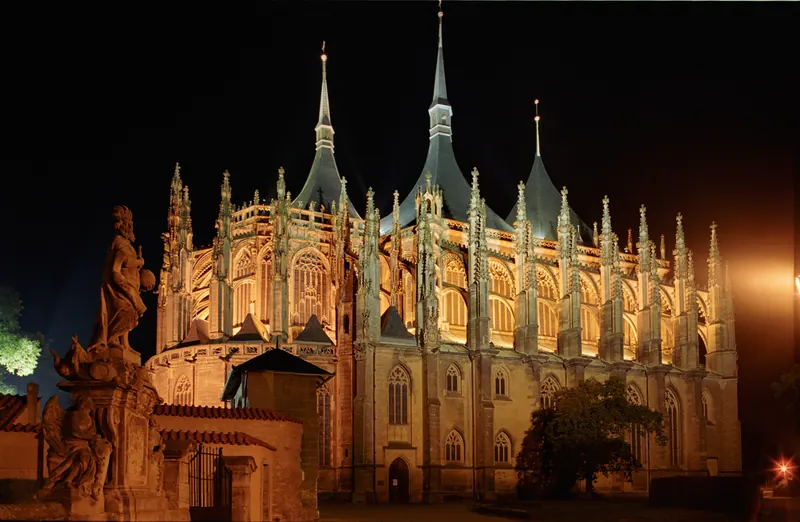
Begun in 1388 by Peter Parler's workshop, carried on by Matěj Rejsek and Benedikt Ried, abandoned in 1558 when the silver ran short and only closed off at the west end in 1905 — a cathedral built by miners for their own patron saint, not by a bishop. Go straight to the chapels off the ambulatory and ask for the Hašplíř and minters' chapels: their frescoes show men in white hooded smocks working a winch and Prague groschen being hammered out by hand.

Works in the rain Quiet corner
Walking directions
Castle

Italian Court (Vlašský dvůr)

Central royal mint from 1300 under Wenceslas II; palace and chapel added by Wenceslas IV around 1400; mint closed 1727

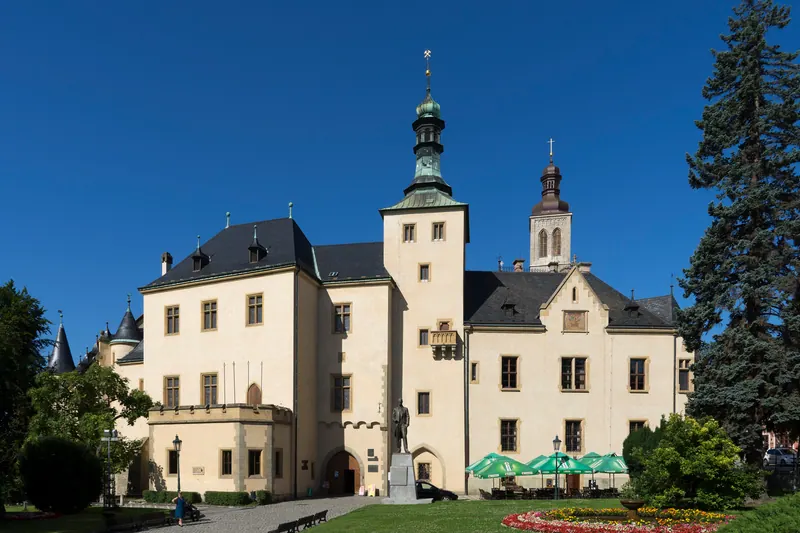
The royal mint of Bohemia from 1300, where the Prague groschen was struck for four centuries, rebuilt by Wenceslas IV as a palace with an audience hall and a chapel. For CZK 50 you can hammer out your own groschen on a die and take it home with a certificate.

Good with children Works in the rain
Walking directions