Medieval Booker

Museum ◆ Kutná Hora

Czech Museum of Silver and the medieval mine

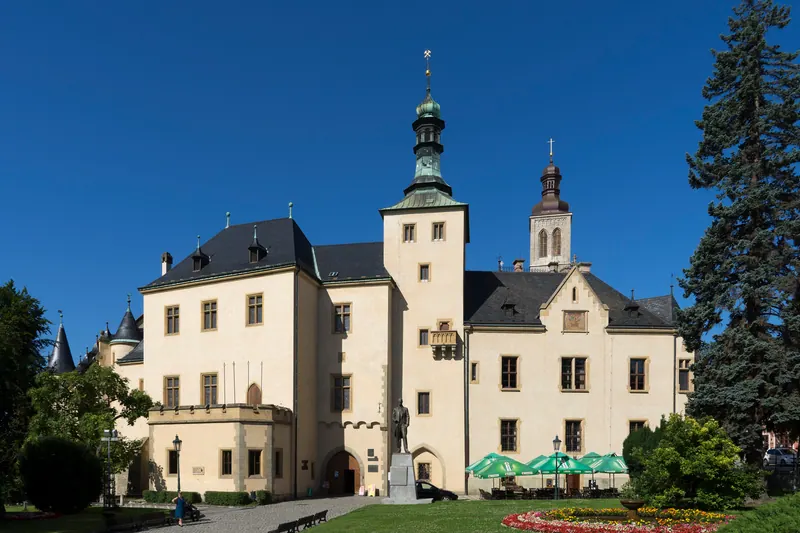
The town's silver museum occupies Hrádek, a late-Gothic mansion built by a mine owner on the ore beneath it, and its second route puts you in a miner's white canvas smock and a helmet lamp and walks you 250 m through a real gallery of the Osel mine. Book Route II ahead, and note that nobody under six is allowed underground.

Where and when

Where
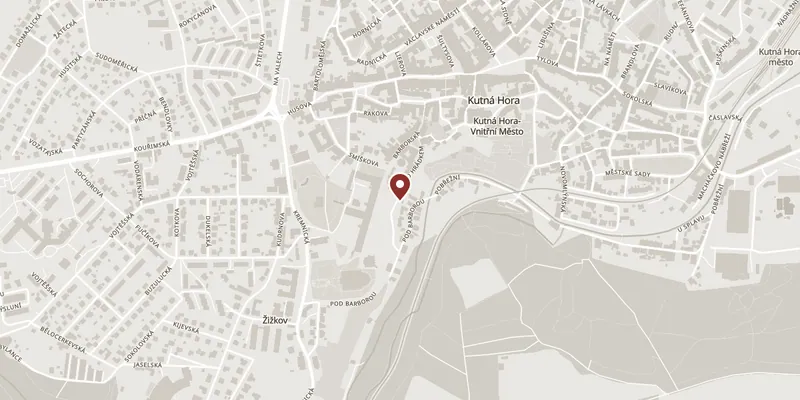
Barborská 28, 284 01 Kutná Hora, Kutná Hora, Czechia Open in Google Maps Walking directions
Era
Hrádek rebuilt in the 1490s by Jan Smíšek of Vrchoviště; the mine gallery worked 14th to early 16th century
Opening
Tuesday–Sunday, closed Mondays and closed all February. Roughly 09:00–17:00 in January, March, April, October and November, 09:00–18:00 in May, June and September, 10:00–18:00 in July and August. Route II is guided only and the museum asks you to reserve in advance (as of August 2026)
Price
Route I CZK 100 adult / 70 child, student, senior / 290 family. Route II with the mine CZK 200 / 160 / 640; Route II without the mine CZK 110 / 80. Both routes together CZK 270 / 220 / 870 (as of August 2026)
Best time
A weekday morning, on a booked Route II slot. Underground it is cool and dry whatever the weather is doing above.
Good for
Good with childrenWorks in the rain
Official site
www.cms-kh.cz
Map showing where Czech Museum of Silver and the medieval mine is
Open in Google Maps Walking directions © MapTiler © OpenStreetMap contributors

Checked

What is Czech Museum of Silver and the medieval mine?

Hrádek — “the little castle” — stands on Barborská, the lane between the old town and St Barbara’s. It was rebuilt in the 1490s by Jan Smíšek of Vrchoviště, a mine owner rich enough to endow his own chapel in the cathedral, and it has housed the Czech Museum of Silver since 1970. The museum’s subject is the reason the town exists at all.

Route I, “City of Silver”, is the indoor exhibition over two floors: the geology of the ore veins, the archaeology of the medieval town, the history of Hrádek itself, how the silver aristocracy lived, and a numismatic display of what came out of the mint. It costs CZK 100 and you can walk it without a guide.

Route II, “The Way of Silver”, is the one to book. It runs about 90 minutes, guided only. Above ground it follows ore from the vein to the coin — a replica shaft, an original horse-powered winding whim (trejv), medieval ore processing, minting. Then you are dressed in a perkytle, the hooded white canvas coat Kutná Hora miners wore, given a helmet and a lamp, and taken down a 33 m staircase built inside an old ventilation shaft to a gallery about 22 m below the surface. Roughly 250 m of it is open. The tunnels join the pits of the Osel (“Donkey”) and Čapčoch veins, cut between the 14th century and the early 16th, when the Osel was among the deepest and richest mines in the town. The walls still carry the marks of the hammer and chisel that made them, because that is how they were made.

The restrictions are real and worth reading before you travel. Children under six may not enter the mine at all; six- to ten-year-olds only with an adult, two children per adult. The museum advises against it for anyone with claustrophobia, heart, nerve or serious respiratory conditions, restricted mobility, poor sight or late pregnancy. Groups are capped at 25, you need one hand free for the lamp and the other for the rock, and sensible shoes matter. If any of that rules you out, ask for Route II without the mine — the same above-ground route for CZK 110, which most people do not know exists.

It closes on Mondays and shuts entirely for February. From the door it is four minutes uphill to the cathedral the miners paid for.
What visitors say

4.6 from 2,042 ratings

  • Jennie Morrison

    5 out of 5 2 months ago

    We did a day trip to Kutna Hora from Prague. The silver mines were the highlight of the day. We booked 2 months advance online, knowing they had limited number of English groups per day. Unfortunately they put us with a tour group. The group was fairly large and they did not speak English. Their tour guide was interpreting while the guide was explaining. It was a little distracting and hard to hear what was being said unless we were in the front by the guide. The mines are wet/damp , had narrow and short passage ways. Not for the claustrophobics. 2 people left towards the beginning of the tour. Some of the adults had to bend and/or walk side ways in some areas. Definitely something I recommend for families.

    Read this review on Google
  • Johan Brits

    5 out of 5 2 months ago

    Very very good. Tour in English was good. To go down in mine is exciting

    Read this review on Google
  • Paublitoo 9

    3 out of 5 3 months ago

    We did the guided tour. When we arrived at the ticket office we ordered the tour in English and we were charged for it, no comment, everything perfect. Our surpise was that we were handed some sheets with explanations about the tour while the guide spoke to the rest of the group in Czech. The guide had no trouble at all speaking English. So I was surprised by this and asked how is it that they had no tours in English. They told me that there are but you have to reserve them first and if the majority are Czech people then it is in Cezch. At least, I’d have liked to know when I payed the guided tour that the guide wasn’t gonna speak in English. I can tell you guys that reading a text and feeling your missing a lot it’s not fun. Specially if you’re in the middle of a mine, all lights off, 5min speaking on a language you don’t know. We also did the self guided tour, with another book of sheets, but that one was like having the texts of the museum on your hand, so no problem on that one and it was pretty good. So overall a good museum, but please, figure out the issue with the guided tour. Make clear separate shifts for Czech and English

    Read this review on Google

Ratings and reviews from Google. See all on Google Maps

Frequently asked questions

Can you go down a real medieval silver mine in Kutná Hora?

Yes. Route II at the Czech Museum of Silver takes visitors 22 m down into a gallery of the medieval Osel mine, about 250 m of which is open. It is guided only and lasts around 90 minutes.

How much does the Kutná Hora medieval mine tour cost?

Route II, which includes the mine, is CZK 200 for an adult, 160 for children, students and over-65s, and 640 for a family as of August 2026. Both routes together cost CZK 270 / 220 / 870.

Is there a minimum age for the medieval mine?

Children under six are not allowed into the mine. Children aged six to ten may go only with an adult, at a ratio of two children per adult. School groups are taken from age ten.

What do you wear in the Kutná Hora silver mine?

The museum issues a perkytle — the white hooded canvas coat medieval miners here wore — plus a helmet and a hand lamp. Wear proper shoes and keep your hands free; you carry the lamp yourself.

Do I need to book the Czech Museum of Silver in advance?

The museum recommends reserving Route II, which is guided and capped at 25 people. It is closed on Mondays and closed for the whole of February.

Festivals in Kutná Hora

Medieval festivals in Kutná Hora
Jousting & Tournaments Living History & Museums +1

Královské stříbření Kutné Hory (Royal Silvering of Kutná Hora)

Kutná Hora, Czechia

The Royal Silvering of Kutná Hora recreates a visit by King Wenceslas IV and his court to the silver-mining town around the year 1400, with a costumed procession from the Italian Court to St Barbara's Cathedral, mounted tournaments, period music, crafts and a torchlit evening programme in the park below the royal mint. Held on a weekend in late June since 1992, it reached its 32nd edition on 20–21 June 2026.

Expected 2027
Family

More places in Kutná Hora

Places in Kutná Hora
Church

Cathedral of St Barbara

Begun 1388 by Peter Parler's workshop; choir vault by Matěj Rejsek from 1489, nave by Benedikt Ried after 1512; work stopped 1558, west front completed 1905

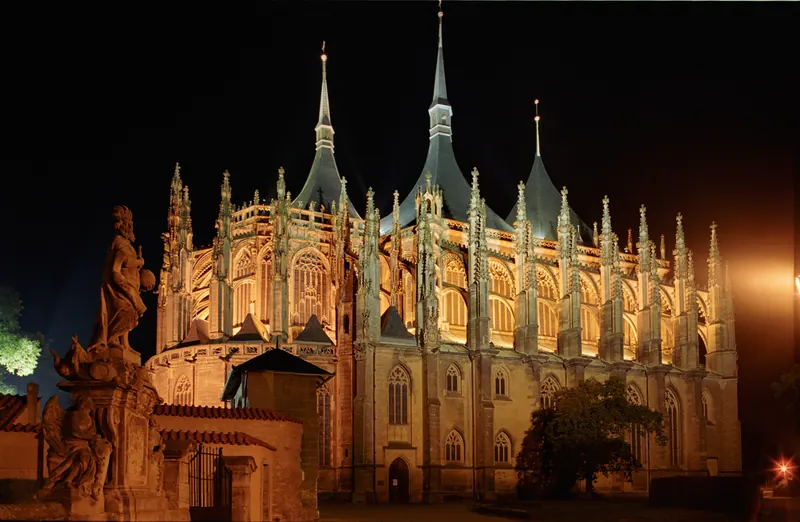
Begun in 1388 by Peter Parler's workshop, carried on by Matěj Rejsek and Benedikt Ried, abandoned in 1558 when the silver ran short and only closed off at the west end in 1905 — a cathedral built by miners for their own patron saint, not by a bishop. Go straight to the chapels off the ambulatory and ask for the Hašplíř and minters' chapels: their frescoes show men in white hooded smocks working a winch and Prague groschen being hammered out by hand.

Works in the rain Quiet corner
Walking directions
Castle

Italian Court (Vlašský dvůr)

Central royal mint from 1300 under Wenceslas II; palace and chapel added by Wenceslas IV around 1400; mint closed 1727

The royal mint of Bohemia from 1300, where the Prague groschen was struck for four centuries, rebuilt by Wenceslas IV as a palace with an audience hall and a chapel. For CZK 50 you can hammer out your own groschen on a die and take it home with a certificate.

Good with children Works in the rain
Walking directions
Church

Sedlec Ossuary

Cemetery chapel of the first half of the 14th century; bone arrangement by František Rint, around 1870

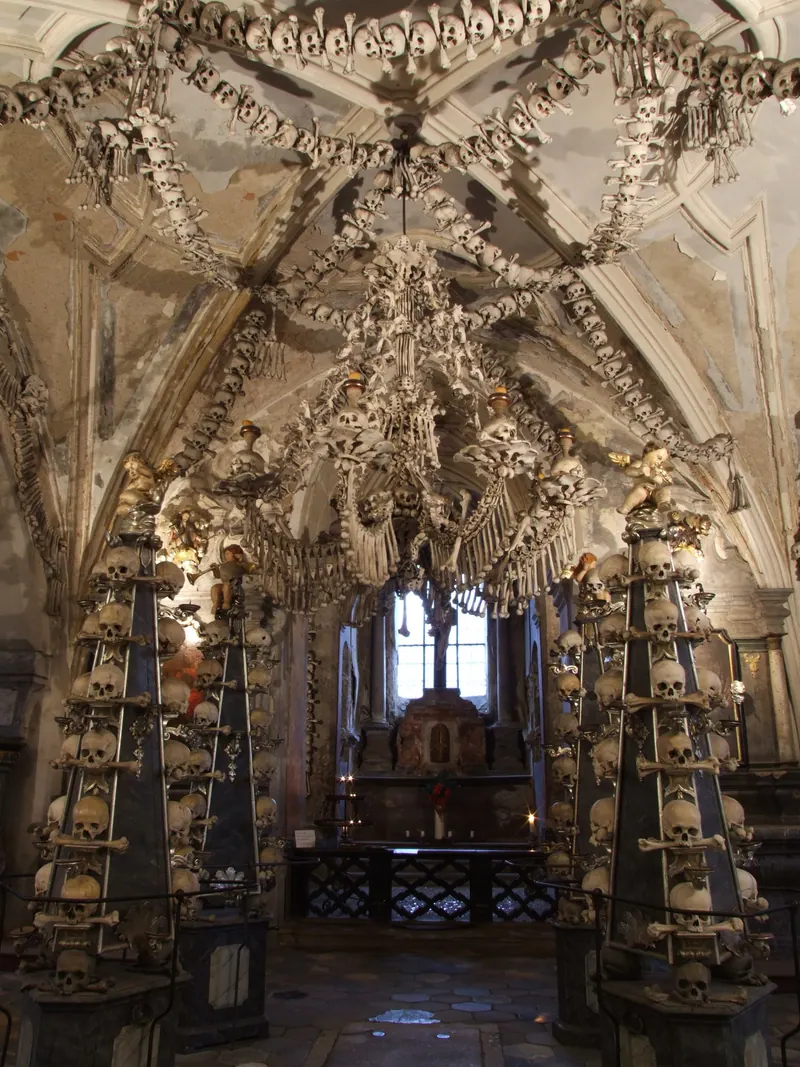
A two-storey Gothic cemetery chapel of the early 14th century whose lower floor holds the bones of an estimated 40,000 dead, stacked into four pyramids, a chandelier and a coat of arms by the woodcarver František Rint around 1870. Book a timed slot before you travel and leave the camera in the bag: photography inside is banned outright.

Works in the rain
Walking directions