Medieval Booker

Church ◆ Kutná Hora

Cathedral of St Barbara

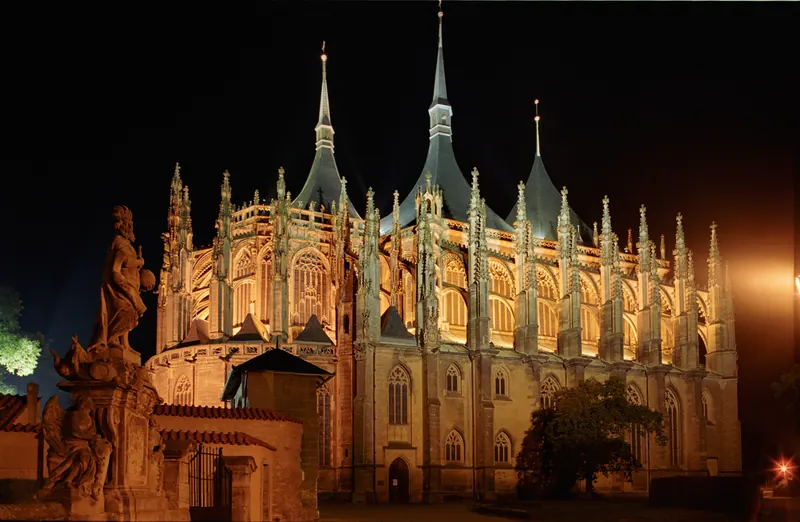
Begun in 1388 by Peter Parler's workshop, carried on by Matěj Rejsek and Benedikt Ried, abandoned in 1558 when the silver ran short and only closed off at the west end in 1905 — a cathedral built by miners for their own patron saint, not by a bishop. Go straight to the chapels off the ambulatory and ask for the Hašplíř and minters' chapels: their frescoes show men in white hooded smocks working a winch and Prague groschen being hammered out by hand.

Where and when

Where
Barborská 685, 284 01 Kutná Hora, Kutná Hora, Czechia Open in Google Maps Walking directions
Era
Begun 1388 by Peter Parler's workshop; choir vault by Matěj Rejsek from 1489, nave by Benedikt Ried after 1512; work stopped 1558, west front completed 1905
Opening
Daily. April–October 09:00–18:00; March 10:00–17:00; November–December 10:00–17:00; January–February 10:00–16:00. Closed 24 December, and it closes for occasional weddings — the official site posts the dates (as of August 2026)
Price
CZK 180 full / 140 reduced / 60 children from 6 and ZTP holders; under 6 free. Guided tours add a guide fee of CZK 600 within opening hours (as of August 2026)
Best time
Late afternoon in summer, when the low sun comes through the south windows into the ambulatory chapels. The frescoes are dim and need whatever light there is.
Good for
Works in the rainQuiet corner
Official site
chramsvatebarbory.cz
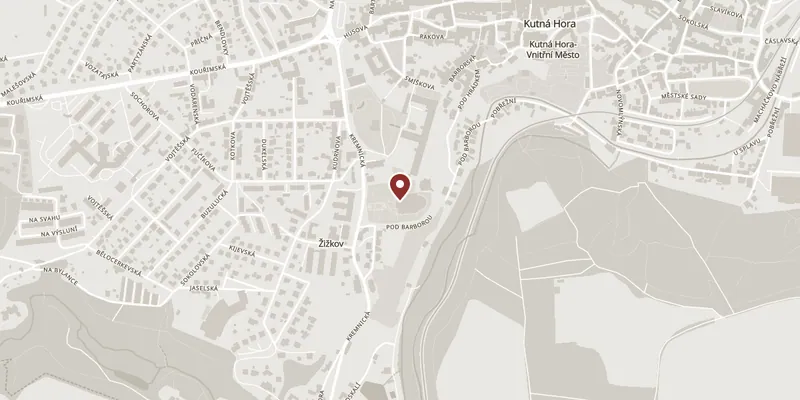
Map showing where Cathedral of St Barbara is
Open in Google Maps Walking directions © MapTiler © OpenStreetMap contributors

Checked

What is Cathedral of St Barbara?

St Barbara is the patron of miners, and this is their church. It was not a bishop’s seat and never has been; it was paid for by the mining companies and the burghers of a town that was, for a while, the second richest place in the kingdom. Building started in 1388 under the workshop of Peter Parler, the mason of St Vitus in Prague, on a plan of five naves with an ambulatory and a ring of chapels. Matěj Rejsek took over in 1489 and vaulted the choir; Benedikt Ried followed after 1512 and roofed the nave with a looping rib vault carrying the arms of the guilds and mining companies, under the triple tent roof that gives the building its silhouette. In 1558 the mines faltered, the money stopped, and the unfinished west end was simply walled off. The front you enter through is neo-Gothic, completed in 1905.

The medieval paintings are the reason to come, and they are unlike anything in a Prague church. In the Hašplíř chapel (the windlass-men’s chapel) late-15th-century frescoes show miners in their white hooded coats hauling ore with a haspl, a hand winch. In the minters’ chapel the frescoes show the striking of Prague groschen — the coin the town’s silver became — blow by blow. Wall painting of medieval industrial work at this quality survives almost nowhere else in Europe.

The Smíšek chapel (1485–92), endowed by the mine owner who built Hrádek down the road, is the other stop. Its murals run to the Queen of Sheba before Solomon, the Trial of Trajan, the Vision of the Tiburtine Sibyl and a Crucifixion, with a lower register showing litterati laying out the vessels for the liturgy. The painter clearly knew contemporary Italian work.

An audio guide and a printed guide are offered at the door. The cathedral also sells a roof tour and an organ tour, both privately guided and priced for a group rather than an individual — worth an email if there are several of you.

Walk back into town along the Barborská terrace rather than the road: a raised stone promenade lined with thirteen 18th-century saints, twelve of them carved by František Baugut between 1703 and 1716, with the Vrchlice valley dropping away on one side. Locals call it the Kutná Hora Charles Bridge. It is free, it is the view of the cathedral everyone photographs, and it takes ten minutes.
Frequently asked questions

Why is St Barbara's Cathedral in Kutná Hora unfinished?

Building ran from 1388 until 1558, when the silver mines that funded it declined and the money stopped. The unfinished west end was walled off; the present west front is neo-Gothic work completed in 1905.

How much is entry to St Barbara's Cathedral?

CZK 180 full, 140 reduced and 60 for children from six and ZTP holders as of August 2026, with under-sixes free. A guide within opening hours costs a further CZK 600 for the group.

What are the mining frescoes in St Barbara's?

Late-Gothic wall paintings in the ambulatory chapels. The Hašplíř chapel shows miners in white hooded smocks working a hand winch; the minters' chapel shows Prague groschen being struck by hand. They are rare survivals of medieval working life in paint.

Who built St Barbara's Cathedral?

The mining town itself paid for it. Peter Parler's workshop began it in 1388, Matěj Rejsek vaulted the choir from 1489 and Benedikt Ried roofed the nave after 1512.

What is the Smíšek chapel?

A chapel of 1485–92 endowed by the mine owner Jan Smíšek of Vrchoviště, painted with the Queen of Sheba before Solomon, the Trial of Trajan, the Vision of the Tiburtine Sibyl and a Crucifixion. The same man rebuilt Hrádek, now the silver museum.

Festivals in Kutná Hora

Medieval festivals in Kutná Hora
Jousting & Tournaments Living History & Museums +1

Královské stříbření Kutné Hory (Royal Silvering of Kutná Hora)

Kutná Hora, Czechia

The Royal Silvering of Kutná Hora recreates a visit by King Wenceslas IV and his court to the silver-mining town around the year 1400, with a costumed procession from the Italian Court to St Barbara's Cathedral, mounted tournaments, period music, crafts and a torchlit evening programme in the park below the royal mint. Held on a weekend in late June since 1992, it reached its 32nd edition on 20–21 June 2026.

Expected 2027
Family

More places in Kutná Hora

Places in Kutná Hora
Museum Start here

Czech Museum of Silver and the medieval mine

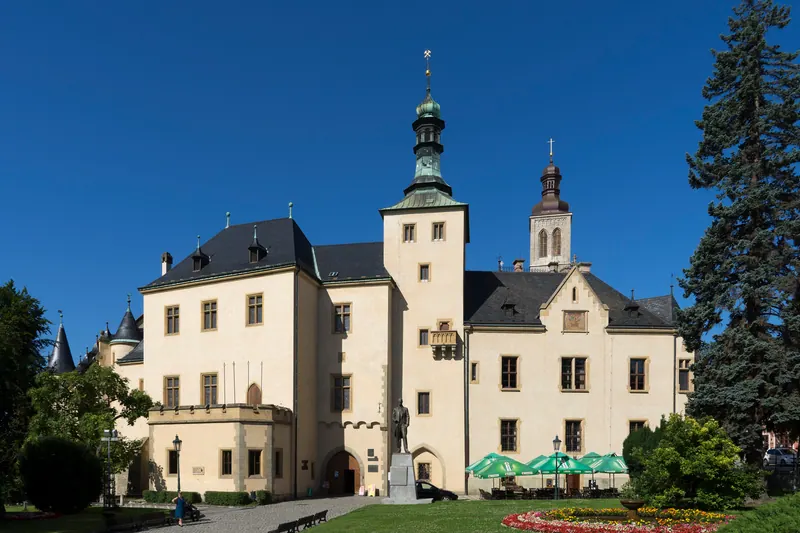
Hrádek rebuilt in the 1490s by Jan Smíšek of Vrchoviště; the mine gallery worked 14th to early 16th century

The town's silver museum occupies Hrádek, a late-Gothic mansion built by a mine owner on the ore beneath it, and its second route puts you in a miner's white canvas smock and a helmet lamp and walks you 250 m through a real gallery of the Osel mine. Book Route II ahead, and note that nobody under six is allowed underground.

Good with children Works in the rain
Walking directions
Castle

Italian Court (Vlašský dvůr)

Central royal mint from 1300 under Wenceslas II; palace and chapel added by Wenceslas IV around 1400; mint closed 1727

The royal mint of Bohemia from 1300, where the Prague groschen was struck for four centuries, rebuilt by Wenceslas IV as a palace with an audience hall and a chapel. For CZK 50 you can hammer out your own groschen on a die and take it home with a certificate.

Good with children Works in the rain
Walking directions
Church

Sedlec Ossuary

Cemetery chapel of the first half of the 14th century; bone arrangement by František Rint, around 1870

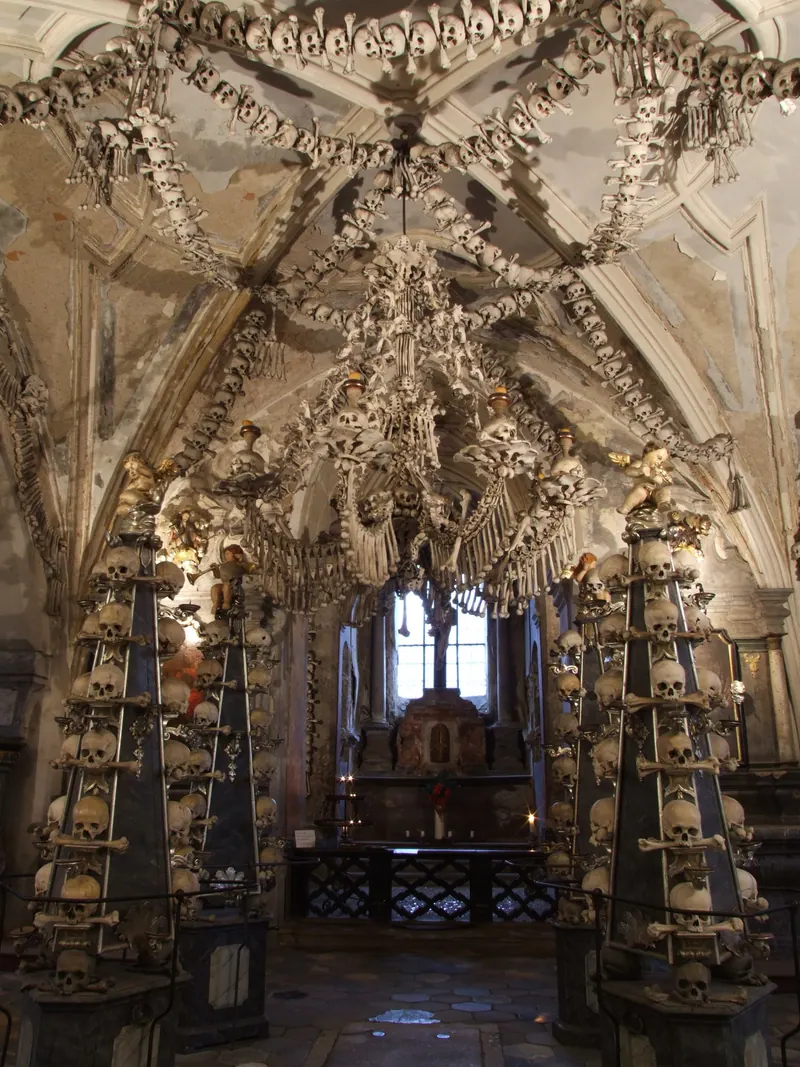
A two-storey Gothic cemetery chapel of the early 14th century whose lower floor holds the bones of an estimated 40,000 dead, stacked into four pyramids, a chandelier and a coat of arms by the woodcarver František Rint around 1870. Book a timed slot before you travel and leave the camera in the bag: photography inside is banned outright.

Works in the rain
Walking directions