The bones are here because of a handful of soil. The Cistercian abbey at Sedlec, founded in 1142 as the first house of the order in Bohemia, sent its abbot Henry to the Holy Land in 1278; the story runs that he came back with earth from Golgotha and scattered it over the abbey cemetery. Whether or not that happened, the graveyard became one of the most sought-after burial grounds in central Europe, and then the plague of 1318 and the Hussite wars filled it far past what the ground could hold.
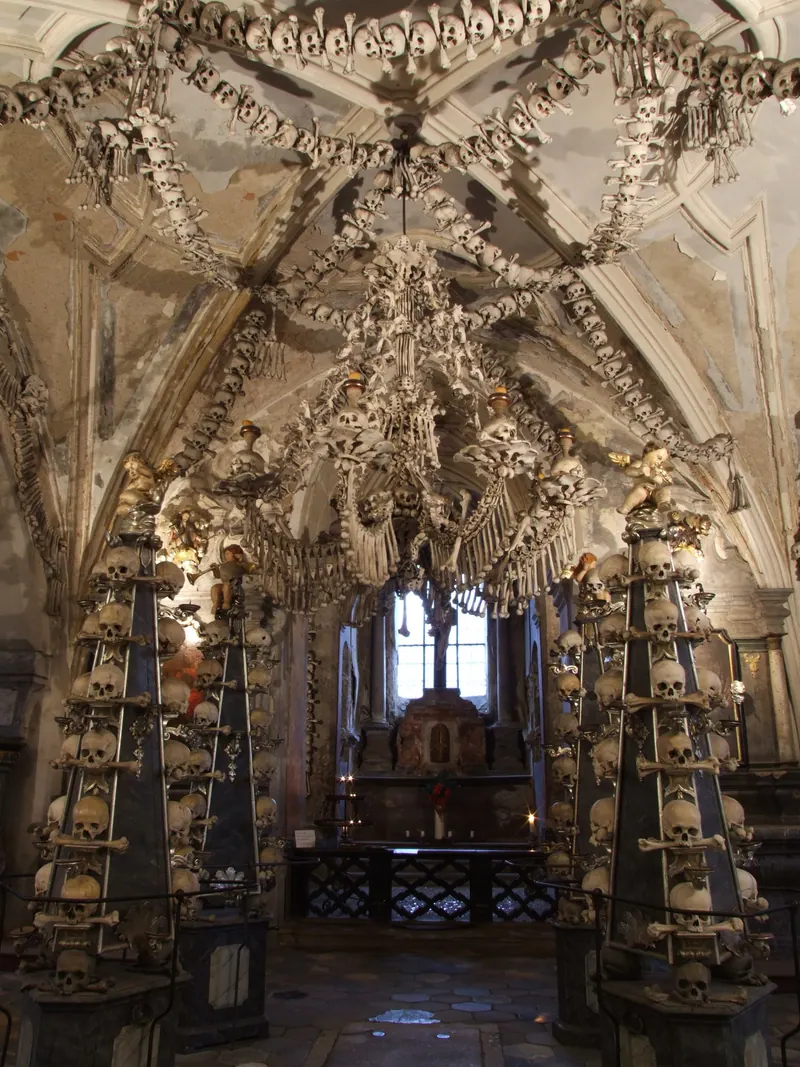
The Cemetery Church of All Saints was built in the first half of the 14th century as a two-storey chapel: services above, cleared bones below. Tradition credits a half-blind monk with stacking them in 1511. In 1870 the Schwarzenbergs, who by then owned the estate, commissioned the woodcarver František Rint to put the heaps in order, and what he made is what people come for — four pyramids of stacked bone in the corner chapels, a chandelier said to use every bone in the human body, chains of skulls along the vaults, a Schwarzenberg coat of arms with the raven pecking at a Turk’s eye, and his own signature spelled out in bone by the stair.
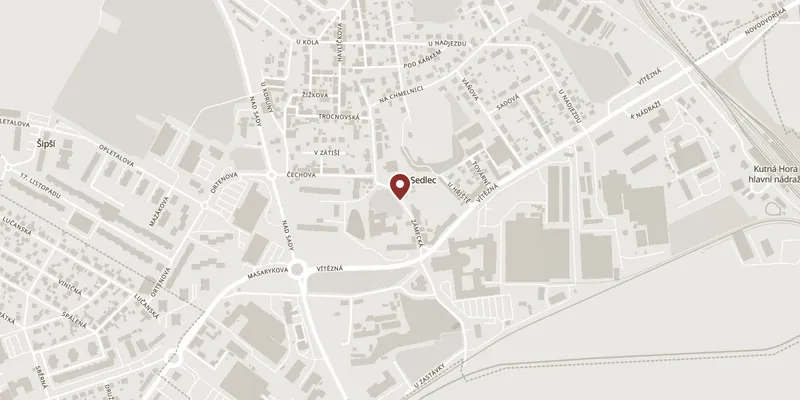
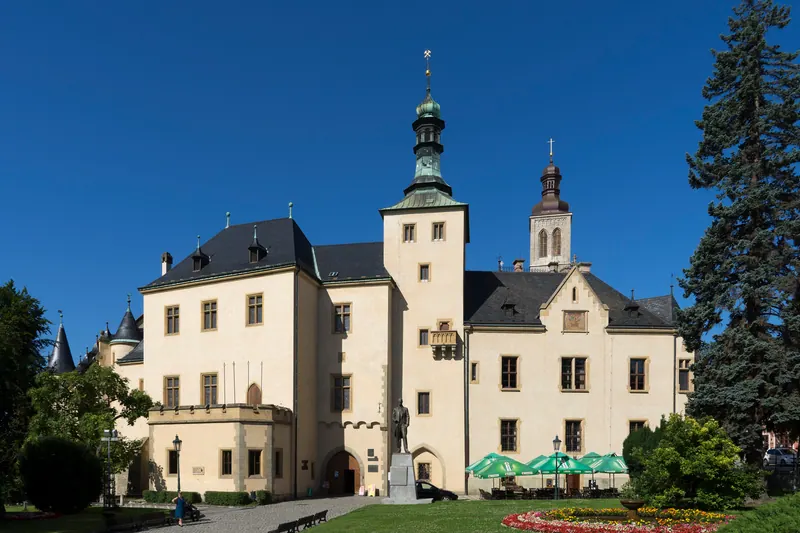
The rules changed and they are strictly applied. The site is run by the Roman Catholic parish of Kutná Hora–Sedlec, capacity is capped and every ticket is for a fixed date and entry time, bought online or at the Sedlec information centre at Zámecká 279. Arrive about five minutes early and no later than ten minutes after your slot or entry is not guaranteed; times cannot be changed, only cancelled up to three days before for a voucher. You may spend a maximum of 30 minutes in the lower chapel. Bulky bags and motorcycle helmets are not allowed down there. Photography is prohibited — the parish states plainly that this is a burial place and a working sacred space, not content. Professional photographs are published free on its own website, and permission can be requested in advance for documentary work.
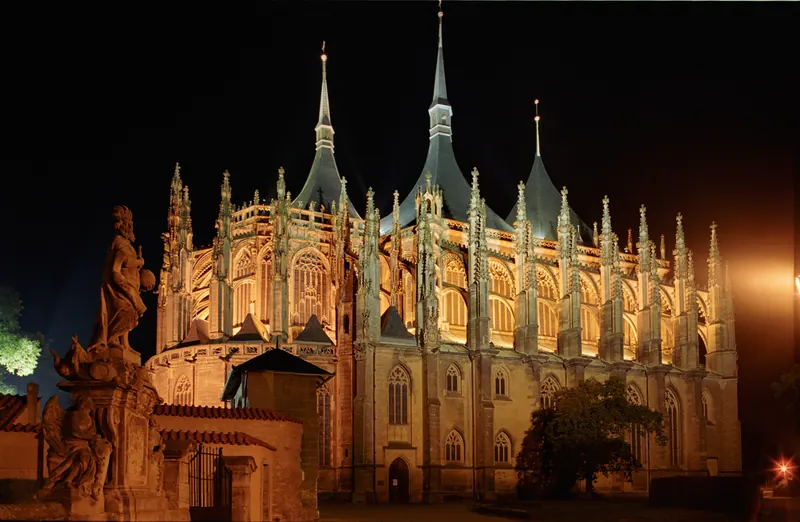
One ticket, “Areál Sedlec”, also covers the Cathedral of the Assumption up the road. Sedlec is about ten minutes’ walk from Kutná Hora hlavní nádraží, where the Prague trains arrive, so make it the first or last thing you do.