Medieval Booker

Church ◆ Kutná Hora

Cathedral of the Assumption at Sedlec

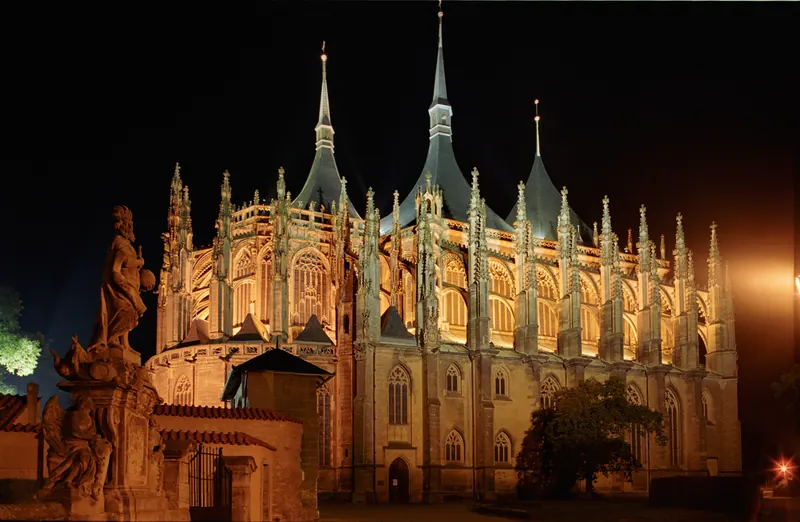
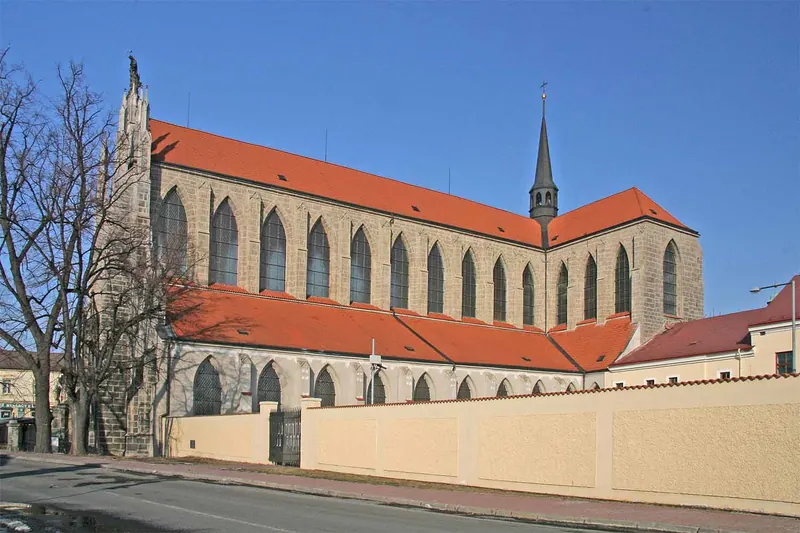
The abbey church of the first Cistercian house in Bohemia, built between 1290 and 1320 on the plan of a French cathedral, burnt out by the Hussites in 1421 and left a ruin for nearly three hundred years until Santini rebuilt it from 1703 without straightening a single Gothic line. Your ossuary ticket already covers it and it is a few minutes' walk away — most visitors never use the second half.

Where and when

Where
Zámecká, Sedlec, 284 03 Kutná Hora (tickets and information centre at Zámecká 279), Kutná Hora, Czechia Open in Google Maps Walking directions
Era
Cistercian abbey founded 1142; church built 1290–1320; burnt by the Hussites 1421; rebuilt by Santini-Aichel 1703–08
Opening
Daily, same hours as the ossuary: April–September 09:00–18:00; March and October 09:00–17:00; November–February 09:00–16:00. A working parish church, so services close it (as of August 2026)
Price
Included in the "Areál Sedlec" ticket with the ossuary: CZK 220 adult / 150 senior and student / 80 child and ZTP (as of August 2026)
Best time
Straight after the ossuary, while the ticket is in your hand. Late morning gets the west window at its best.
Good for
Quiet cornerWorks in the rain
Official site
www.sedlec.info
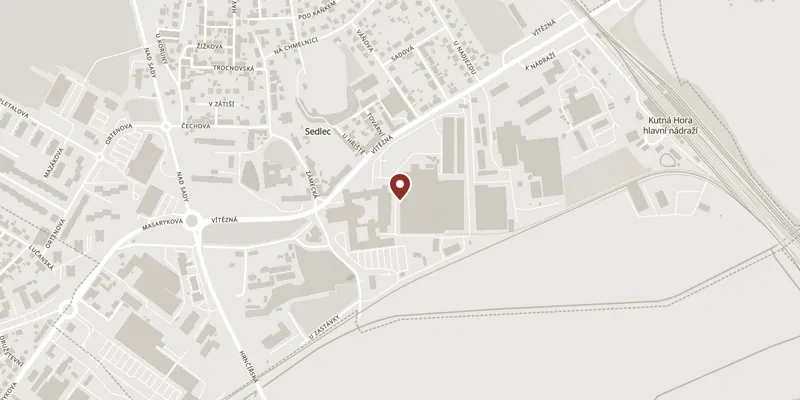
Map showing where Cathedral of the Assumption at Sedlec is
Open in Google Maps Walking directions © MapTiler © OpenStreetMap contributors

Checked

What is Cathedral of the Assumption at Sedlec?

Sedlec abbey was founded in 1142, the first Cistercian house in Bohemia, and the town owes its existence to it: systematic mining began in the 1260s after silver ore was found on the abbey’s land, and the rush that followed made Kutná Hora. The abbey church went up between 1290 and 1320, and it is not a monastery chapel — it is a cathedral, built on the northern French plan with an ambulatory and a ring of radiating chapels, the first building of that type in central Europe and for a time the largest church in Bohemia. Count the windows: there are 106, and the one in the west front is 14 m high, which is why the interior is startlingly bright for a Gothic building.

In 1421 the Hussites sacked and burned it. The roof went, the abbey was broken, and the church stood as a ruin for the better part of three hundred years. When the Cistercians finally rebuilt, they gave the job to Jan Blažej Santini-Aichel, who between 1703 and 1708 did something no one else was doing in Europe: instead of dressing the medieval shell in fashionable Baroque, he continued it. His vaults are 18th-century ribs drawn in a 14th-century hand — star and net patterns, Gothic proportions, Baroque plasterwork — the style now called Baroque Gothic, and Sedlec is where he worked it out.

So be clear-eyed about what you are looking at. The medieval part is the shell: the plan, the piers, the height, the light. The surfaces, the furnishings and the paintings are of about 1700. That is still worth the walk, because standing in the nave tells you exactly how much money a Cistercian house sitting on a silver seam could raise around 1300.

Practically, it is on the same “Areál Sedlec” ticket as the ossuary and keeps the same hours, and it is a working parish church, so services close it. The timed-entry rule and the photography ban apply to the ossuary’s lower chapel, not here. It was inscribed with the rest of Kutná Hora on the UNESCO list in 1995.
What visitors say

4.6 from 2,152 ratings

  • Ladislav Lacman

    4 out of 5 a month ago

    A beautiful and impressive cathedral that is definitely worth a visit, especially if you're already at the nearby Ossuary. While St. Barbara's usually steals the spotlight in Kutná Hora, this magnificent site certainly has its own unique charm and calm atmosphere.

    Read this review on Google
  • Señorito Pencil

    5 out of 5 a month ago

    We went there as a group of four simply to look at the architecture and art. The church also featured a little shop offering books roserys and other small items. You also had the possibility to write your prayers on a piece of paper that you could offer for free. I recommend doing that🙏

    Read this review on Google
  • Hug Dealer

    5 out of 5 2 months ago

    The cathedral looks unfinished. You can use the ticket from the bone church to enter here. Its architecture, paint work is amazing, stunning old Cathedral.

    Read this review on Google

Ratings and reviews from Google. See all on Google Maps

Frequently asked questions

Is the Cathedral of the Assumption included in the Sedlec Ossuary ticket?

Yes. The "Areál Sedlec" ticket, CZK 220 for an adult as of August 2026, covers both the ossuary and the cathedral, and they keep the same opening hours.

How old is the Sedlec cathedral?

The Cistercian abbey was founded in 1142 and the church was built between 1290 and 1320. It was burnt by the Hussites in 1421 and rebuilt by Jan Blažej Santini-Aichel between 1703 and 1708.

What is Baroque Gothic?

Santini-Aichel's way of restoring ruined Gothic buildings by continuing their forms rather than replacing them — Gothic rib patterns and proportions executed in Baroque materials. Sedlec, rebuilt from 1703, is the first major example.

Why is the Sedlec cathedral so bright inside?

It has 106 windows, and the one in the west front is 14 m high. It was built on a French cathedral plan with an ambulatory and radiating chapels, the earliest building of that type in central Europe.

Is photography allowed in the Sedlec cathedral?

The photography ban applies to the ossuary's lower chapel. The cathedral is a working parish church; check the notices at the door and respect any service in progress.

Festivals in Kutná Hora

Medieval festivals in Kutná Hora
Jousting & Tournaments Living History & Museums +1

Královské stříbření Kutné Hory (Royal Silvering of Kutná Hora)

Kutná Hora, Czechia

The Royal Silvering of Kutná Hora recreates a visit by King Wenceslas IV and his court to the silver-mining town around the year 1400, with a costumed procession from the Italian Court to St Barbara's Cathedral, mounted tournaments, period music, crafts and a torchlit evening programme in the park below the royal mint. Held on a weekend in late June since 1992, it reached its 32nd edition on 20–21 June 2026.

Expected 2027
Family

More places in Kutná Hora

Places in Kutná Hora
Museum Start here

Czech Museum of Silver and the medieval mine

Hrádek rebuilt in the 1490s by Jan Smíšek of Vrchoviště; the mine gallery worked 14th to early 16th century

The town's silver museum occupies Hrádek, a late-Gothic mansion built by a mine owner on the ore beneath it, and its second route puts you in a miner's white canvas smock and a helmet lamp and walks you 250 m through a real gallery of the Osel mine. Book Route II ahead, and note that nobody under six is allowed underground.

Good with children Works in the rain
Walking directions
Church

Cathedral of St Barbara

Begun 1388 by Peter Parler's workshop; choir vault by Matěj Rejsek from 1489, nave by Benedikt Ried after 1512; work stopped 1558, west front completed 1905

Begun in 1388 by Peter Parler's workshop, carried on by Matěj Rejsek and Benedikt Ried, abandoned in 1558 when the silver ran short and only closed off at the west end in 1905 — a cathedral built by miners for their own patron saint, not by a bishop. Go straight to the chapels off the ambulatory and ask for the Hašplíř and minters' chapels: their frescoes show men in white hooded smocks working a winch and Prague groschen being hammered out by hand.

Works in the rain Quiet corner
Walking directions
Castle

Italian Court (Vlašský dvůr)

Central royal mint from 1300 under Wenceslas II; palace and chapel added by Wenceslas IV around 1400; mint closed 1727

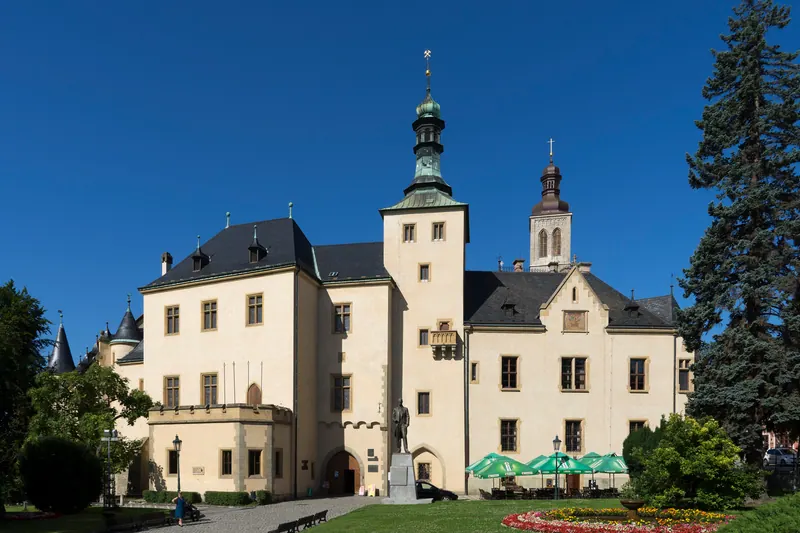
The royal mint of Bohemia from 1300, where the Prague groschen was struck for four centuries, rebuilt by Wenceslas IV as a palace with an audience hall and a chapel. For CZK 50 you can hammer out your own groschen on a die and take it home with a certificate.

Good with children Works in the rain
Walking directions