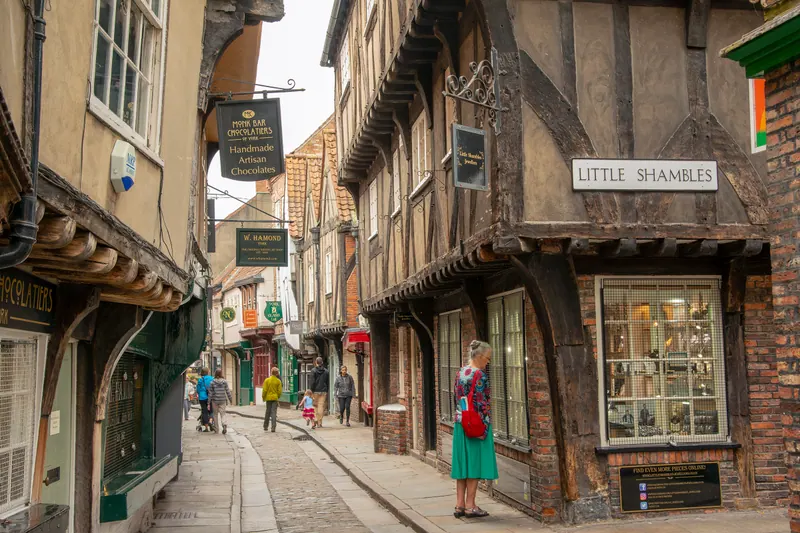
The name is the point. It comes from the Anglo-Saxon fleshammels — flesh-shelves — the sloping wooden boards on which butchers laid out meat, and a number of those shelves and the iron meat hooks above them are still bolted to the fronts of the shops. Look at the timber below the windows on the east side as you walk down; once you have seen one set you will see several. The Shambles is generally taken to be the only street named in York’s Domesday entry of 1086, where two butchers’ stalls near St Crux are recorded in the hands of the Count of Mortain.
Most of the standing buildings are later than that — roughly 1350 to 1475 — and they lean. The upper floors are jettied out over the street, storey by storey, so that at the narrowest point the eaves on opposite sides almost meet overhead. That was not picturesque planning: overhangs shaded the meat on the shelves below from direct sun, in a street with no refrigeration and an open central channel to sluice blood and offal down. The channel is gone; the geometry is not.
Halfway along, at No. 35, is the Shrine of St Margaret Clitherow, free and open daily, with Mass on Saturday mornings at 10:00. Clitherow was a York butcher’s wife who hid Catholic priests in her house and ran a clandestine school; she was pressed to death in 1586 and canonised in 1970. Be aware the shrine is not her house — she is thought to have lived at 11–12, across the road — and it is a small Tudor room rather than a grand chapel. It is also the quietest thirty seconds available on the Shambles.
The honest problem is the crowd. This is a very short, very narrow street carrying a very large number of people, and several of its shops now sell Harry Potter merchandise on the strength of a Diagon Alley connection that has never been confirmed by anyone official. Come early, and use the two escape routes: Little Shambles, the alley opening off halfway down, leads into Shambles Market, which trades daily and is better for food; and St Crux Hall at the bottom end usually has a charity hall going.