Medieval Booker

Church ◆ York

York Minster

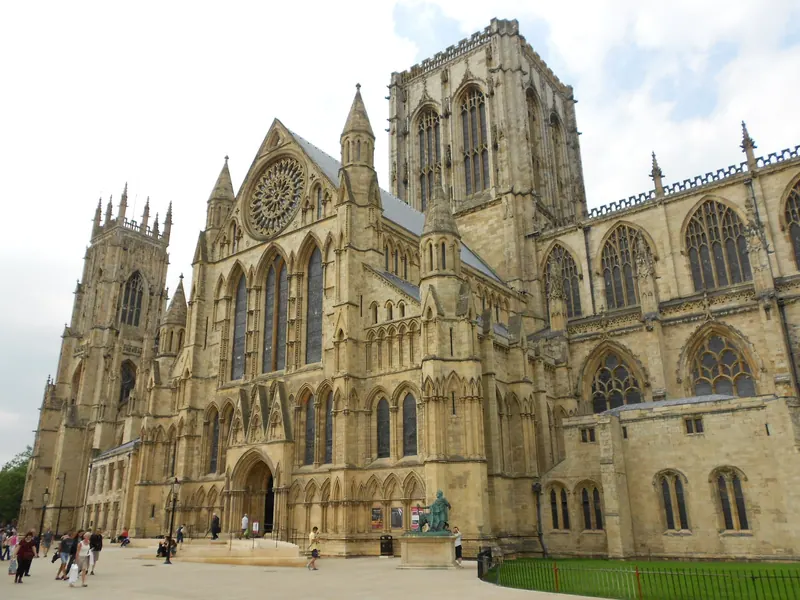
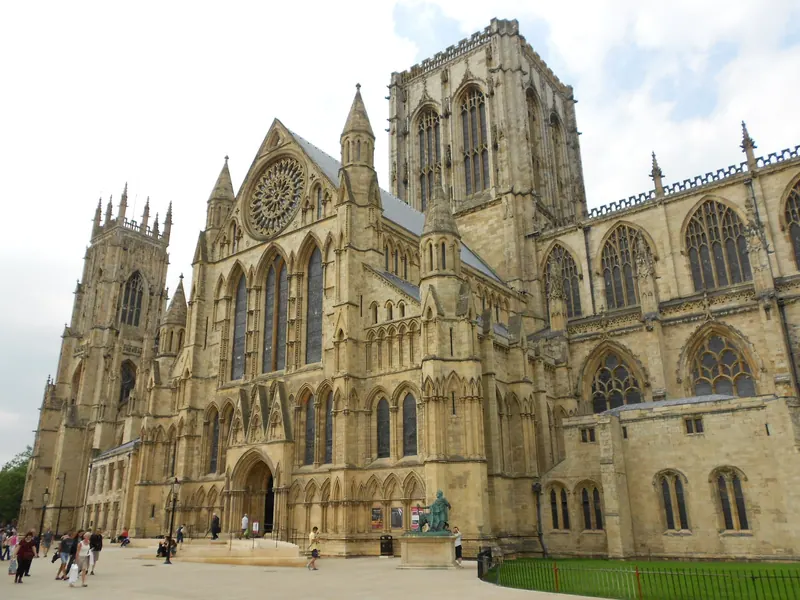
The present church was begun about 1220 and its east end consecrated in 1472, and it holds the largest single expanse of medieval stained glass in Britain. Come at 09:30 on a weekday and stand under the Great East Window while the morning sun is still behind it.

Where and when

Where
Deangate, York YO1 7HH, York, England Open in Google Maps Walking directions
Era
Present church begun c. 1220; east end consecrated 1472; Great East Window 1405–08
Opening
Sightseeing Monday–Saturday 09:30–16:00 (first admission 09:30, last admission 16:00); Sunday only 12:45–14:30, because the day is given to worship. The Minster closes to sightseeing for services — check the calendar on yorkminster.org for your date (as of August 2026)
Price
Adult and senior £18.20 until 1 September, £20 from 2 September; students not studying in York £15, then £16. Up to four children aged 17 and under go free with each paying adult. York residents and York students free with proof of address. Tower Challenge £24.20 adult including admission (£26 from 2 September), £6 for a child aged 8–17. Every ticket is valid for a calendar year (as of August 2026)
Best time
First admission at 09:30 on a weekday: the Great East Window faces east and reads best with the morning sun behind it, and the tower slots are emptiest early.
Good for
Good with childrenWorks in the rain
Official site
yorkminster.org
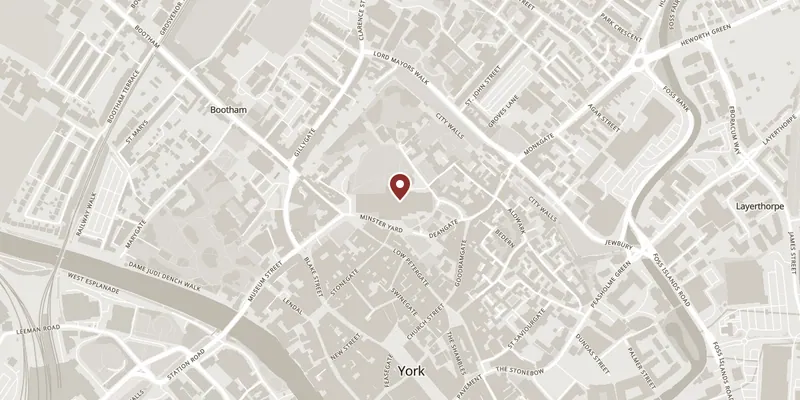
Map showing where York Minster is
Open in Google Maps Walking directions © MapTiler © OpenStreetMap contributors

Checked

What is York Minster?

There has been a church on this spot since 627, and before that the Roman fortress of Eboracum had its headquarters building here — you can see the foundations of both, plus the Norman cathedral of 1080, in the Undercroft. The building you walk into is the Gothic one: begun about 1220, the south and north transepts first, the nave between 1291 and about 1350, the choir and east end from 1361, and the whole thing consecrated on 3 July 1472. It is one of the largest Gothic cathedrals in northern Europe and it never had a monastery attached, which is why the medieval fabric survived the Dissolution largely intact.

The glass is the reason to come. Roughly half of all surviving medieval stained glass in England is in this one building. The Great East Window was glazed between 1405 and 1408 by John Thornton of Coventry under a signed contract, runs to 311 panels of Apocalypse and Genesis scenes and is about the area of a tennis court; the York Glaziers Trust took it apart, conserved it panel by panel and finished reinstalling it in 2018. In the north transept the Five Sisters are five lancets of grisaille glass of about 1260, the oldest complete window here. The west window of 1338 has heart-shaped tracery and is known as the Heart of Yorkshire.

Then look for: the kings’ screen across the choir entrance, later 15th century, carrying fifteen carved English kings from William I to Henry VI; the chapter house off the north transept, octagonal, built about 1260–96, roofed by a wooden vault with no central column and lined with carved heads and foliage under the canopies; and the roof bosses of the south transept, rebuilt after the lightning fire of 9 July 1984, six of them designed by Blue Peter viewers.

The Undercroft museum is included in the ticket: Roman barracks and basilica walls, an Anglo-Saxon cemetery, the Norman foundations, the Horn of Ulf — a carved elephant-ivory drinking horn given with the land it stands on around 1030 — and the York Gospels of about 1020, still used in ceremonies.

The central tower is 275 steps, minimum age 8, and £6 on top of admission.
What visitors say

4.7 from 24,500 ratings

  • Diego Esteban

    5 out of 5 a month ago

    The year-long valid ticket was great for us as we arrived on the wrong day for the crypt visit, but could do it on our way back from our trip. The staff is incredibly friendly and helps you realize how amazing this monument is. Check the opening times before visiting and marvel at this wonder of historical architecture.

    Read this review on Google
  • Ann Marie

    5 out of 5 a month ago

    York Minster is absolutely beautiful and well worth visiting. The admission price is on the higher side but there is a huge amount to see, including the fascinating Undercroft Museum beneath the cathedral, where you can explore Roman, Viking and medieval remains. You can also climb the 275 medieval steps to the top of the Central Tower, the panoramic views over York are spectacular.

    Read this review on Google
  • Michael and Rachael Isham

    5 out of 5 2 months ago

    I’ve been in a lot of cathedrals (in the USA, Mexico, Guatemala, England, Canada and France). York Minster is one of the most beautiful, and easily beats out Westminster. I’d much rather see the stunning architecture than walk on a bunch of famous dead people. The lighting is incredible. I highly recommend climbing the stairs up to the tower. The views were amazing and it was 100% worth the $15 we paid.

    Read this review on Google

Ratings and reviews from Google. See all on Google Maps

Frequently asked questions

How much does it cost to visit York Minster?

£18.20 for an adult until 1 September and £20 from 2 September, as of August 2026. Up to four children aged 17 and under go free with each paying adult, and York residents and students enter free with proof of address. The ticket is valid for a calendar year.

Is the Great East Window real medieval glass?

Yes. It was glazed in 1405–08 by John Thornton of Coventry, runs to 311 panels and is the largest single expanse of medieval stained glass in Britain. The York Glaziers Trust conserved it panel by panel and completed the reinstallation in 2018.

How many steps is the York Minster tower climb?

275 steps to the top of the central tower, with a minimum age of 8. It costs £6 on top of sightseeing admission, so £24.20 in total for an adult as of August 2026.

Can you visit York Minster on a Sunday?

Only between 12:45 and 14:30. The rest of Sunday is given to worship, and services are free to attend but are not sightseeing.

What is in the York Minster Undercroft?

The Roman barracks and basilica walls of Eboracum, an Anglo-Saxon cemetery, the foundations of the Norman cathedral of 1080, the carved ivory Horn of Ulf of about 1030 and the York Gospels of about 1020. It is included in the admission ticket.

Festivals in York

Medieval festivals in York
Featured
Reenactment & Battles Living History & Museums +1

JORVIK Viking Festival

York, England

The JORVIK Viking Festival takes over York for a week every February half-term with a Viking encampment and traders' market in the city centre, a march of hundreds of warriors, talks, crafts, a best-beard contest and a ticketed finale battle with pyrotechnics. Founded in 1985 by the team behind the JORVIK Viking Centre, it is the largest Viking festival in Europe and draws around 40,000 people.

Expected 2027
Family

More places in York

Places in York
View

York City Walls

Mostly 13th–14th century on Roman and Anglo-Scandinavian banks; Red Tower 1490

Two miles of wall-top walkway, mostly 13th- and 14th-century, raised on the Roman rampart and the earth banks of Viking Jorvik — the longest medieval town walls in England, and free. Start at Bootham Bar and walk to Monk Bar with the Minster over your left shoulder; that is the best half-mile of the circuit.

Free or cheap Good with children Quiet corner
Walking directions
Landmark

Merchant Adventurers' Hall

Built 1357–61; chapel early 15th century; company chartered 1581

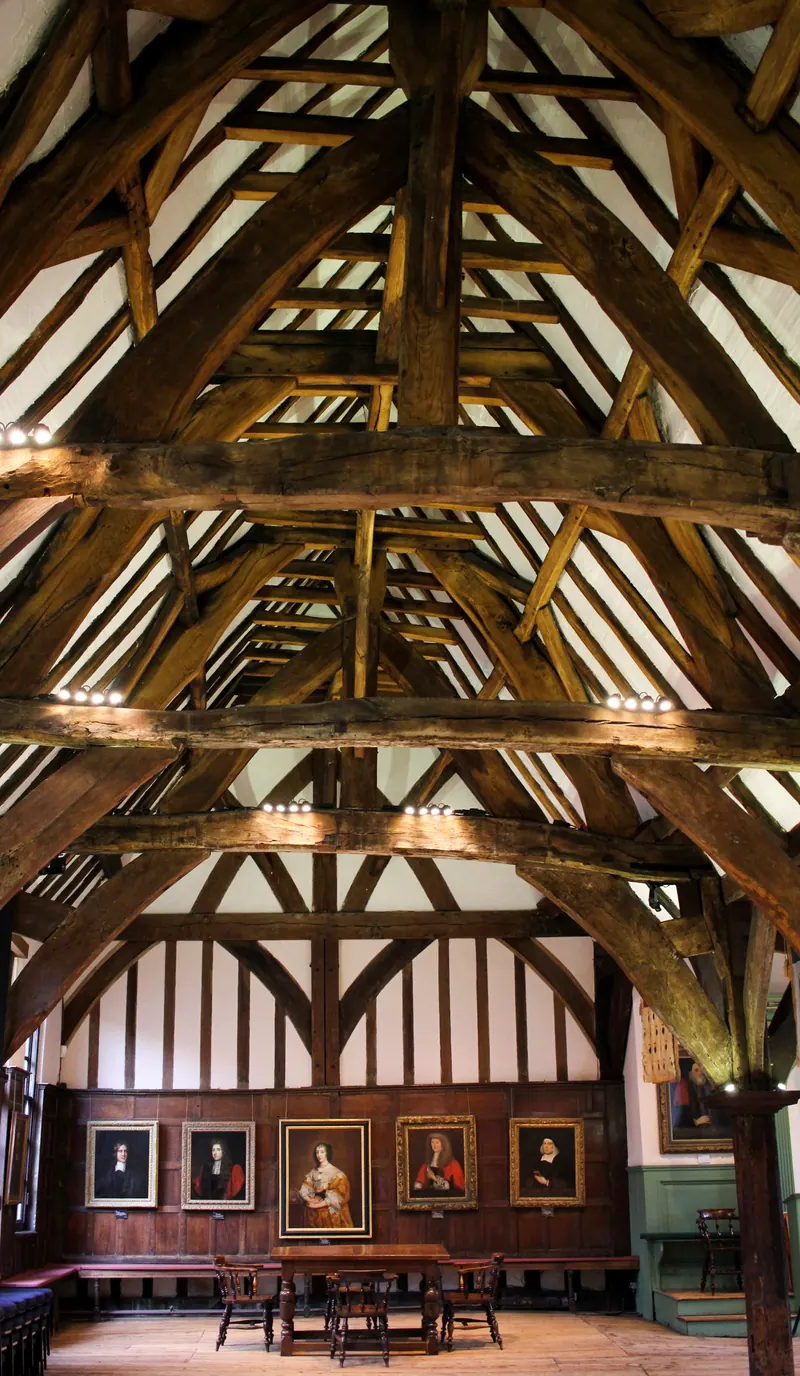
A guildhall built in 1357–61 and still owned by the company that built it, with a timber-framed Great Hall upstairs and the undercroft below that served as an almshouse for over 500 years. £7.50 gets you in, children are free, and the ticket lets you come back for a year.

Works in the rain Quiet corner Free or cheap
Walking directions
Museum

JORVIK Viking Centre

Coppergate excavated 1976–81; reconstruction of the 10th-century Anglo-Scandinavian street; centre opened 1984, rebuilt 2017

Built directly over the Coppergate dig of 1976–81, where five years of waterlogged Yorkshire mud gave up more than 40,000 Viking-age objects, and the tenement plots below your feet are reconstructed at the scale and on the spot where they were found. Book the first timed slot of the day; every ticket then lets you come back free for twelve months.

Good with children Works in the rain
Walking directions
All articles