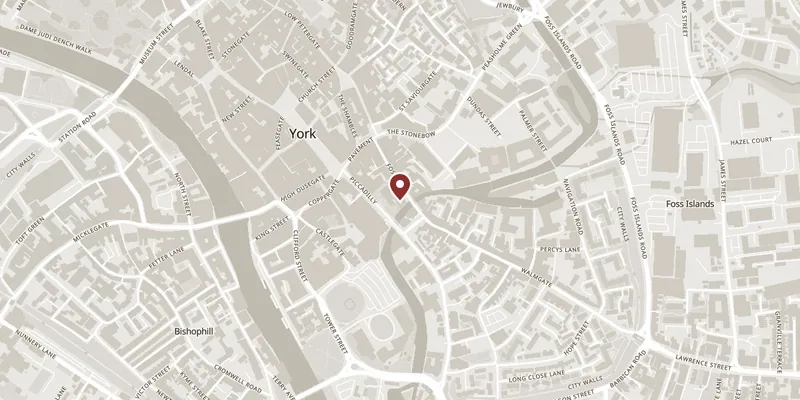
A religious fraternity of York merchants put this building up between 1357 and 1361 on a plot beside the Foss, and the company it became — the Company of Merchant Adventurers of the City of York, chartered under Elizabeth I in 1581 — still owns it and still meets in it. That continuity is the point. This is not a museum that has been installed in an old building; it is a working guild hall that happens to let visitors in.
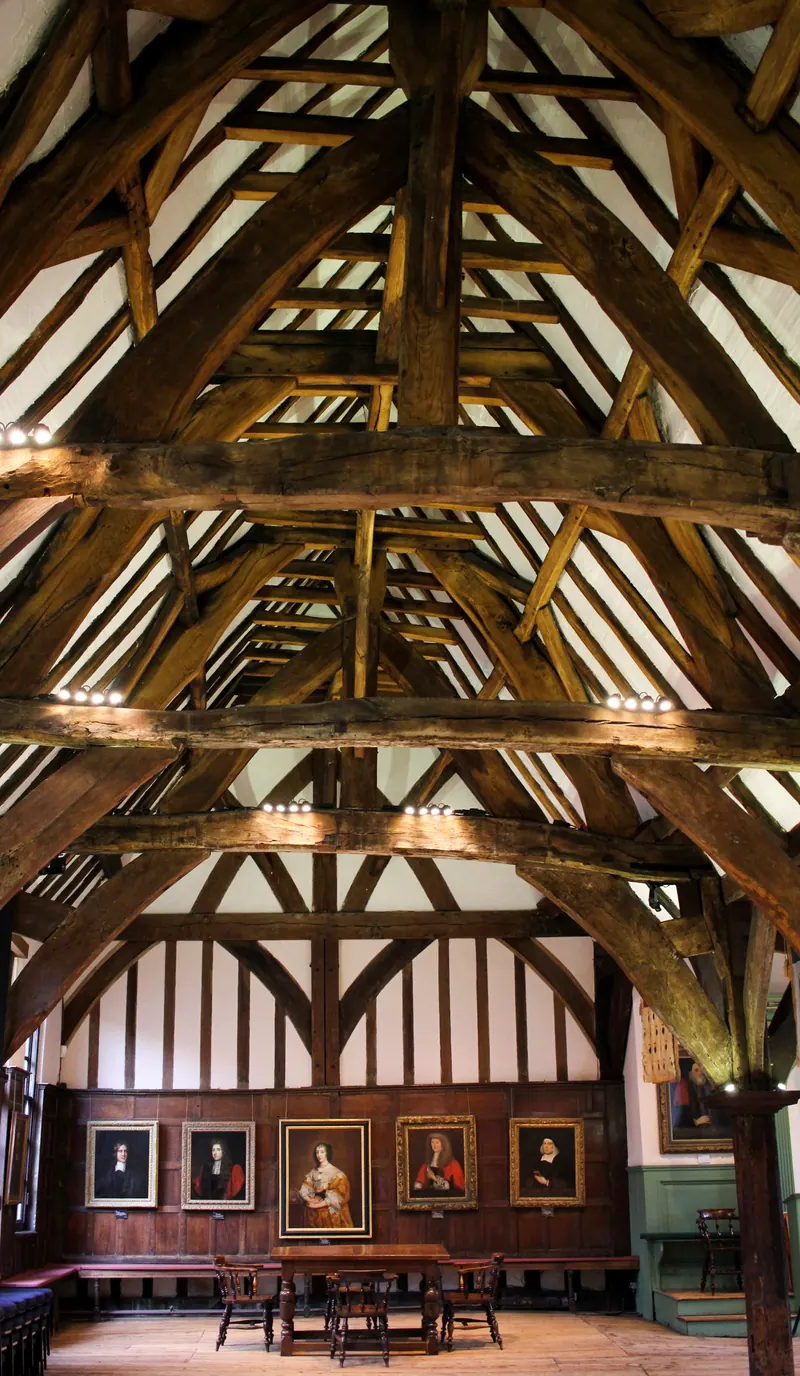
The Great Hall on the upper floor is the largest timber-framed room of its date in the city: oak posts and braces, a great open roof, plastered infill, and a floor that has moved enough over six and a half centuries to be obvious under your feet. The guild met here, ate here, ran its courts here and hung its banners here, and the walls carry portraits of York governors and mayors along with two collections of silver, one of it made and hallmarked in York.
Below, at street level, the undercroft is the older and stranger room: vast oak pillars, stone niches, and the job of caring for the poor. It was built as a hospital and served as an almshouse for York’s poor and elderly for more than 500 years — the trade upstairs paid for the charity downstairs, in the same building, which is exactly how a medieval guild understood itself. The small chapel off the undercroft was built in the early 15th century and is still used.
Also on show: the guild’s Evidence Chest, a 13th-century strongbox for charters and deeds, and the banners carried in civic processions. Allow 45 minutes to an hour, longer if you stop in the Merchants’ Coffee House, which is in the building.
The practical catch is that a hall this good at weddings gets booked for weddings. It closes to visitors for private events, and the Saturday hours are shorter than the rest of the week, so look at the opening times on the hall’s own site the day before you go. There is no advance booking for a normal visit, and payment is by card only.