Medieval Booker

Castle ◆ York

Clifford's Tower

The stone keep of York Castle, built for Henry III between 1245 and 1270 on William the Conqueror's motte of 1068, on the ground where about 150 of York's Jewish community died in March 1190. Since 2022 a free-standing timber deck lets you stand at roof level inside the shell; go up for the plan of the medieval city laid out below you.

Where and when

Where
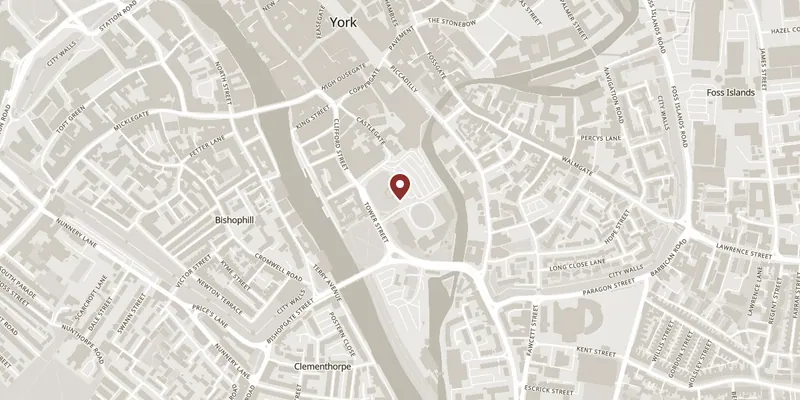
Tower Street, York YO1 9SA, York, England Open in Google Maps Walking directions
Era
Motte raised 1068–69; stone quatrefoil keep c. 1245–70; interior blown out 1684
Opening
Daily 10:00–18:00, last entry 17:30, with extra late Monday evening openings advertised through to 31 August. Winter hours are shorter — check the English Heritage prices and opening times page (as of August 2026)
Price
English Heritage site, free to members. Prices are quoted through the booking calendar in Standard, Saver and Super Saver tiers and the site advertises up to 25% off for booking online before midnight the day before; secondary listings put the standard adult ticket at about £9 as of August 2026. Take the figure for your date from the English Heritage prices page rather than from us
Best time
Late afternoon in clear weather, for low light along the walls from the roof deck. In February the Eye of York below is the JORVIK Viking Festival battlefield.
Good for
Good with childrenFree or cheap
Map showing where Clifford's Tower is
Open in Google Maps Walking directions © MapTiler © OpenStreetMap contributors

Checked

What is Clifford's Tower?

William I threw up two castles in York in 1068–69 after the city resisted him. This is the mound of the larger one. On 16 March 1190, during the anti-Jewish violence that followed Richard I’s coronation, about 150 members of York’s Jewish community — who had taken refuge in the wooden tower on this motte — died there; many killed themselves rather than surrender, and the rest were killed when the tower burned. A plaque at the foot of the mound records it. The stone tower you climb to was begun for Henry III about 1245 and finished around 1270.

Its plan is the unusual part: a quatrefoil, four overlapping round lobes around a central space, with the entrance through a forebuilding on the south side that held a chapel at first-floor level. Almost nothing else like it was built in England. The interior was gutted by an explosion in 1684 and the tower has stood open to the sky ever since, which is why what you see is a shell of thick walls, fireplaces and window embrasures hanging above you rather than rooms.

English Heritage reopened it in April 2022 after inserting a free-standing timber structure: walkways at the level of the vanished first floor and a roof deck at the top of the walls. From there you get the whole medieval town at once — the Minster, the line of the walls, the two rivers, and directly below you the flat green of the Eye of York where the JORVIK Viking Festival stages its finale battle every February.

Practically: the climb up the motte is steep, with three places to stop and rest built into it, and there is a tactile map of the tower at the bottom. Inside, the interpretation is done through fictional voices from the tower’s history rather than object cases, which is a choice you will either like or ignore. Allow 30 to 45 minutes. It stands next to the York Castle Museum in what is otherwise a car park, so the approach is bleak — the view from the deck is the payoff.
What visitors say

4.3 from 6,074 ratings

  • Anne Mei de Smit-van Lisdonk

    5 out of 5 2 weeks ago

    Amazing place. Very informative, great view. Very friendly and helpful staff. On monday evenings they are open and you have a great view of the sunset over York.

    Read this review on Google
  • Ivan Martín

    3 out of 5 a month ago

    My threes star review is just because i think it's overpriced not because the site itself doesn't have historical value, but is quite small and it won't take long enough to see it, the staff is cool and it's plenty of information inside. It was NOT build by william the conqueror it is indeed erected around 1250 in the same place replacing the original timber built one and it has seen a lot of action through the years, be warned: don't expect nothing special nor beautiful views from the top, the 11£ pounds i paid is just for history geeks like myself.

    Read this review on Google
  • Tomek

    4 out of 5 2 months ago

    Clifford tower offers amazing 360 views of York, however I was really disappointed when I got there and found out how expensive the tickets were therefore losing one star. It looks cool and gives you the “old” vibe which York really gives. I recommend to at least visit it and then device if you’d want to enter or not. The hill is quite steep and the stairs, which might be an issue for older people.

    Read this review on Google

Ratings and reviews from Google. See all on Google Maps

Frequently asked questions

What happened at Clifford's Tower in 1190?

About 150 members of York's Jewish community died on this motte on 16 March 1190. They had taken refuge in the wooden castle keep from an armed mob; many died by their own hand and the rest when the tower burned. The stone tower standing today was built about fifty years later.

Can you go to the top of Clifford's Tower?

Yes. English Heritage installed a free-standing timber roof deck and internal walkways in 2022, so you can stand at the top of the walls and look over York. There is no lift, and the steps up the mound are steep with three resting points.

How much does Clifford's Tower cost?

It is an English Heritage site and free to members. Non-members buy timed tickets through the English Heritage site, which offers up to 25% off for booking online in advance; check the current figure for your date on their prices page.

Why is it called Clifford's Tower?

The usual explanation is Roger de Clifford, hanged in chains at the castle in 1322; the Clifford family's long association with the castle is also given as the source of the name.

How long do you need at Clifford's Tower?

Thirty to forty-five minutes, including the climb up the mound. The tower is a single open shell with walkways, not a set of rooms.

Festivals in York

Medieval festivals in York
Featured
Reenactment & Battles Living History & Museums +1

JORVIK Viking Festival

York, England

The JORVIK Viking Festival takes over York for a week every February half-term with a Viking encampment and traders' market in the city centre, a march of hundreds of warriors, talks, crafts, a best-beard contest and a ticketed finale battle with pyrotechnics. Founded in 1985 by the team behind the JORVIK Viking Centre, it is the largest Viking festival in Europe and draws around 40,000 people.

Expected 2027
Family

More places in York

Places in York
Church Start here

York Minster

Present church begun c. 1220; east end consecrated 1472; Great East Window 1405–08

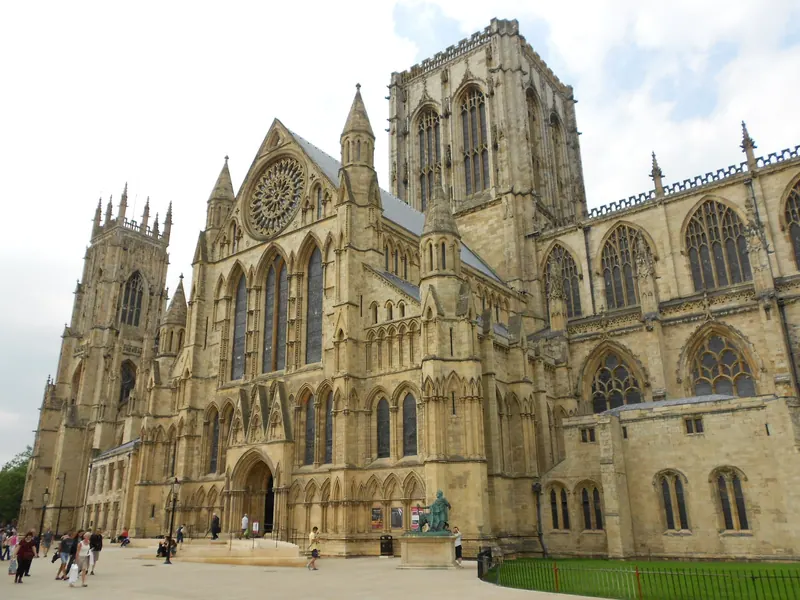
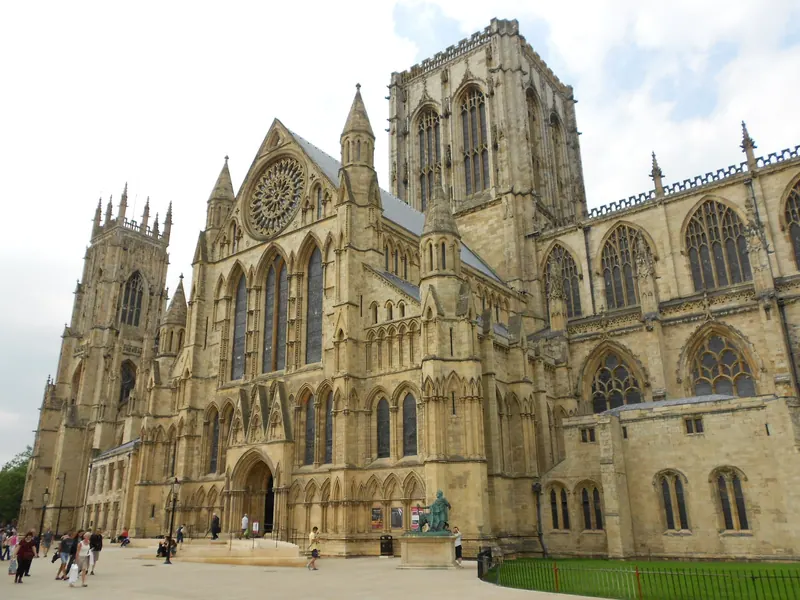
The present church was begun about 1220 and its east end consecrated in 1472, and it holds the largest single expanse of medieval stained glass in Britain. Come at 09:30 on a weekday and stand under the Great East Window while the morning sun is still behind it.

Good with children Works in the rain
Walking directions
View

York City Walls

Mostly 13th–14th century on Roman and Anglo-Scandinavian banks; Red Tower 1490

Two miles of wall-top walkway, mostly 13th- and 14th-century, raised on the Roman rampart and the earth banks of Viking Jorvik — the longest medieval town walls in England, and free. Start at Bootham Bar and walk to Monk Bar with the Minster over your left shoulder; that is the best half-mile of the circuit.

Free or cheap Good with children Quiet corner
Walking directions
Landmark

Merchant Adventurers' Hall

Built 1357–61; chapel early 15th century; company chartered 1581

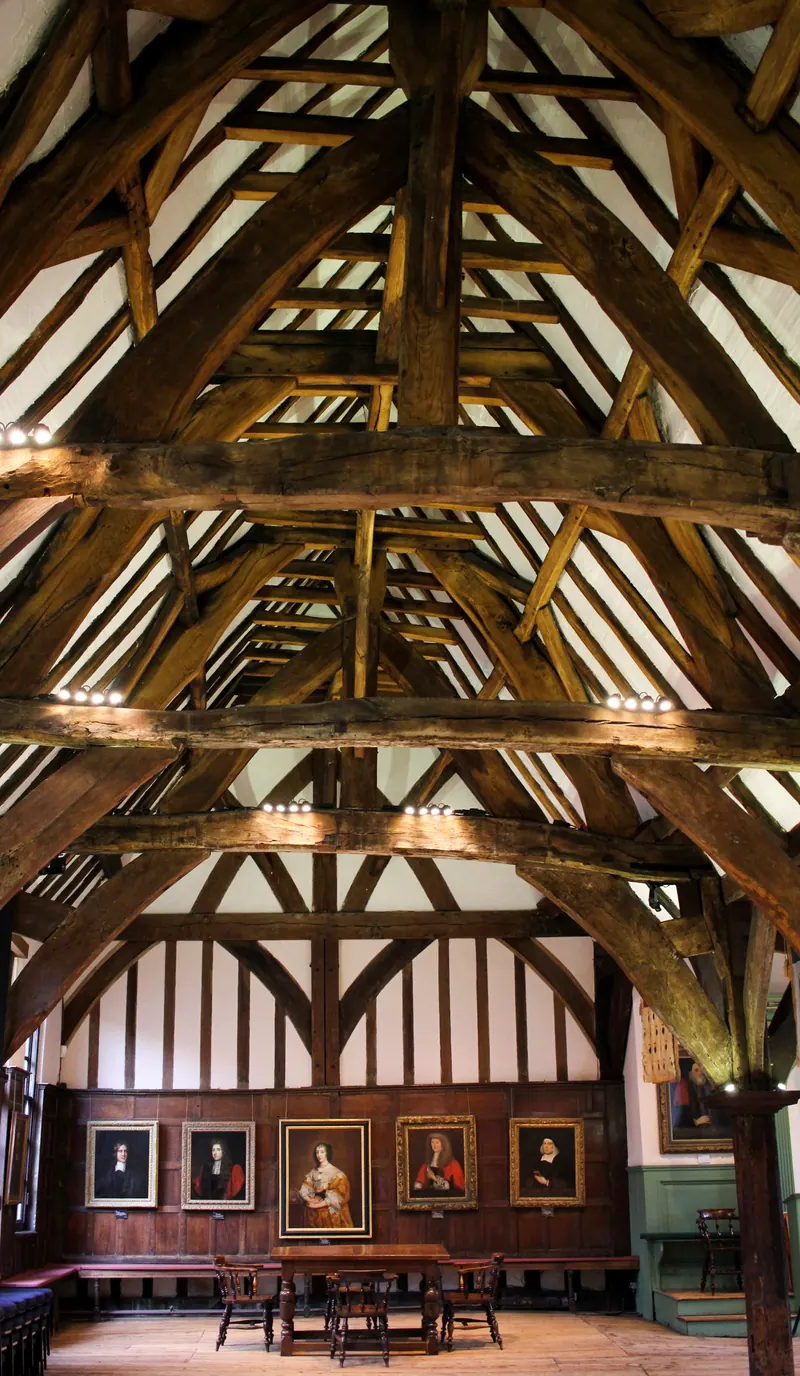
A guildhall built in 1357–61 and still owned by the company that built it, with a timber-framed Great Hall upstairs and the undercroft below that served as an almshouse for over 500 years. £7.50 gets you in, children are free, and the ticket lets you come back for a year.

Works in the rain Quiet corner Free or cheap
Walking directions
All articles