Medieval Booker

Church ◆ York

All Saints North Street

Ten medieval windows in a small parish church, including the Pricke of Conscience window of about 1410 — the fifteen signs of the end of the world, painted straight from a Middle English poem, with the verses written in the glass. Free, open 10:00–16:00 daily, and you will very likely have it to yourself. Bring binoculars.

Where and when

Where
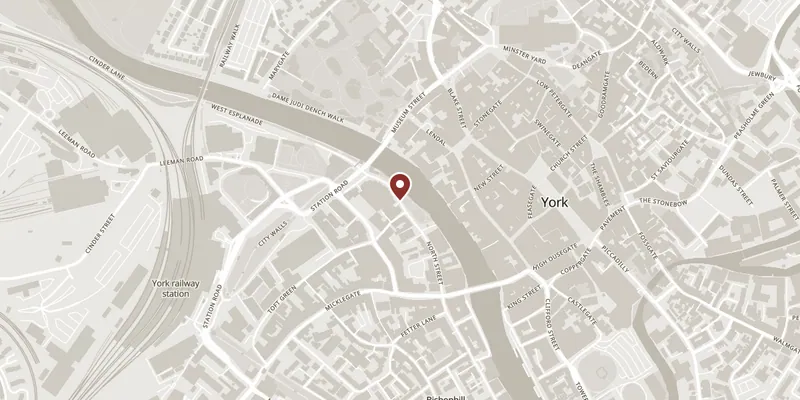
All Saints Church, North Street, York YO1 6JD, York, England Open in Google Maps Walking directions
Era
Nave 12th century, arcades 13th, east end 14th; the great windows c. 1410 and c. 1460
Opening
Open to the public 10:00–16:00 daily, per the church's own site. It is a working parish with a published Mass schedule, and services take precedence — check the service times page on allsaints-northstreet.org.uk if you want a clear run at the glass (as of August 2026)
Price
Free. Entry is free with a retiring collection; the church asks nothing at the door (as of August 2026)
Best time
Mid-morning on a bright day, outside Mass times, when there is enough light through the north aisle to read the Pricke of Conscience panels from the floor.
Good for
Free or cheapQuiet cornerWorks in the rain
Map showing where All Saints North Street is
Open in Google Maps Walking directions © MapTiler © OpenStreetMap contributors

Checked

What is All Saints North Street?

The Minster has the most medieval glass in Britain. This church, ten minutes’ walk away and free, has the most readable. The nave is 12th century, the arcades 13th, the east end and chancel chapels 14th, and into it were fitted about ten medieval windows, three of which are among the best-known pieces of parish glazing in England.

The Pricke of Conscience window (c. 1410, north aisle) illustrates the Fifteen Signs before Doomsday, taken from the Middle English poem of the same name, with the relevant verses lettered into the panels beneath each scene. Read upward: the sea rises above the mountains and then sinks, fish howl, the buildings fall, the stones grind against each other, the dead climb out of their graves, and finally everything burns. It is believed to be the only depiction of that poem anywhere in stained glass, and it is the closest thing in York to seeing directly into a medieval head.

The Corporal Acts of Mercy window (also c. 1410, north aisle) is the counterweight and, for our money, the more useful one. Six of the seven acts of mercy — feeding the hungry, giving drink to the thirsty, clothing the naked, sheltering the stranger, visiting the sick, visiting the prisoner — are shown being carried out by a prosperous York man in the ordinary clothes of about 1410. The donors were the Blackburn family, York merchants. It is a documentary photograph of what people in this city actually wore, sat on and ate off. The third to find is the Nine Orders of Angels (c. 1460).

At the west end is the anchorhold: a cell built in the 15th century, with a squint cut so that the anchoress Emma Raughton could see and hear Mass without leaving it. The present structure was rebuilt in 1910 by E. Ridsdale Tate, and from the early 1930s until the 1970s Brother Walter Wilman lived in the 8 ft by 10 ft cell as anchorite and sacristan of the church. Anchorites are usually a thing you read about; here is one of the very few places in England where the room is still standing and still identified.

Two practical points. The panels are small and set high, so a pair of binoculars turns this from a pleasant twenty minutes into the best hour of your trip. And this is a working Anglo-Catholic shrine church, not a museum: there will be candles, incense and a Mass schedule, and services take priority over sightseeing.

One warning about the name. The lantern tower with the lamp that guided travellers in through the Forest of Galtres belongs to All Saints Pavement, a different York church on the other side of the river. Do not walk to the wrong one.
What visitors say

4.7 from 97 ratings

  • Rachel Williams

    5 out of 5 3 months ago

    Medieval church lots to see beautiful celling and screen.

    Read this review on Google
  • M W

    5 out of 5 4 months ago

    Stunning and gorgeous. The stained glass, decorations and ceilings are amazing.

    Read this review on Google
  • Eddie Walker

    5 out of 5 a year ago

    Visited for the glass, but there is so much else of interest and, remarkably, you may find yourself with this hidden gem all to yourself! The church seems to open regularly for visitors, and there is a service on Thursday mornings, the clergy are very welcoming and friendly. Oh, and there is a superb guide book for sale, which, if I dare to say it, is even better than the Minster’s!

    Read this review on Google

Ratings and reviews from Google. See all on Google Maps

Frequently asked questions

Is All Saints North Street free to visit?

Yes. Entry is free with a retiring collection, and the church is open to the public from 10:00 to 16:00 daily as of August 2026.

What is the Pricke of Conscience window?

A window of about 1410 in the north aisle showing the Fifteen Signs before Doomsday, illustrated from the Middle English poem The Pricke of Conscience, with the verses lettered into the glass. It is believed to be the only depiction of that poem in stained glass anywhere.

What is the Corporal Acts of Mercy window?

A window of about 1410 showing six of the seven corporal acts of mercy performed by a wealthy York man in the everyday dress of the period. It was given by the Blackburn family, York merchants, and it is one of the best records of how ordinary early-15th-century York looked.

Is there really an anchorite's cell at All Saints North Street?

Yes, at the west end. A cell was built in the 15th century with a squint so the anchoress Emma Raughton could hear Mass; it was rebuilt in 1910, and Brother Walter Wilman lived in the 8 ft by 10 ft room as anchorite and sacristan from the early 1930s until the 1970s.

Is this the church with the lantern tower and the Forest of Galtres lamp?

No. That is All Saints Pavement, a different church in York. All Saints North Street is the one with the medieval glass.

Do I need binoculars?

You will get far more out of the visit with them. The painted panels are small and set high in the aisle windows, and the detail — the lettering, the clothes, the faces — is what makes the church worth the walk.

Festivals in York

Medieval festivals in York
Featured
Reenactment & Battles Living History & Museums +1

JORVIK Viking Festival

York, England

The JORVIK Viking Festival takes over York for a week every February half-term with a Viking encampment and traders' market in the city centre, a march of hundreds of warriors, talks, crafts, a best-beard contest and a ticketed finale battle with pyrotechnics. Founded in 1985 by the team behind the JORVIK Viking Centre, it is the largest Viking festival in Europe and draws around 40,000 people.

Expected 2027
Family

More places in York

Places in York
Church Start here

York Minster

Present church begun c. 1220; east end consecrated 1472; Great East Window 1405–08

The present church was begun about 1220 and its east end consecrated in 1472, and it holds the largest single expanse of medieval stained glass in Britain. Come at 09:30 on a weekday and stand under the Great East Window while the morning sun is still behind it.

Good with children Works in the rain
Walking directions
View

York City Walls

Mostly 13th–14th century on Roman and Anglo-Scandinavian banks; Red Tower 1490

Two miles of wall-top walkway, mostly 13th- and 14th-century, raised on the Roman rampart and the earth banks of Viking Jorvik — the longest medieval town walls in England, and free. Start at Bootham Bar and walk to Monk Bar with the Minster over your left shoulder; that is the best half-mile of the circuit.

Free or cheap Good with children Quiet corner
Walking directions
Landmark

Merchant Adventurers' Hall

Built 1357–61; chapel early 15th century; company chartered 1581

A guildhall built in 1357–61 and still owned by the company that built it, with a timber-framed Great Hall upstairs and the undercroft below that served as an almshouse for over 500 years. £7.50 gets you in, children are free, and the ticket lets you come back for a year.

Works in the rain Quiet corner Free or cheap
Walking directions
All articles