Medieval Booker

Museum ◆ Kraków

Old Synagogue

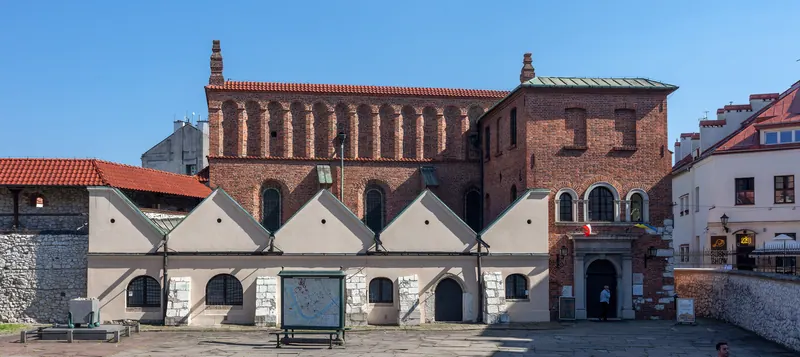
The oldest synagogue building standing in Poland, put up in Kazimierz around 1500 and built against the town wall so it could be defended. It opens at 09:00, earlier than anything else on this list, and Mondays are free.

Where and when

Where
ul. Szeroka 24, 31-053 Kraków (Kazimierz), Kraków, Poland Open in Google Maps Walking directions
Era
Built in Kazimierz around 1500, against the town wall; rebuilt in Renaissance form by Matteo Gucci in the later 16th century
Opening
Monday 10:00–15:00 (free admission day), Tuesday–Sunday 09:00–17:00; last entry 30 minutes before closing for individuals and 60 minutes before for groups. Closed on a list of public holidays published by the museum (as of August 2026)
Price
22 zł normal / 16 zł reduced / 44 zł family up to four; groups 16 zł a head, school groups 12 zł. Free on Mondays, tickets online or at the desk as capacity allows. Audio guide 15 zł, or 52 zł for a family; guided tour 280 zł per group on top of admission. Not included in the museum's "Kraków Średniowieczny" route ticket (as of August 2026)
Best time
At 09:00. It opens an hour or two earlier than most of Kraków's museums, and Szeroka at that hour is a quiet square rather than a bar strip.
Good for
Works in the rainQuiet cornerFree or cheap
Official site
muzeumkrakowa.pl
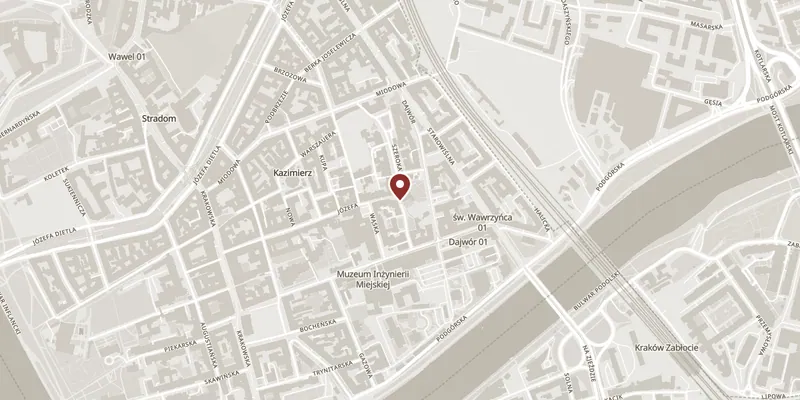
Map showing where Old Synagogue is
Open in Google Maps Walking directions © MapTiler © OpenStreetMap contributors

Checked

What is Old Synagogue?

Kazimierz was not a suburb. Casimir III the Great chartered it in 1335 as a separate town with its own walls, its own market square and its own council, and it stayed separate from Kraków until 1800. In 1494 a fire tore through eight streets by plac Szczepański; the Jews of Kraków were blamed for it and moved out to Kazimierz, and this building went up soon afterwards on what became ulica Szeroka.

It is usually called the oldest surviving synagogue in Poland. Kraków’s own tourism board puts it more carefully — the oldest of Kraków’s synagogues, and one of the best preserved in the country — and that is the version we would repeat.

The thing worth understanding before you go in is that this was built as a defensible building. Its east side was set directly against the defensive wall of Kazimierz. When it burned about fifty years later, the rebuilding was given to Matteo Gucci, a Florentine working in Poland, who added a cantors’ room on the south side and a women’s hall on the north, put a Renaissance parapet on the roof, and kept the military character.

Inside is a tall Gothic prayer hall, with the aron kodesh — the niche in the east wall where the Torah scrolls were kept — and the bimah standing in the middle of the floor inside a wrought-iron cage. Be honest with yourself about what you are looking at: the Germans gutted the building during the occupation and destroyed even the Gothic vaulting and the Renaissance columns, and what stands was restored in the 1950s. It is now a branch of the Museum of Kraków, with a permanent exhibition on the history and culture of Kraków’s Jews — the festival year, the liturgical objects, family life.

As of August 2026 it is 22 zł normal, 16 zł reduced, 44 zł for a family of four, and free on Mondays, when it opens 10:00–15:00; Tuesday to Sunday it runs 09:00–17:00. An audio guide is 15 zł. If you want a synagogue that is still in use rather than a museum, the Remuh is a few doors up Szeroka at No. 40, with its cemetery behind it; the Jewish Religious Community opens them Sunday to Friday 09:00–16:00 and closes on Saturdays and Jewish holidays.
What visitors say

4.4 from 5,639 ratings

  • Burak Yürük

    2 out of 5 3 months ago

    I went there on the night of museums and I don't think its worth even that money. There are only 3 rooms (1 big 2 small) to visit and most stuff are new, barely few old wall pieces and some old antiques. Most of the museum focuses on explaining Jewish traditions and showcase the related stuff with that tradition. You can finish visiting in half hour if you don't read everything one by one.

    Read this review on Google
  • Dragoș Manea

    5 out of 5 5 months ago

    A meaningful place to learn about Jewish history and culture in Kraków. The visit can feel quite emotional and sad, considering everything the community went through, but it’s important and worth experiencing. A quiet, reflective space with a lot of history behind it.

    Read this review on Google
  • Travis Hydzik

    5 out of 5 7 months ago

    Visiting this 15th century landmark was a highlight of our trip that provided a meaningful educational experience for the whole family while we stayed warm. The interior was a welcome escape from the winter chill and allowed us to spend plenty of time looking through the fascinating cultural exhibits in the museum. The architecture itself is stunning and beautifully restored and the respectful atmosphere encouraged great conversations with our children.

    Read this review on Google

Ratings and reviews from Google. See all on Google Maps

Frequently asked questions

Is the Old Synagogue in Kraków the oldest in Poland?

It is usually described as the oldest surviving synagogue building in Poland. Kraków's tourism board words it as the oldest of Kraków's synagogues and one of the best preserved in the country, which is the safer claim. It was built in Kazimierz around 1500.

How much does the Old Synagogue cost?

22 zł normal, 16 zł reduced, 44 zł for a family of up to four as of August 2026, with free admission on Mondays. An audio guide is 15 zł. It is not covered by the museum's Medieval Kraków route ticket.

Is the Old Synagogue still used for worship?

No. It is a branch of the Museum of Kraków, with a permanent exhibition on the history and culture of Kraków's Jews. The working synagogue in Kazimierz is the Remuh, at ul. Szeroka 40.

Why was the Old Synagogue built against the town wall?

Because Kazimierz was a separate walled town, chartered by Casimir III the Great in 1335, and the synagogue's east side was set against its defences. Matteo Gucci's 16th-century rebuilding kept that fortified character while adding a Renaissance parapet, a cantors' room and a women's hall.

How much of the Old Synagogue is original?

Less than it looks. German forces wrecked the interior during the occupation, destroying the Gothic vaulting and the Renaissance columns among much else, and the building was restored in the 1950s. The plan, the masonry shell and the aron kodesh niche are the continuity.

Can you visit the Remuh cemetery too?

Yes, separately. The Remuh synagogue and its cemetery are at ul. Szeroka 40, run by the Jewish Religious Community in Kraków, open Sunday to Friday 09:00–16:00 and closed on Saturdays and Jewish holidays. The community does not publish an admission price online, so ask at the gate.

Festivals in Kraków

Medieval festivals in Kraków
Historic City Celebrations

Lajkonik Procession

Kraków, Poland

Once a year a bearded rider in Tatar dress on a white hobby-horse — the Lajkonik, or Konik Zwierzyniecki — parades across Kraków with a band and a costumed retinue, from Zwierzyniec to the Main Market Square, tapping bystanders with his mace for luck. The pageant is held on the octave of Corpus Christi, the Thursday eight days after Corpus Christi, and is organised by the Museum of Kraków; the 2026 edition was on 11 June and 3 June 2027 is expected.

Expected 2027
Family

More places in Kraków

Places in Kraków
Church Start here

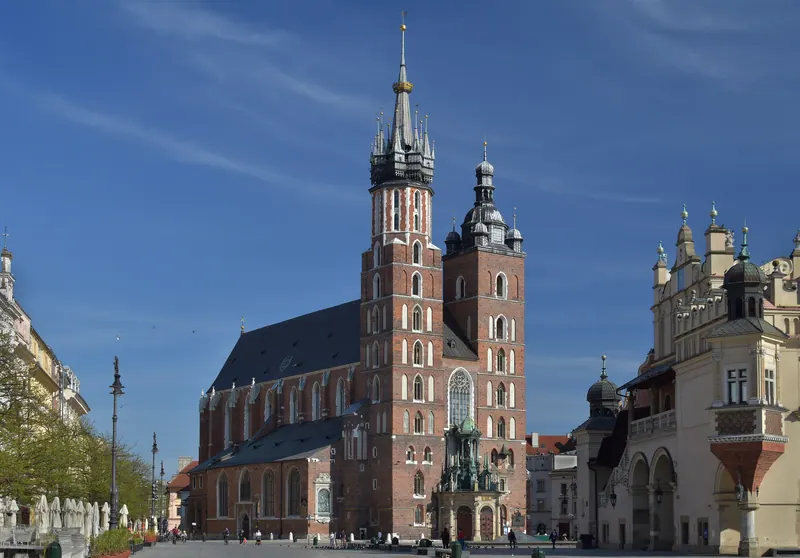
St Mary's Basilica

Chancel from the 1350s, nave completed late 14th century; Veit Stoss altarpiece 1477–89

Veit Stoss spent twelve years, from 1477 to 1489, carving the largest Gothic altarpiece in the world for the burghers of Kraków, and it still stands in the chancel it was made for. Be inside before 11:50, when the wings are opened by hand; the hejnał is played from the taller tower on the hour and breaks off mid-phrase.

Works in the rain Good with children
Walking directions
Castle

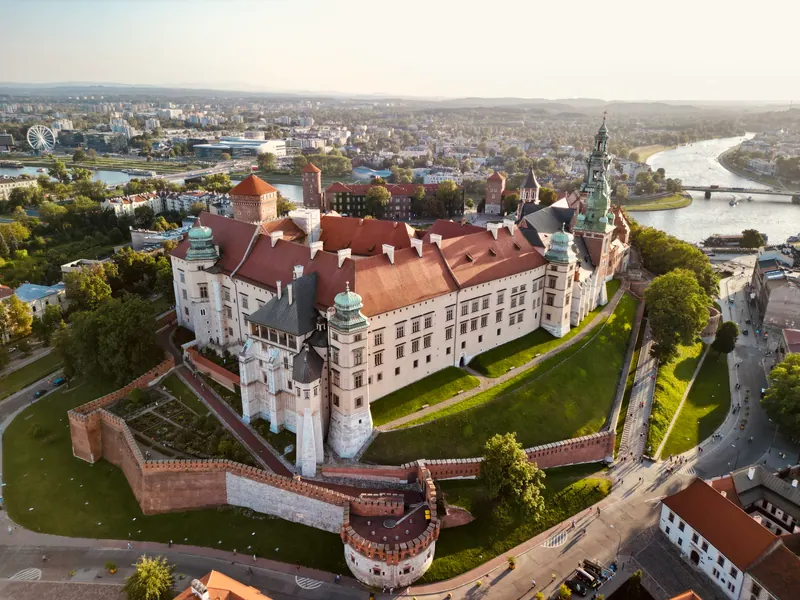
Wawel Royal Castle

Royal seat from the 11th century; Gothic castle of Casimir the Great, 14th century; Renaissance rebuilding 1507–1536

The seat of the Polish kings on the limestone hill above the Vistula — a Gothic castle of Casimir the Great rebuilt from 1507 around a three-tier arcaded courtyard. Nothing here is a single ticket: the two castle floors, the Crown Treasury and Armoury, the Castle Dungeons and the Dragon's Den are sold separately in timed slots with daily caps, so buy online before you walk up the hill.

Good with children Works in the rain
Walking directions
Church

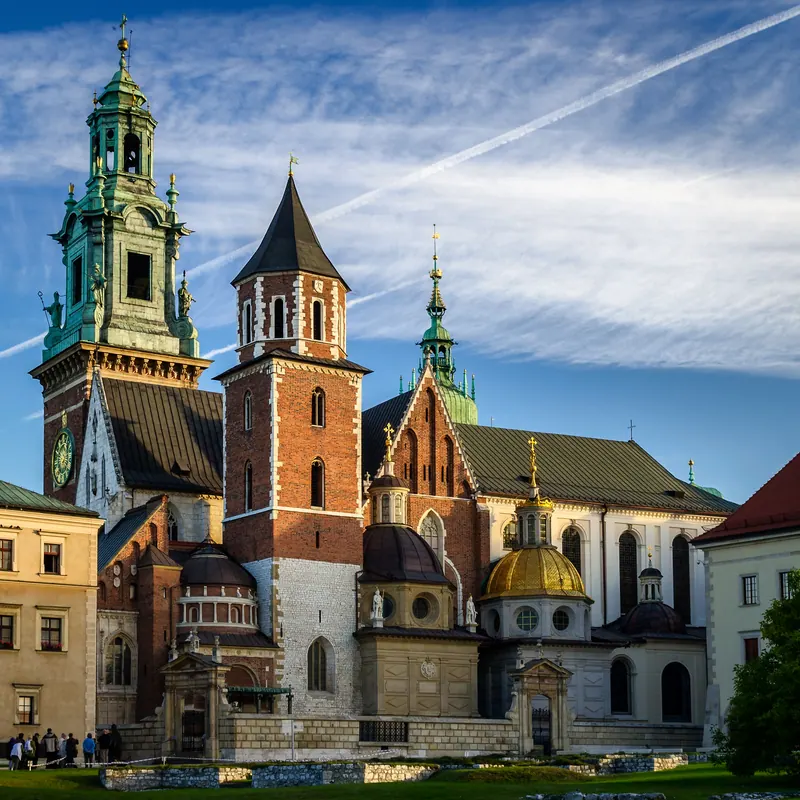
Wawel Cathedral

Gothic cathedral begun 1320, consecrated 1364; St Leonard's Crypt c. 1090–1118; Sigismund Bell cast 1520

The coronation and burial church of the Polish monarchy — kings crowned here from 1320 to 1734, and most of them buried under the floor. It is ticketed separately from the castle and the castle box office will not sell it to you: one ticket of 26 zł covers the cathedral, the royal crypts, the Cathedral Museum and the wooden climb to the Sigismund Bell of 1520.

Works in the rain
Walking directions