Medieval Booker

Church ◆ Kraków

St Mary's Basilica

Veit Stoss spent twelve years, from 1477 to 1489, carving the largest Gothic altarpiece in the world for the burghers of Kraków, and it still stands in the chancel it was made for. Be inside before 11:50, when the wings are opened by hand; the hejnał is played from the taller tower on the hour and breaks off mid-phrase.

Where and when

Where
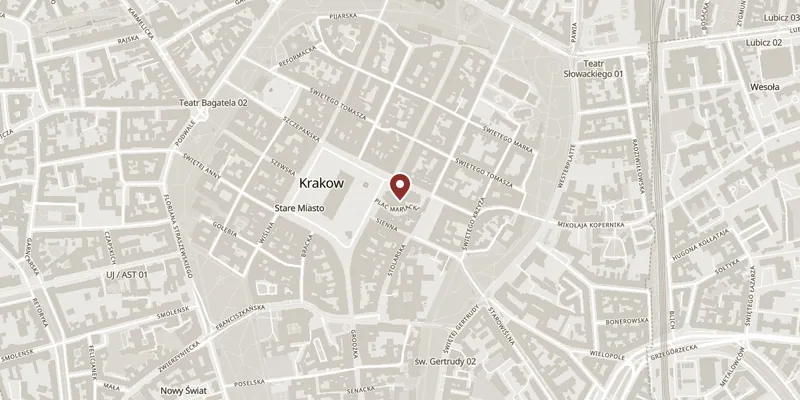
plac Mariacki 5, 31-042 Kraków (tickets at plac Mariacki 7), Kraków, Poland Open in Google Maps Walking directions
Era
Chancel from the 1350s, nave completed late 14th century; Veit Stoss altarpiece 1477–89
Opening
Basilica for visitors Monday–Saturday 11:30–18:00, Sundays and holidays 14:00–18:00; the altarpiece is opened at 11:50 (14:10 Sundays and holidays) and closed at 18:00. Tower Tuesday–Saturday 11:00–17:30 and Sundays and holidays 13:00–17:30, entries every 25 minutes from 11:05, maximum 15 people, tickets sold on the day only and no under-7s; it can close in bad weather (as of August 2026)
Price
Basilica 20 zł normal / 10 zł reduced (ages 7–18, students to 26, over-65s). Tower 20 zł / 15 zł. Both sold only at the visitor point, plac Mariacki 7 (as of August 2026)
Best time
Buy the basilica ticket at 11:30, be in the nave by 11:45, and watch the altarpiece open. The hourly hejnał is free from the square at any time.
Good for
Works in the rainGood with children
Official site
mariacki.com
Map showing where St Mary's Basilica is
Open in Google Maps Walking directions © MapTiler © OpenStreetMap contributors

Checked

What is St Mary's Basilica?

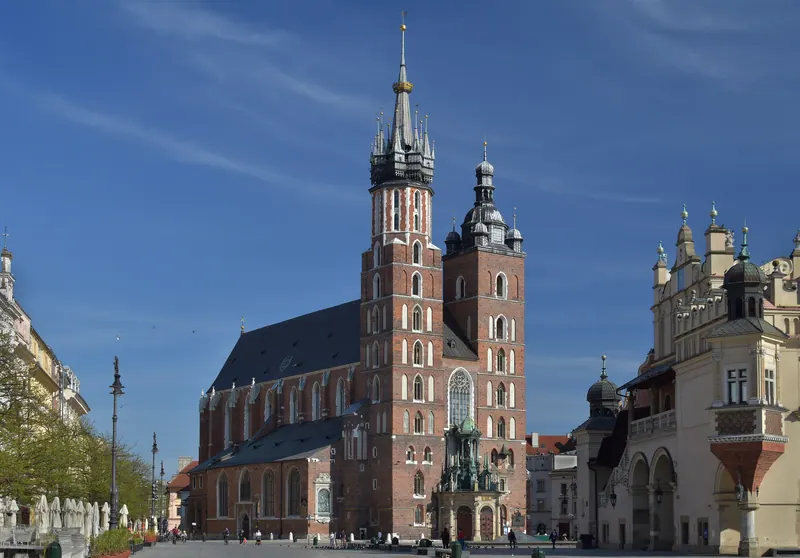
The parish church of the merchants who ran the square. The present brick building was raised on the burnt site of an earlier church destroyed in the Mongol raid of 1241: the chancel from the 1350s, the nave finished by the end of the 14th century. Its two towers are deliberately unequal — the taller carries the watch and the trumpet, the shorter the bells.

The altarpiece is the reason to come. Veit Stoss, called Wit Stwosz in Poland, was contracted by the city and worked on it from 1477 to 1489. It is a limewood and oak polyptych about 13 metres high and 11 metres wide with its wings open; the central scene is the Dormition of the Virgin, the figures in it are life-and-a-half size, and there are some two hundred of them across the whole work. The Germans dismantled it in 1939 and shipped it out; it was recovered from Nuremberg in 1946, and came back from a six-year conservation campaign in 2021. The wings are opened by hand at 11:50 each day (14:10 on Sundays and holidays) and closed at 18:00. Arrive before that and you see the outer, painted faces; stay and you watch it open.

Around it, look for the 14th-century stained glass in the chancel — some of the oldest surviving in Poland — and the blue vault of painted stars, which is Jan Matejko’s work of 1889–91, not medieval.

The hejnał mariacki is played from the taller tower every hour, on the hour, four times over: to Wawel for the king, to the square for the councillors, to the Florian Gate for arriving guests, and to the fire station, whose trumpeters have kept the duty. The tune stops mid-note. The bugle call is documented in the city’s pay records from 1392; the story that a trumpeter was shot in the throat by a Tatar arrow in 1241 is a 20th-century invention, popularised by an American children’s book of 1928. The midday call is broadcast live across Poland.

Tourists use the south door, not the west door, which is kept for prayer.
What visitors say

4.8 from 20,086 ratings

  • Loredana-Ștefania Ion

    5 out of 5 2 months ago

    A truly beautiful and historic church in the heart of Kraków. The architecture, interior decorations, and atmosphere are absolutely breathtaking. What makes this place even more special is the tradition of the Hejnał Mariacki trumpet call, played from the tower every hour. According to local legend, centuries ago a watchman sounded the alarm to warn the city of an approaching attack and was struck by an arrow while playing. The melody still ends abruptly today in memory of his sacrifice. Whether you come for the history, the culture, or the stunning architecture, St. Mary's Basilica is a must-visit in Kraków.

    Read this review on Google
  • Mustafa Barış

    5 out of 5 2 months ago

    Awesome place, it is full of details. The walls, the ceiling pillars it was fantastic. This is the one of most beautiful cathedral/ basilica I have ever visited. İt is also quite cheap. It cost 10 pln for eu/eez students. İt takes about 30 min to visit.

    Read this review on Google
  • Lj Scorpio

    4 out of 5 4 months ago

    This place was really beautiful inside, truly dramatic and awe inspiring. At night it’s lit up and you hear a fanfare every hour which is lovely when you’re sat in the square. My only comments are that an audio guide would really enhance the experience and the queue for tickets was persistently jumped by tour guides.

    Read this review on Google

Ratings and reviews from Google. See all on Google Maps

Frequently asked questions

What time does the Veit Stoss altarpiece open?

At 11:50 Monday to Saturday, and at 14:10 on Sundays and holidays. It is closed at 18:00. On some Sundays and solemnities there is no opening ceremony because the altarpiece stays open through the liturgy.

How much does it cost to enter St Mary's Basilica in Kraków?

20 zł normal and 10 zł reduced as of August 2026, bought at the visitor service point at plac Mariacki 7. The tower is a separate 20 zł / 15 zł ticket.

Can you climb the tower of St Mary's Basilica?

Yes, the taller tower, Tuesday to Saturday 11:00–17:30 and Sundays and holidays 13:00–17:30. Entries leave every 25 minutes from 11:05 in groups of no more than 15, tickets are sold only on the day at plac Mariacki 7, and children under 7 are not admitted.

Why does the Kraków trumpet call stop suddenly?

By tradition, because a trumpeter was struck in the throat by an arrow while sounding the alarm during the Mongol attack of 1241. That story is a 20th-century one; the bugle call itself is documented in city records from 1392.

How often is the hejnał played?

Every hour, on the hour, four times in succession from the taller tower — towards Wawel, the market square, the Florian Gate and the fire station. It is played by trumpeters of the Kraków fire brigade, and the noon call is broadcast live nationally.

Festivals in Kraków

Medieval festivals in Kraków
Historic City Celebrations

Lajkonik Procession

Kraków, Poland

Once a year a bearded rider in Tatar dress on a white hobby-horse — the Lajkonik, or Konik Zwierzyniecki — parades across Kraków with a band and a costumed retinue, from Zwierzyniec to the Main Market Square, tapping bystanders with his mace for luck. The pageant is held on the octave of Corpus Christi, the Thursday eight days after Corpus Christi, and is organised by the Museum of Kraków; the 2026 edition was on 11 June and 3 June 2027 is expected.

Expected 2027
Family

More places in Kraków

Places in Kraków
Castle

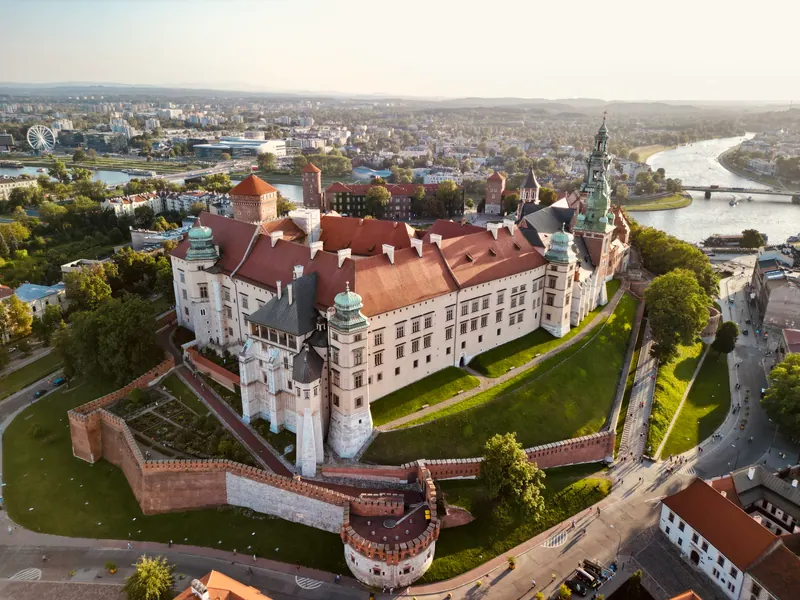
Wawel Royal Castle

Royal seat from the 11th century; Gothic castle of Casimir the Great, 14th century; Renaissance rebuilding 1507–1536

The seat of the Polish kings on the limestone hill above the Vistula — a Gothic castle of Casimir the Great rebuilt from 1507 around a three-tier arcaded courtyard. Nothing here is a single ticket: the two castle floors, the Crown Treasury and Armoury, the Castle Dungeons and the Dragon's Den are sold separately in timed slots with daily caps, so buy online before you walk up the hill.

Good with children Works in the rain
Walking directions
Church

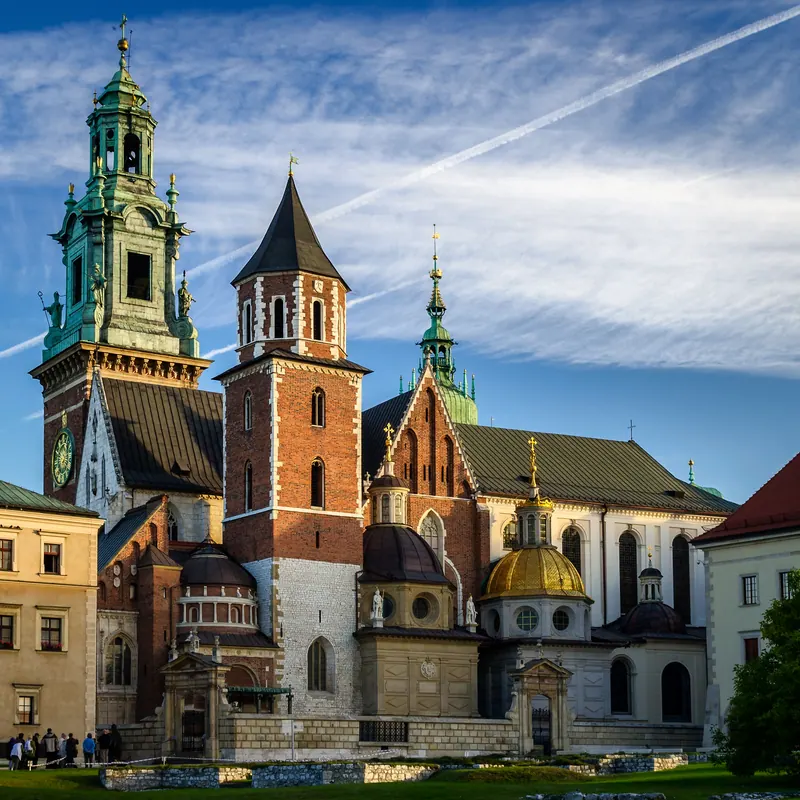
Wawel Cathedral

Gothic cathedral begun 1320, consecrated 1364; St Leonard's Crypt c. 1090–1118; Sigismund Bell cast 1520

The coronation and burial church of the Polish monarchy — kings crowned here from 1320 to 1734, and most of them buried under the floor. It is ticketed separately from the castle and the castle box office will not sell it to you: one ticket of 26 zł covers the cathedral, the royal crypts, the Cathedral Museum and the wooden climb to the Sigismund Bell of 1520.

Works in the rain
Walking directions
Museum

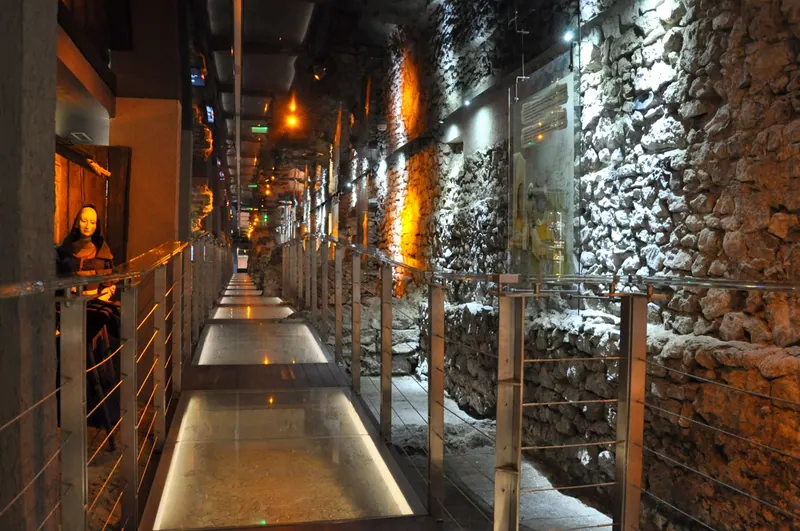
Rynek Underground

Excavated 2005–2010; shows the market square from the 11th century to the late Middle Ages

Nearly 4,000 square metres of the medieval market square, dug out between 2005 and 2010 and left exactly where it was found: merchants' stalls, road surfaces, a 693 kg block of lead, graves from before the town was chartered. The entrance is in the square between the Cloth Hall and St Mary's, Tuesday is free but capped, and it is closed on the second Monday of every month.

Works in the rain Good with children
Walking directions