Medieval Booker

Castle ◆ Carcassonne

The four castles of Lastours

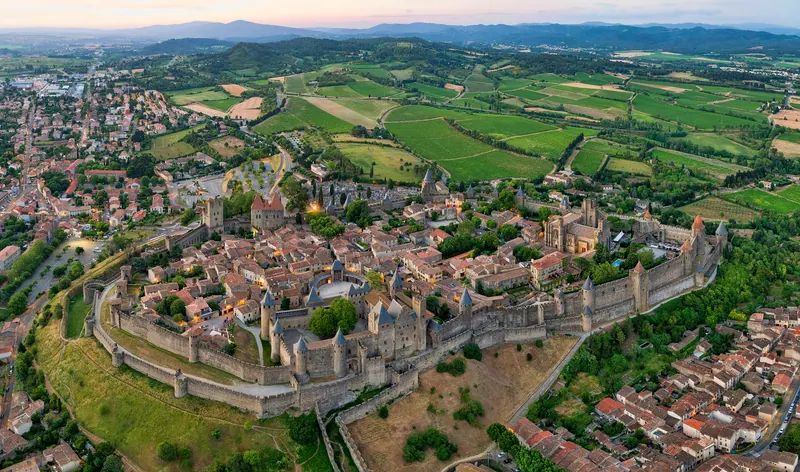
Four small fortresses on one rock spine 18 km north of Carcassonne — Cabaret, Tour Régine, Surdespine and Quertinheux — on the site where Pierre-Roger de Cabaret held out against Simon de Montfort in 1209 and only came to terms in 1211. It is the closest, best day trip from the city, it is now UNESCO-listed, and the honest headline is that the towers you climb to are not the Cathar castles: they are the ones the king built afterwards so there would never be another Cabaret.

Where and when

Where
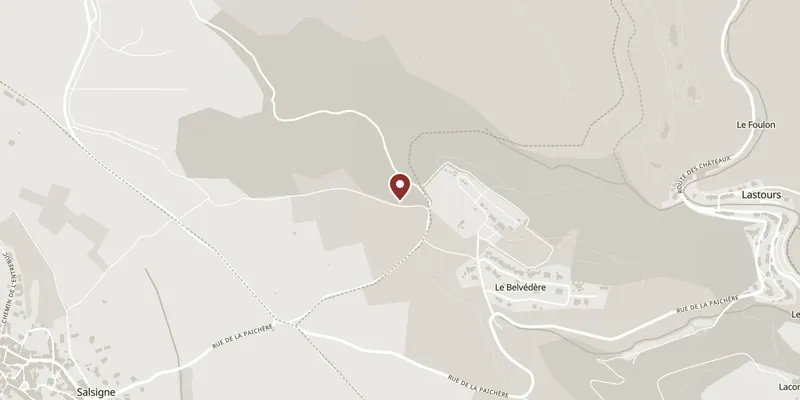
22 route des 4 Châteaux, 11600 Lastours (18 km north of Carcassonne), Carcassonne, France Open in Google Maps Walking directions
Era
Cathar-era castrum of Cabaret, besieged 1209, surrendered 1211, destroyed 1240; four royal Capetian forts rebuilt on the crest in the later 13th century; UNESCO-inscribed 26 July 2026
Opening
The operator's calendar: February–March 09:30–16:30, April–June 09:30–18:00, July–August 08:30–18:00, September 09:00–17:30, October–December 09:30–16:30. Closed all January and on 25 December. Aude Tourisme's 2026 listing gives 09:00–19:00 for July–August, so the summer hours are worth a phone call. The belvedere runs April–June 10:30–17:30, July–August 08:30–18:00, September 10:00–17:00, October 09:30–16:30, and is closed in November. The site may shut in the afternoon during extreme heat, so phone ahead in July and August (as of August 2026)
Price
Castles: adult €9, 16–25 €6, child 6–15 €4.50, under 6 free, reduced (jobseekers, CMI card) €6. Family 1 adult + 2 children €15, 2 adults + 2 children €23, extra child €3.50. Belvedere alone: €3 adult, free under 16. The operator's tariff page does not print a year; these were read in August 2026
Best time
First thing in the morning, May or September. The path is open rock with no shade, the light on the four silhouettes is best early, and you avoid the heat-closure risk entirely. Autumn is the honest sweet spot: the hills are still warm and the site is nearly empty.
Good for
Good with children
Official site
www.lastourisme.fr
Map showing where The four castles of Lastours is
Open in Google Maps Walking directions © MapTiler © OpenStreetMap contributors

Checked

What is The four castles of Lastours?

Cabaret was one of the hard places. In 1209 Simon de Montfort besieged it and failed; Pierre-Roger de Cabaret, a man loyal to the Trencavels, later captured Bouchard de Marly, one of Montfort’s own, and traded him for terms — he surrendered on favourable conditions in 1211, which in that war counts as winning. The site sheltered Cathar bishops and a religious community, and a castral village, a castrum, ran along the ridge and down the slope beneath the towers.

Then be clear about what you are walking on, because it is the same problem as the Cité. After resistance in the region collapsed in 1229, the crown had the castrum destroyed in 1240, and royal authority rebuilt the crest as four smaller, separate forts in Capetian military style, each with its own garrison, in the second half of the 13th century. The fourth tower, Tour Régine, is a purely royal addition, planted there to say who was in charge. So: the resistance is 12th- and early-13th-century and mostly underground; the standing architecture is the French crown’s answer to it. The excavated quarters of the castrum — houses, forges, cisterns, a chapel and a cemetery — and the finds from thirty years of digging are what actually survive from Pierre-Roger’s Cabaret, and they are displayed on site.

The castles sit at only 260 to 285 m on about 12 hectares of garrigue, holm oak and maquis in the foothills of the Montagne Noire. It does not sound like much until you are on the path. The visit is an uphill loop on rock and steps from the old textile mill at the bottom; the operator suggests around 2h30, the Aude tourist board says 2 hours, and there is essentially no shade. Wear real shoes and carry water. The site warns that it may close in the afternoon during extreme heat — phone before you go in July or August.

On 26 July 2026 Lastours was inscribed on the UNESCO World Heritage list as one of the eight Forteresses royales capétiennes du Languedoc, alongside the Cité de Carcassonne itself, Peyrepertuse, Quéribus, Termes, Aguilar, Puilaurens and Montségur. If you have seen the Château Comtal, this is the same story, told from the other end: the mountain the fortress was built to control.

There is also a belvedere on the far side of the valley, a separate, much easier visit that gives you all four castles in one frame — €3 for adults, free under 16, and closed in November. It is the picture everyone takes, and it is the right answer if the climb is not on.
What visitors say

4.7 from 2,887 ratings

  • Arne Kittler

    4 out of 5 a month ago

    Easy to find round trip. English translations of the information tableaus on the way would have been helpful

    Read this review on Google
  • Michel G

    1 out of 5 a month ago

    We visited the site on our way to Carcassonne and wanted to see the towers from the "Belvedere" that has been organized by the municipality to channel the visitors. The viewpoint which is accessible for a fee of 5 euro per person's is open until 5:30 pm but the entrance only until 5:00 pm. On that afternoon we were in all evidence the only visitors and reached the site at 5:05 pm. We were as a result refused entrance in a fairly harsh way and the argument that we had driven almost 2000 km to get there did not help. The municipality lost an easy 20 euro revenue and gained this negative review. A typical lose-lose situation! Business sense is not inborn everywhere!

    Read this review on Google
  • terike

    5 out of 5 4 months ago

    Definitely worth visiting this charming mountain town with its four castles high above, although you had better be fit to handle the hills and stairs.

    Read this review on Google

Ratings and reviews from Google. See all on Google Maps

Frequently asked questions

How far is Lastours from Carcassonne?

18 km north, up the Orbiel valley into the foothills of the Montagne Noire. The Carcassonne tourist office calls it 15 minutes; the last stretch is a narrow valley road, so allow more, and it is a drive rather than a bus trip.

How much does Lastours cost?

€9 adult, €6 for 16–25s, €4.50 for children 6–15 and free under 6, as read in August 2026. A family of two adults and two children is €23. The belvedere on its own is €3 for adults and free under 16.

Are the castles of Lastours Cathar castles?

Not the buildings you climb to. Cabaret was a Cathar stronghold and held out against Simon de Montfort in 1209, but the crown destroyed the castrum in 1240 and rebuilt the crest as four royal Capetian forts later that century. The Cathar-era village survives as excavated foundations below, not as the standing towers.

How hard is the climb at Lastours?

Steady and rocky. The circuit runs uphill from the old mill at the bottom over rock and steps, takes roughly two to two and a half hours, and has almost no shade. Proper shoes and water are not optional in summer.

Can you see the castles without climbing?

Yes. The belvedere across the valley is a separate, easy visit with all four castles in one view, €3 for adults and free under 16. It is closed in November.

Is Lastours a UNESCO World Heritage site?

Yes, since 26 July 2026, as one of the eight Forteresses royales capétiennes du Languedoc — with the Cité de Carcassonne, Peyrepertuse, Quéribus, Termes, Aguilar, Puilaurens and Montségur.

Festivals in Carcassonne

Medieval festivals in Carcassonne
Featured
Jousting & Tournaments Castle Events

Tournoi de Chevalerie de Carcassonne (Knights' Tournament and Falconry Show)

Carcassonne, France

Every summer the lices between the double walls of the Cité de Carcassonne host a daily knights' tournament, a 45-minute show of mounted combat in armour, billed in 2026 as 'Tournois de chevalerie et spectacle de fauconnerie' after a falconry display was added. The 2026 season runs from 12 July to 27 August with three performances a day, every day except Saturday.

On now until
Family

More places in Carcassonne

Places in Carcassonne
Castle Start here

Château Comtal and the rampart walk

Trencavel palatium c. 1130 on a Gallo-Roman wall; royal fortress after 1226; restored by Viollet-le-Duc from 1853

The Trencavel viscounts' palace of about 1130, rebuilt by the French crown after 1226 into a castle inside the castle, and the only ticketed part of the Cité. The ticket buys the castle, its moat and barbican, the wall walk on the inner rampart and the lapidary museum — and it is the only way to stand on the Gallo-Roman wall instead of under it.

Good with children Best in the evening
Walking directions
Landmark

The lices and the double walls

Inner wall Gallo-Roman (late 3rd–4th c.) and 12th-century; outer wall and lices built for Louis IX and Philip III after 1240

The strip of grass between Carcassonne's two rings of wall is free, open at all hours and usually near-empty, and it is where the fortress finally makes sense — outer wall on one side, Gallo-Roman and 12th-century inner wall on the other, both close enough to touch. Go in at the Porte Narbonnaise, drop straight down into the lices, and walk to the Tour de l'Évêque, the one tower built across the strip to cut it in two.

Free or cheap Quiet corner Best in the evening
Walking directions
Church

Basilica of Saints Nazarius and Celsus

Romanesque nave from 1096; Gothic transept and choir 1269–1330; cathedral until 1801, minor basilica since 1898

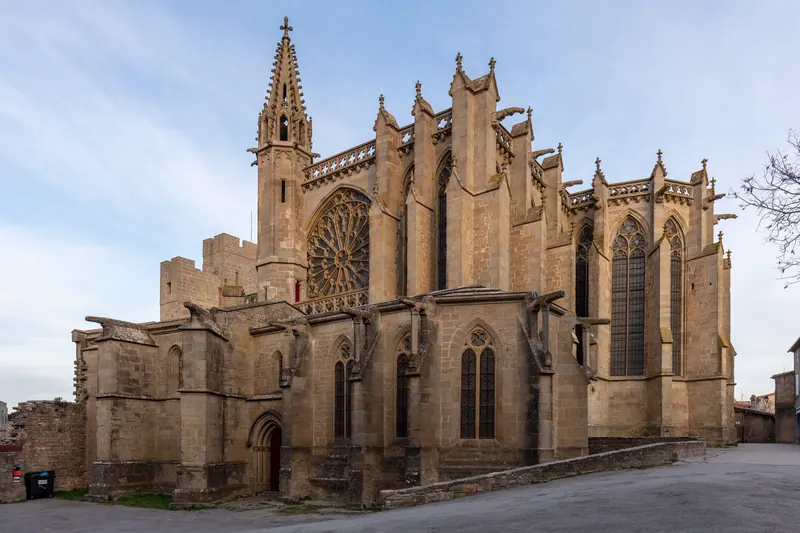
The Cité's cathedral until 1801: a Romanesque nave whose building stones Urban II blessed on 11 June 1096, welded to a Rayonnant Gothic transept and choir put up between 1269 and 1330. Entry is free, and the 13th- and 14th-century glass — which the Aude tourist board calls the finest in the Midi — is the reason to go in.

Free or cheap Quiet corner Works in the rain
Walking directions
All articles