Medieval Booker

Church ◆ Carcassonne

Basilica of Saints Nazarius and Celsus

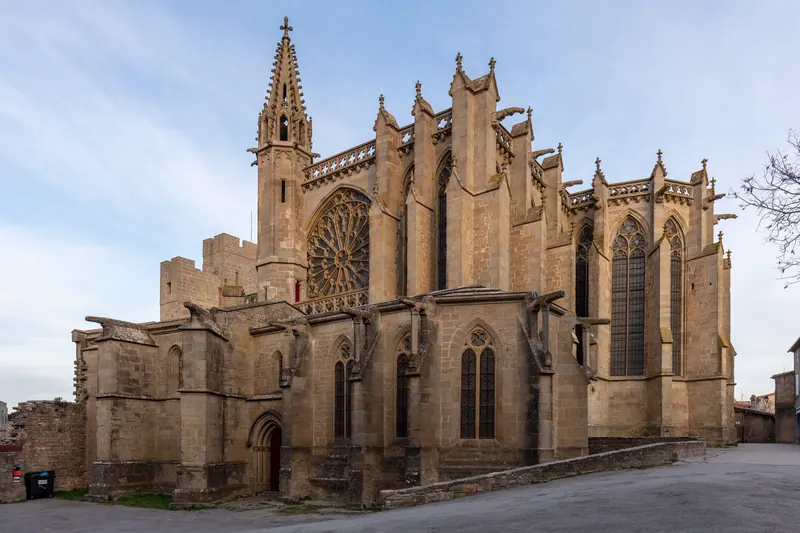
The Cité's cathedral until 1801: a Romanesque nave whose building stones Urban II blessed on 11 June 1096, welded to a Rayonnant Gothic transept and choir put up between 1269 and 1330. Entry is free, and the 13th- and 14th-century glass — which the Aude tourist board calls the finest in the Midi — is the reason to go in.

Where and when

Where
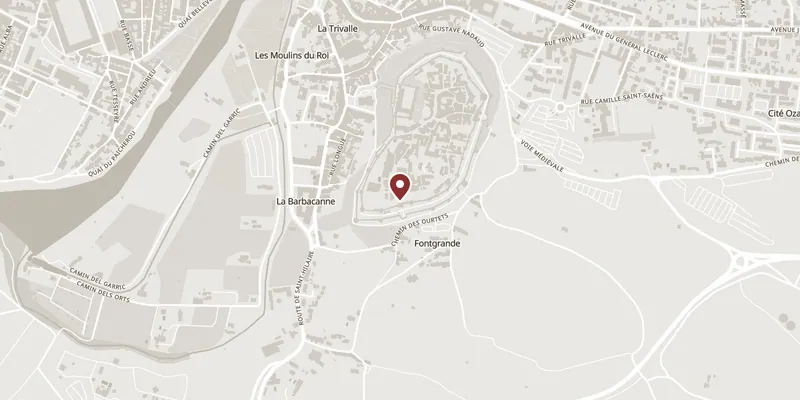
Place Saint-Nazaire, La Cité, 11000 Carcassonne, Carcassonne, France Open in Google Maps Walking directions
Era
Romanesque nave from 1096; Gothic transept and choir 1269–1330; cathedral until 1801, minor basilica since 1898
Opening
Aude Tourisme lists 1 April–30 September Monday–Saturday 09:00–19:00, Sunday 09:00–10:45 and 12:30–19:00; 1 October–31 December Monday–Saturday 09:00–17:30 with the same Sunday break. Other listings give a midday closure of roughly 12:00–13:45, so do not count on the middle of the day. Visits stop for the 11:00 Sunday mass (as of August 2026)
Price
Free to enter (as of August 2026)
Best time
Mid-afternoon on a clear day, for the southern rose and the choir glass. It is also the coolest room in the Cité in August.
Good for
Free or cheapQuiet cornerWorks in the rain
Official site
www.carcassonne.fr
Map showing where Basilica of Saints Nazarius and Celsus is
Open in Google Maps Walking directions © MapTiler © OpenStreetMap contributors

Checked

What is Basilica of Saints Nazarius and Celsus?

Pope Urban II came through Carcassonne in the summer of 1096 preaching the First Crusade and blessed the stones of the new cathedral on 11 June. The nave is that building: round arches, heavy piers, thick walls, and dim even at midday. It served as the cathedral of Carcassonne until 1801, when the bishop’s seat moved down to Saint-Michel in the bastide, and Leo XIII gave it the rank of minor basilica in 1898.

Walk east and the building changes century mid-stride. The transept and choir were rebuilt between 1269 and 1330 — after the crusade, under French rule — in Rayonnant Gothic: thin piers, height, and wall replaced by window wherever the structure allowed. Stand at the crossing and look west, then east. Two centuries and two political orders in one sightline, and it is the clearest architectural before-and-after in the Cité. The choir glass and the two transept rose windows are 13th and 14th century. Sit under the southern rose in the afternoon, when it is the only one getting direct sun.

The crusade is buried here too, briefly. Simon de Montfort, who took Trencavel’s title and led the Albigensian Crusade, was killed at the siege of Toulouse on 25 June 1218 and brought back to Saint-Nazaire for burial; his remains were exhumed about three years later and taken north to Montfort-l’Amaury. The carved relief known as the pierre du siège — found in the church by Prosper Mérimée in 1835, thought to show a 13th-century siege and possibly a fragment of Montfort’s own tomb — is the other object people come for, but a Carcassonne heritage association reported in October 2025 that it had been removed from the basilica, and we could not confirm where it now is. Ask at the door before you go hunting for it.

This is a working parish church of the diocese of Carcassonne-Narbonne, not a monument with a turnstile. Visits stop for the 11:00 Sunday mass, and concerts — including some in the Festival de Carcassonne in July — close it without much notice.
What visitors say

4.6 from 5,324 ratings

  • Julian Dyer

    5 out of 5 2 months ago

    Such a beautiful place. A cool and quiet sanctuary on a roasting hot day. You absolutely must visit here when in the medieval city of Carcassonne

    Read this review on Google
  • Emily Hahnel

    5 out of 5 3 months ago

    What a beautiful Basilica! I absolutely love the stained glass (I'm a sucker for stained glass). It would be a real treat to attend a mass here with the Pope in service.

    Read this review on Google
  • V H

    5 out of 5 9 months ago

    We visited this awesome medieval church during a guided tour of the medieval city learning all about the history, of the church and the city, definitely a must when visiting this fairytale city.

    Read this review on Google

Ratings and reviews from Google. See all on Google Maps

Frequently asked questions

Is the Basilica of Saint-Nazaire in Carcassonne free?

Yes, entry is free as of August 2026. It is a working parish church, so visits pause for services, including the 11:00 mass on Sundays.

How old is the Basilica of Saint-Nazaire?

Pope Urban II blessed the stones of the Romanesque church on 11 June 1096. The Gothic transept and choir were built between 1269 and 1330. It was the cathedral of Carcassonne until 1801 and has been a minor basilica since 1898.

What is worth looking at inside?

The junction between the Romanesque nave and the Gothic choir, visible from the crossing, and the 13th- and 14th-century stained glass in the choir and the two transept rose windows.

Is Simon de Montfort buried in Carcassonne?

He was, but not any more. Killed at the siege of Toulouse on 25 June 1218, he was buried in Saint-Nazaire and exhumed about three years later, and his remains were taken to Montfort-l'Amaury in the north.

Where is the siege stone at Carcassonne?

Uncertain as of August 2026. The carved relief called the pierre du siège, found in the basilica by Prosper Mérimée in 1835, was reported removed from the church by a local heritage association in October 2025. Ask at the door rather than assuming it is on display.

Festivals in Carcassonne

Medieval festivals in Carcassonne
Featured
Jousting & Tournaments Castle Events

Tournoi de Chevalerie de Carcassonne (Knights' Tournament and Falconry Show)

Carcassonne, France

Every summer the lices between the double walls of the Cité de Carcassonne host a daily knights' tournament, a 45-minute show of mounted combat in armour, billed in 2026 as 'Tournois de chevalerie et spectacle de fauconnerie' after a falconry display was added. The 2026 season runs from 12 July to 27 August with three performances a day, every day except Saturday.

On now until
Family

More places in Carcassonne

Places in Carcassonne
Castle Start here

Château Comtal and the rampart walk

Trencavel palatium c. 1130 on a Gallo-Roman wall; royal fortress after 1226; restored by Viollet-le-Duc from 1853

The Trencavel viscounts' palace of about 1130, rebuilt by the French crown after 1226 into a castle inside the castle, and the only ticketed part of the Cité. The ticket buys the castle, its moat and barbican, the wall walk on the inner rampart and the lapidary museum — and it is the only way to stand on the Gallo-Roman wall instead of under it.

Good with children Best in the evening
Walking directions
Landmark

The lices and the double walls

Inner wall Gallo-Roman (late 3rd–4th c.) and 12th-century; outer wall and lices built for Louis IX and Philip III after 1240

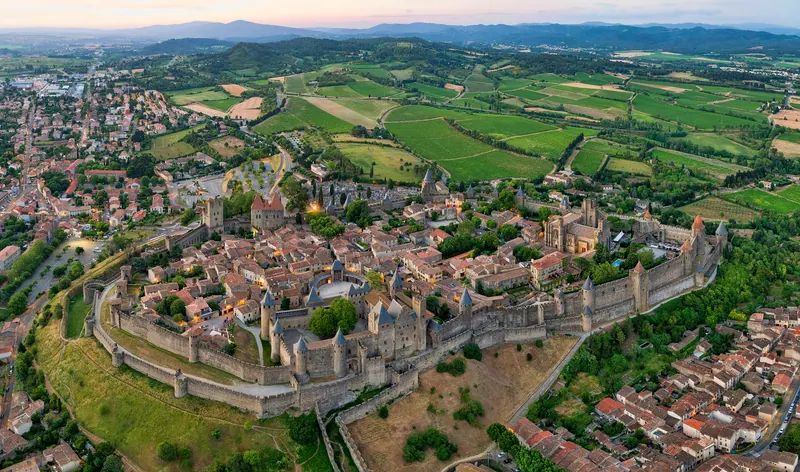
The strip of grass between Carcassonne's two rings of wall is free, open at all hours and usually near-empty, and it is where the fortress finally makes sense — outer wall on one side, Gallo-Roman and 12th-century inner wall on the other, both close enough to touch. Go in at the Porte Narbonnaise, drop straight down into the lices, and walk to the Tour de l'Évêque, the one tower built across the strip to cut it in two.

Free or cheap Quiet corner Best in the evening
Walking directions
View

Pont Vieux

Stone bridge under construction 1315, completed c. 1320; classified monument historique 1926; heavily restored 1820

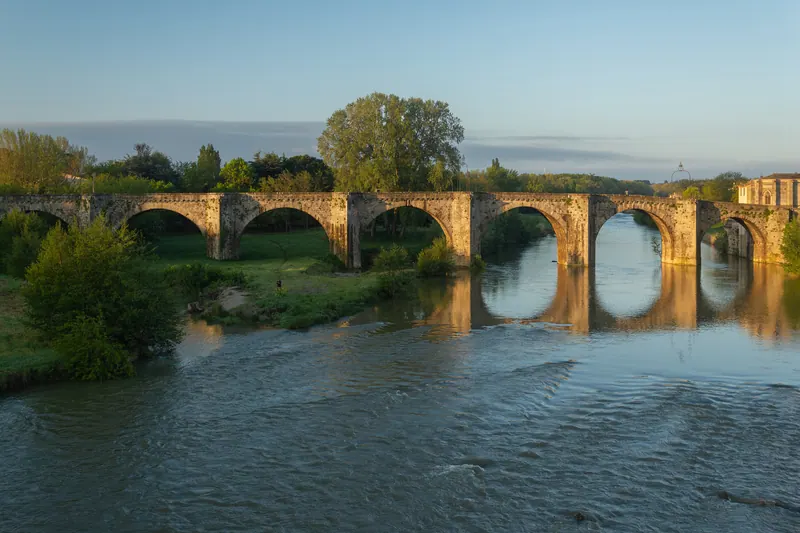
Twelve arches thrown across the Aude around 1320, and for five centuries the only way from the new town to the Cité. Cars were moved off it long ago, so it is now the one place in Carcassonne where you can stand still, in the middle of a river, and see the entire fortress at once — free, at any hour, and best in the twenty minutes after sunset.

Free or cheap Best in the evening Good with children
Walking directions
All articles