Medieval Booker

Medieval Markets & Fairs ◆ Croatia

Rapska fjera (Rab Medieval Summer Festival)

Rapska fjera is a three-day medieval street festival in the walled town of Rab, held every 25–27 July on the feast days of St James, St Anne and St Christopher, with craft workshops in the lanes, a fishermen's village on the beach, a costumed parade, a crossbow tournament and fireworks over the harbour. It revives a town holiday decreed in 1364 to thank King Louis I for freeing Rab from Venice, and was re-established in 2002; the 25th edition ran in July 2026.

When is Rapska fjera (Rab Medieval Summer Festival) 2027?

Next edition
Expected 2027 Rapska fjera (Rab Medieval Summer Festival) 2027 See all editions
Where
Rab, Croatia
How often
Every year
Entry
Street festival with no entry ticket published by the organisers; food, crafts and some workshops are paid. Confirm on the Rab Tourist Board site before travelling.
Family-friendly
Yes — bring the kids
Founded
2002
Official site
www.rab-visit.com

Checked · we re-check every festival twice a year.

Past and upcoming editions

Editions of Rapska fjera (Rab Medieval Summer Festival)
EditionDatesStatusCalendar
2027 edition Expected 2027 Google Calendar · .ics

Expected means the organiser hasn't announced yet; we show the usual window.

Past editions (1)
  • 2026 edition (25th) — 25–27 July 2026

What happens at Rapska fjera (Rab Medieval Summer Festival)?

On 21 July 1364 the town council of Rab decided to honour King Louis I of Hungary and Croatia, who had taken the island from Venice, with an annual fair around the feasts of St James, St Anne and St Christopher, the town’s patron; the celebrations once lasted two weeks and ended with a crossbow tournament. The knights’ games were revived in 1995 with the founding of the Rab Crossbowmen Association, and in 2002 the town re-established the whole fair as the Rapska fjera, now billed as the oldest and largest medieval summer festival in Croatia. It is organised by the Town of Rab, the Pučko otvoreno učilište Rab and the Rab Tourist Board.

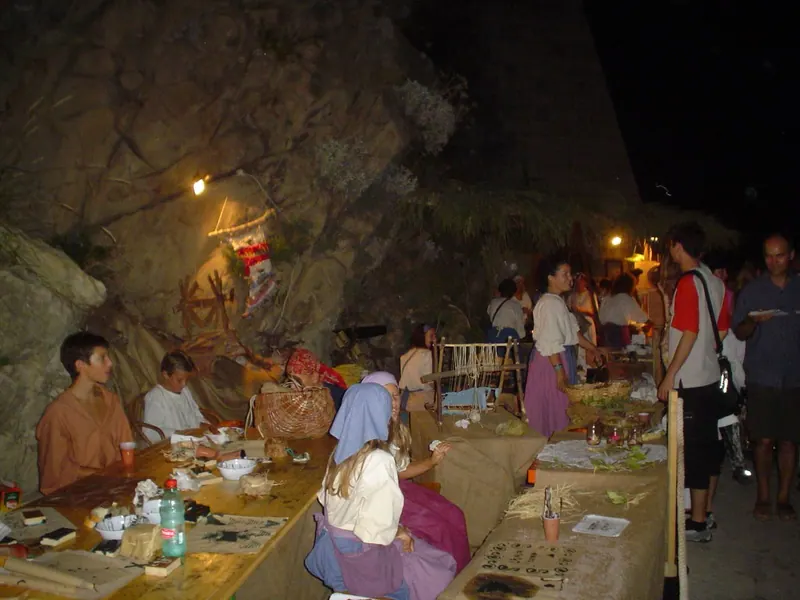
For three days the stone streets of the old town become workshops and stalls: belt-makers, herbal cosmetics, hair ornaments, pottery, coin-striking, basket weaving, carpentry and stone carving, with a gallery recreating medieval household work such as wool preparation, weaving, grinding grain and baking bread. A fishermen’s village is built on the town beach, and the evenings bring music, wine and local food (fried šulčići, grilled tuna, fritule doughnuts and the spiral Rapska torta). Costumed townspeople, visiting historical groups and drummers move through the lanes.

The climax is 27 July, St Christopher’s Day: a procession with the saint’s relics and a solemn mass, the crossbowmen’s tournament on St Christopher’s Square, a costumed parade, a pyromusical fireworks display over the harbour and a closing concert. The 25th edition in 2026 hosted the historical group Arti e mestieri from Montegiardino and crossbowmen from the Federazione Balestrieri di San Marino, and closed with a concert by Gipsy Kings by Andre Reyes.

The programme takes place in public streets, squares and the port, and the organisers publish no entry ticket; food, crafts and some workshops are paid. Rab is reached by ferry from Stinica on the mainland (Mišnjak landing, about 15 minutes) or by catamaran from Rijeka; late July is peak season, so book accommodation well ahead.
Frequently asked questions

When is Rapska fjera 2027?

25–27 July 2027. The festival is always held on these three dates, the feast days of St James, St Anne and St Christopher, and has run every year since 2002.

Is Rapska fjera free?

The organisers publish no entry ticket; the workshops, parades, tournament, fireworks and concert take place in the streets, squares and harbour. You pay for food, crafts and some workshops.

What is the origin of the festival?

A town council decision of 21 July 1364 to hold an annual fair thanking King Louis I for freeing Rab from Venice. The modern festival was re-established in 2002 and the crossbowmen's games revived in 1995.

What happens on the last day?

27 July is St Christopher's Day: a procession with the saint's relics and mass, the crossbow tournament on St Christopher's Square, a costumed parade, pyromusical fireworks over the port and a closing concert.

Is it suitable for children?

Yes. Craft demonstrations, the fishermen's village on the beach, parades and fireworks are aimed at all ages; evenings run late.

How do I get to Rab?

By car ferry from Stinica on the mainland to Mišnjak (about 15 minutes) or by catamaran from Rijeka in summer. Rab town is about 10 km from the ferry landing.

More medieval festivals in Croatia

Same country, upcoming first.

All festivals in Croatia
Reenactment & Battles Medieval Markets & Fairs +1

Sajam u srednjovjekovnom Šibeniku (Medieval Fair in Šibenik)

Šibenik, Croatia

The Medieval Fair in Šibenik turns the Dalmatian port's waterfront below the UNESCO-listed Cathedral of St James and the lanes of the old town into a three-day market of costumed craftspeople, with knights' combat, cannon fire, period music and an evening re-enactment of a 1378 naval battle along the riva. Revived in 2025 after a five-year pause, the 17th edition is scheduled for 4–6 September 2026 and the programme is free.

2026
Free Family

Other medieval markets and fairs

All medieval markets and fairs
Featured
Living History & Museums Castle Events

Guédelon Castle (living medieval construction site)

Treigny, France

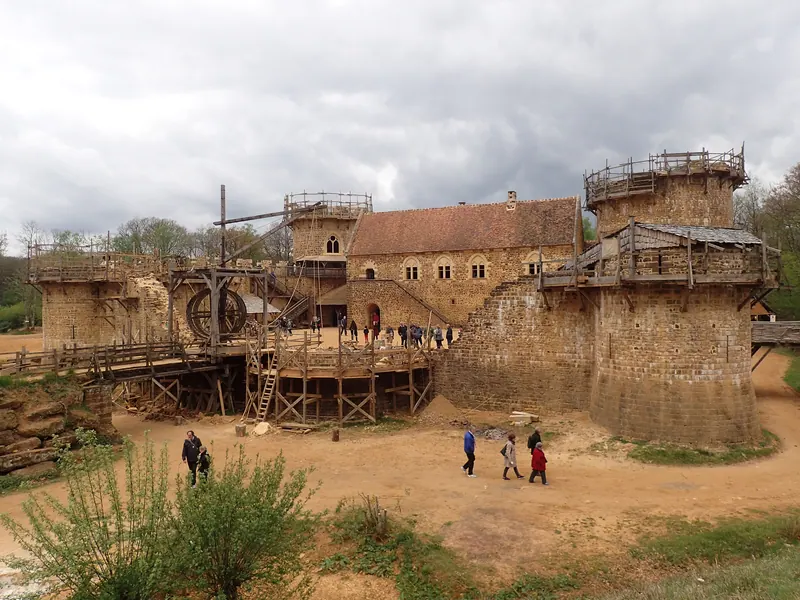
Guédelon is a 13th-century castle being built from scratch in a Burgundy forest quarry using only the tools, materials and techniques of the 1230s, open to visitors from spring to autumn since the first stone was laid in 1997. Around forty masons, carpenters, blacksmiths, tilers, rope-makers and carters work in front of the public, and the site draws roughly 300,000 visitors a season.

On now until
Family
Jousting & Tournaments Living History & Museums

Middelaldercentret (The Medieval Centre), Nykøbing Falster

Nykøbing Falster, Denmark

Middelaldercentret is an experimental living-history museum on the Guldborgsund opposite Nykøbing Falster, where a reconstructed Danish market town of around the year 1400, Sundkøbing, is populated by costumed staff who stay in character all day. Its season runs from early May to late September with daily trebuchet firing, jousting and craft demonstrations, plus an autumn-holiday week in October and a Christmas market.

On now until
Family
Medieval Markets & Fairs Jousting & Tournaments +1

Horsens Medieval Festival

Horsens, Denmark

Horsens Middelalderfestival turns FÆNGSLET, the town's former state prison, into a medieval town for two days at the end of August, with knights, craftsmen, musicians, a market and hundreds of costumed participants. Run by the municipality since 1995 and free to enter, it calls itself northern Europe's largest medieval festival and draws around 100,000 visitors.

2026
Free Family