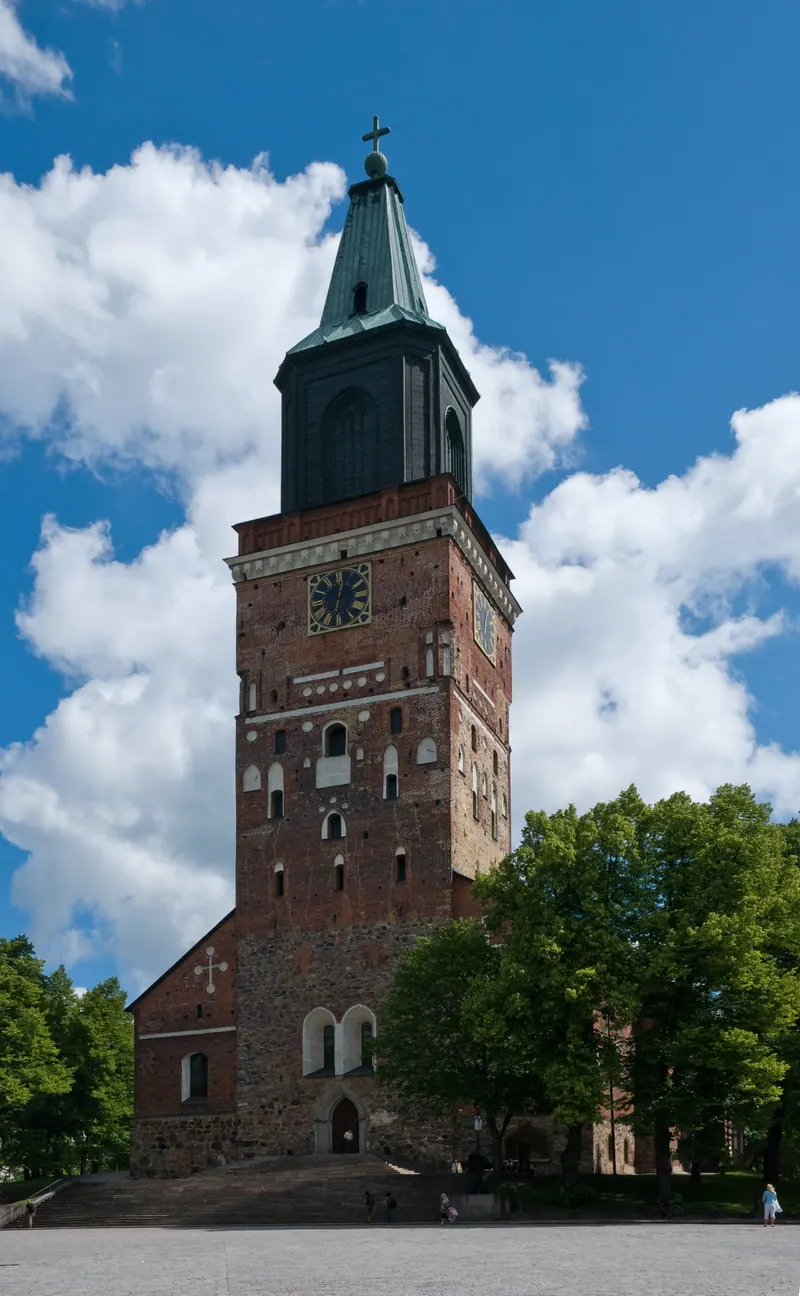
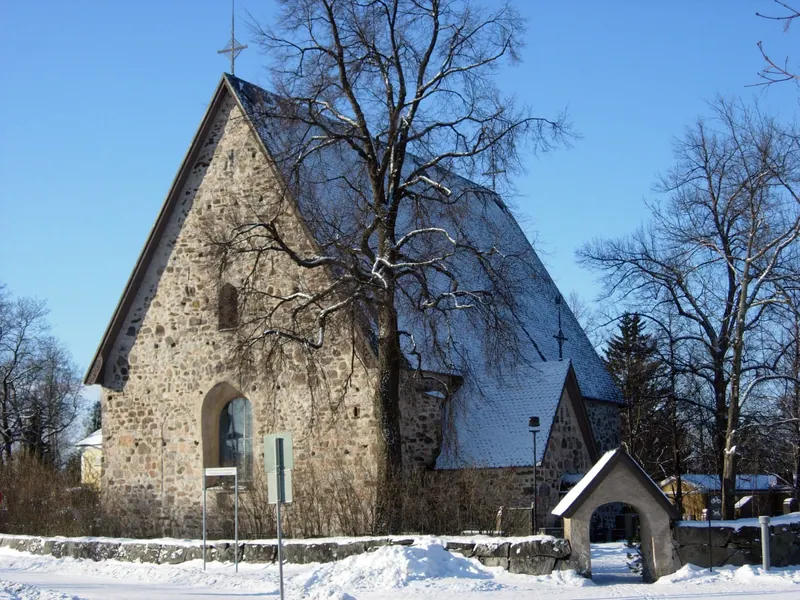
The bishop’s seat moved down from Koroinen in the 1290s and the new cathedral was consecrated on 17 June 1300, dedicated to the Virgin Mary and to St Henry, the first bishop of Finland. What began as a wooden church was rebuilt in grey fieldstone and brick and enlarged for two centuries: a new choir with octagonal Gothic pillars in the 14th century, side chapels added along both sides of the nave in the 15th until there were more than forty, and the roof vaults raised to about 24 m late in the same century. Mikael Agricola, who gave Finnish its written form and translated the New Testament in 1548, went to school here and became bishop of Turku in 1554.
It is a burial church. Blessed Bishop Hemming (d. 1366) lies here; so does Karin Månsdotter (1550–1612), the soldier’s daughter who became Erik XIV’s queen and outlived him by forty years, in a black marble sarcophagus. So do the cavalry commander Torsten Stålhandske (d. 1644) and the Scottish mercenary Samuel Cockburn (d. 1621).
Be honest about 1827. The Great Fire took roughly three-quarters of Turku and it reached the cathedral: the tower and the interior were badly damaged. The stone body of the church is medieval, but the spire above you is the post-fire rebuild, standing 101 m above sea level, and most of what you would see inside is 19th-century fitting-out of a medieval shell.
And you cannot see any of it. The parish has closed the cathedral completely from 9 February 2026 to 2 December 2028 for a full renovation — the building services date from the 1970s overhaul and have reached the end of their life, and the works also cover accessibility. During the closure the cathedral cannot be visited and no events are held in it. The Cathedral Museum in the south gallery, which held material from the early 1300s onward, closed earlier, on 30 September 2025, and will reopen with a new display when the works finish. Sunday services of the cathedral parish are held at St Martin’s Church. Completion is targeted for Advent, 3 December 2028.
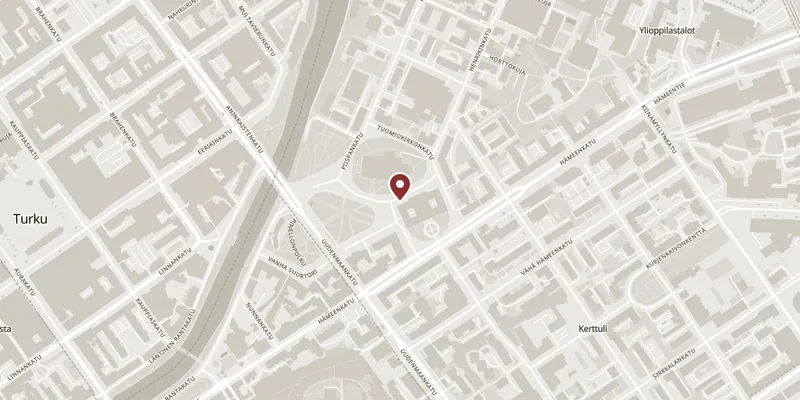
So: walk the churchyard, look at the brick east end and the stepped gables from Tuomiokirkontori, and go two minutes west to the Old Great Square. The noon bells have been broadcast on Finnish national radio daily since 1944; nothing published says whether they ring through the works.