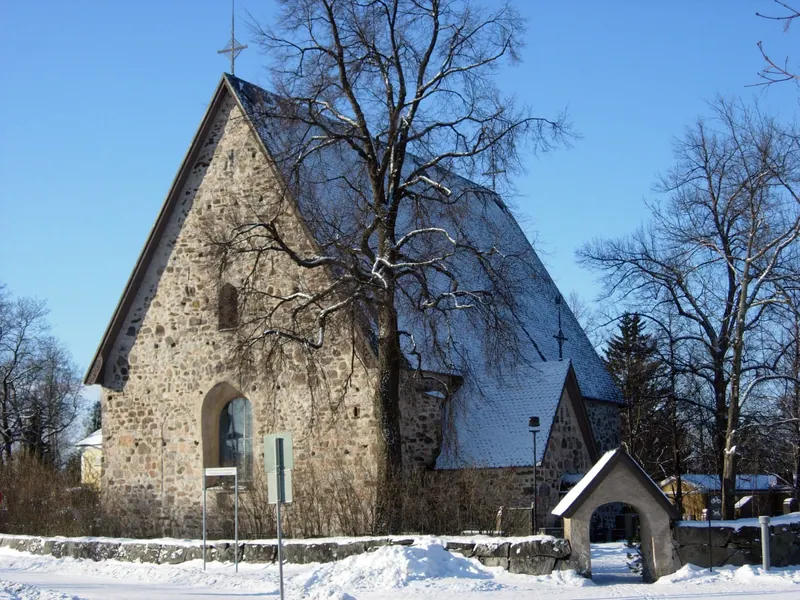
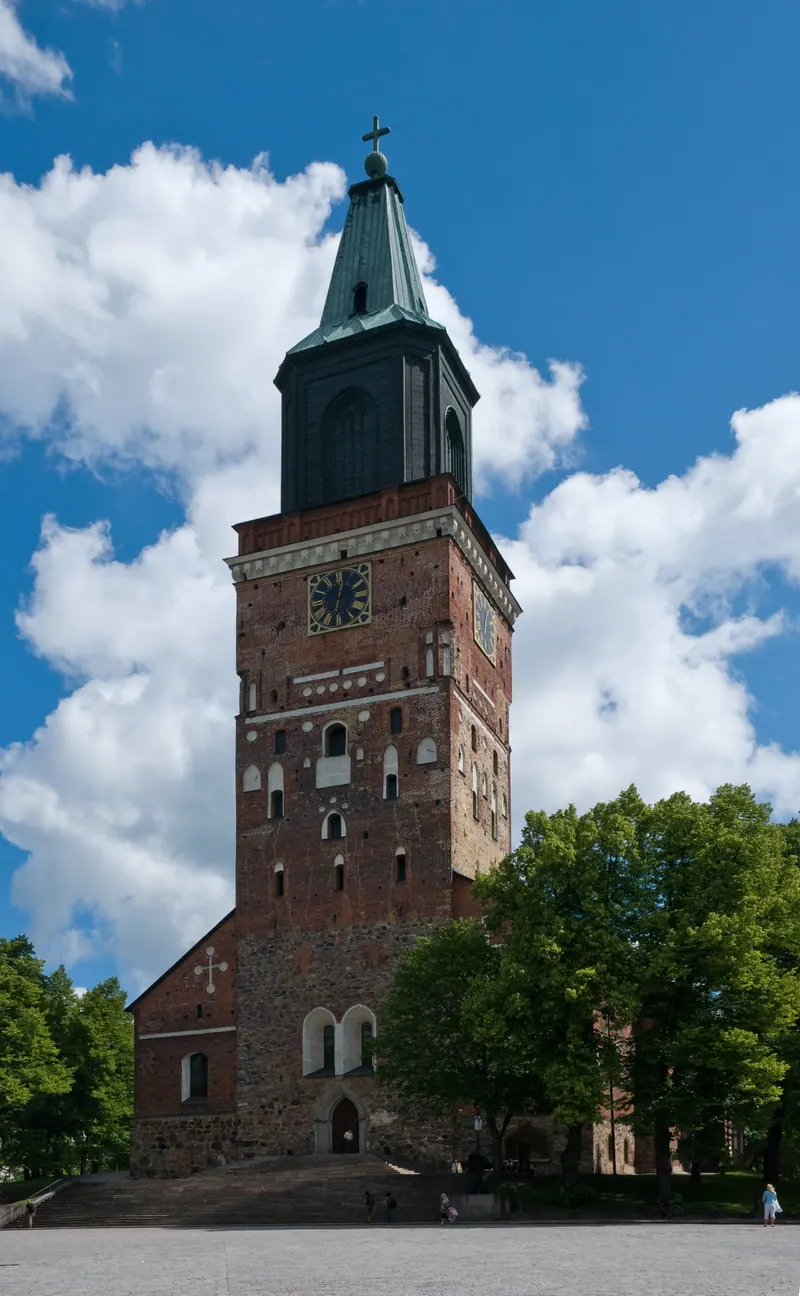
The parish here was originally called Nummi and is first named in writing in 1309. The greystone church that stands now was built, on the parish’s own dating, in the 1440s and 1450s, roofed with brick cross vaults; it was designed as a two-naved church and finished with a single nave, and the western vestibule was added in 1697–99. Older popular accounts put a first church on the site rather earlier, with a consecration in January 1351 — take the parish’s date for the building you are looking at.
Inside there is more surviving medieval work than anywhere else you can currently get into in Turku. The vault paintings date from about 1470–1490. There is a late-medieval crucifix, a 15th-century wall painting, and a wooden sculpture of St Catherine of Alexandria carved in the 14th century — older than the building that houses it. The pulpit is from 1654 and there are painted panels by Jonas Bergman of 1759–60; the glass altar relief is modern, from 2000.
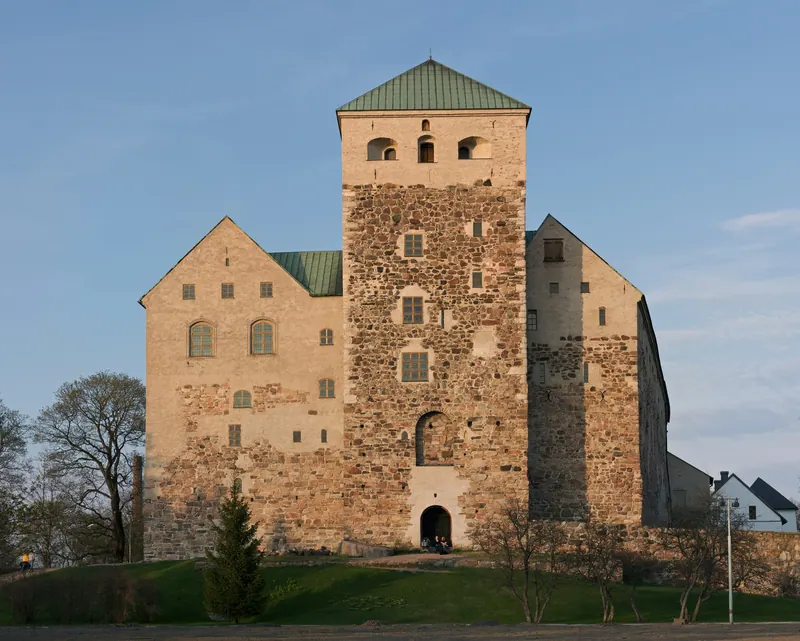
Why it is here at all: the Great Fire of September 1827 destroyed roughly three-quarters of Turku, but this church stood in Nummi, then a rural parish outside the town, and the fire never came near it. Nummi was joined to Turku in 1939 and the church was called Kaarina Church until 1991. That accident of geography makes it one of only a handful of genuinely medieval buildings inside the modern city, alongside the castle and the cathedral.
The catch is the season, and it is a hard one. The church runs as a tiekirkko — a road church, the Finnish scheme under which parishes open their buildings to travellers with a guide on duty and no charge — and its 2026 window is 8 June to 7 August, Monday to Friday, 12:00–17:00, closed on Midsummer’s Eve, 19 June. Not weekends. Outside those nine weeks it opens only for services and events or by arrangement with the parish.
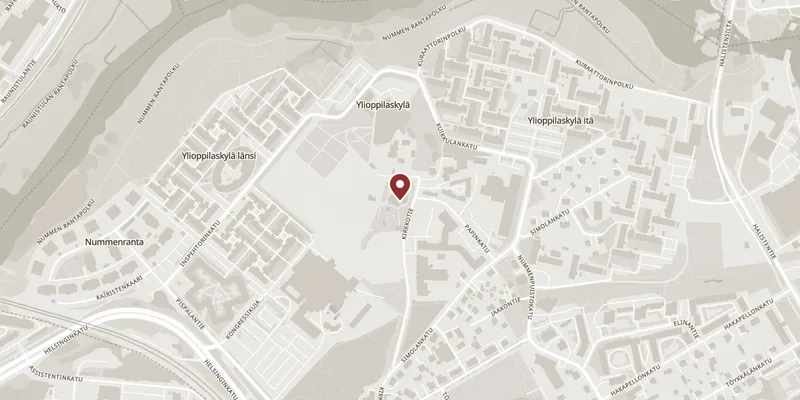
It stands at Kirkkotie 46 in Nummi, roughly 2.5 km north-east of the Market Square, served by city buses. With the cathedral shut until December 2028, this is the medieval church interior in Turku.