Medieval Booker

Church ◆ Turku

Naantali Church (Vallis Gratiae)

The abbey church of Vallis Gratiae — the Bridgettine double convent the king confirmed on this site on 23 August 1443 and Bishop Konrad Bitz consecrated in 1462 — and the only convent building still standing. With Turku Cathedral shut until December 2028, this is the largest medieval church interior open in the region: 15 km out, daily 11:00–18:00 from 18 May to 31 August.

Where and when

Where
Nunnakatu 1, 21100 Naantali, Turku, Finland Open in Google Maps Walking directions
Era
Bridgettine convent of Vallis Gratiae confirmed 1443, consecrated 1462, church built c. 1460–1480; the only convent building surviving
Opening
Daily 11:00–18:00 from 18 May to 31 August 2026. Outside the summer season: Wednesdays 12:00–14:00 and Sundays and public holidays 09:00–12:00 (as of August 2026)
Price
No admission charge is published by the church or by Visit Naantali. Finnish parish churches are ordinarily free to enter, but we have not seen that stated here — do not rely on it without checking (as of August 2026)
Best time
Any day between 18 May and 31 August, when it opens for seven hours. Outside that season it opens for about four hours a week in total.
Good for
Quiet cornerFree or cheap
Official site
visitnaantali.com
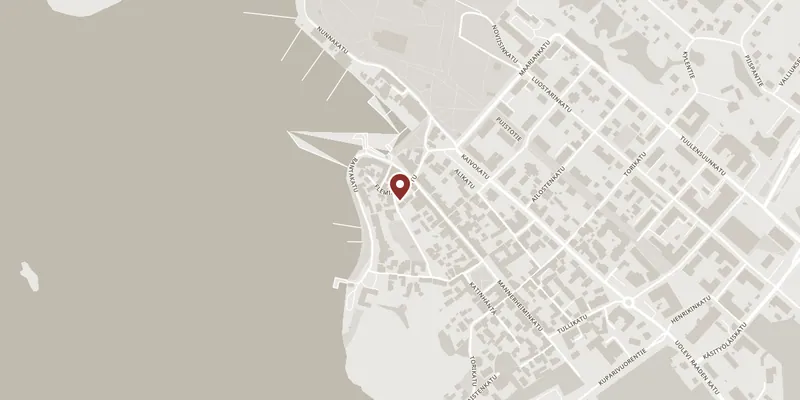
Map showing where Naantali Church (Vallis Gratiae) is
Open in Google Maps Walking directions © MapTiler © OpenStreetMap contributors

Checked

What is Naantali Church (Vallis Gratiae)?

St Bridget of Sweden (1303–1373) founded the Bridgettine order, and in 1438 the Swedish Privy Council decided that Finland should have a house of it. The first site, at Karinkylä in Masku, did not work. The Ailonen farm in Raisio was donated instead and the king confirmed the new location on 23 August 1443 — the date the town of Naantali counts as its founding. The convent went up on Ailostenniemi, a peninsula surrounded by water, and was consecrated in 1462 by Bishop Konrad Bitz; the church itself was built in roughly 1460–1480 and work continued on the house to the end of the century.

It was a double convent in the Bridgettine pattern: separated communities of nuns and brothers under one rule, on one site. The town grew up to serve it, and when the convent went the town’s economy collapsed into three centuries of knitting socks. Accounts of the ending differ slightly and both are worth knowing: Visit Naantali dates the end of convent activity to 1544, while the city’s own history says the crown confiscated church and convent property at the Reformation and monastic life declined gradually through the later 1500s.

The church is all that is left. Every other convent building has gone; the church became, and remains, the parish church, and it is the second-largest medieval stone church in Finland after Turku Cathedral. In the entrance hall there is a model of the convent as it stood on Ailostenniemi, which is the only way now to see the rest of the house. The interior was built for sung liturgy and the acoustics are the thing people remark on.

Be clear about the silhouette. The tower that gives Naantali its skyline from the guest harbour is baroque, completed in 1797, and it is not medieval. The medieval building is the grey stone body underneath it. The most recent renovation was in 2011–12 under the architect Virpi Tervonen, covering lighting, interior windows, the altar and some of the textiles.

Naantali is about 15 km west of Turku and inside the Föli regional transport area, so ordinary regional buses run out to it. The church is at Nunnakatu 1, above the wooden old town.
What visitors say

4.5 from 735 ratings

  • Tibor

    5 out of 5 a month ago

    Naantali Church (Naantalin kirkko): A short and easy walk leads up to the church standing on the hill. It has an impressive history as the only surviving building of the former medieval convent, and the setting is very photogenic from several angles. The interior is simpler than the exterior, but still worth seeing. Around 15 minutes is enough for a relaxed visit.

    Read this review on Google
  • Stanislav Andreev

    5 out of 5 a year ago

    Beautiful church. Sadly it is closed on Saturday. Open on Sunday 10-12

    Read this review on Google
  • Aino

    5 out of 5 2 years ago

    A surprisingly interesting church! The church yard is beautiful and the surroundings are well maintained. The church itself is different to other churches we've seen in Finland which makes it very intriguing.

    Read this review on Google

Ratings and reviews from Google. See all on Google Maps

Frequently asked questions

When is Naantali Church open?

Daily 11:00–18:00 from 18 May to 31 August 2026. Outside the summer season it opens on Wednesdays 12:00–14:00 and on Sundays and public holidays 09:00–12:00.

What was Vallis Gratiae?

The Bridgettine convent of the Valley of Grace. The Swedish Privy Council decided on a Finnish house in 1438; the king confirmed this site on 23 August 1443 and it was consecrated in 1462. It was a double convent of nuns and brothers, and the town of Naantali grew up around it.

What is left of the convent?

Only the church, which is now the parish church and the second-largest medieval stone church in Finland after Turku Cathedral. A model of the convent buildings as they stood on Ailostenniemi is displayed in the entrance hall.

How do you get to Naantali from Turku?

It is about 15 km west of Turku and lies inside the Föli regional transport area, so ordinary regional buses run out to it from the city.

Is the tower medieval?

No. The baroque tower that gives Naantali its skyline was completed in 1797. The medieval fabric is the grey stone church beneath it; the most recent renovation was in 2011–12.

Festivals in Turku

Medieval festivals in Turku
Featured
Medieval Markets & Fairs Living History & Museums +1

Turku Medieval Market

Turku, Finland

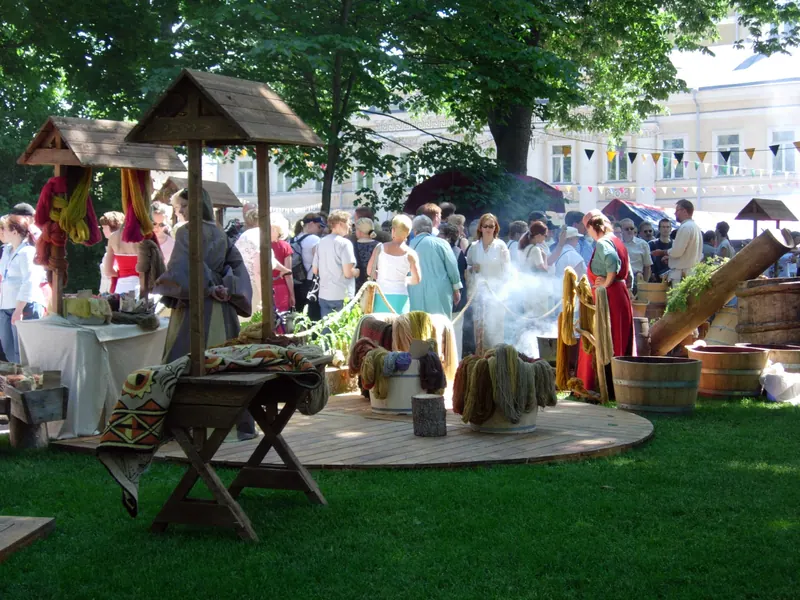
The Medieval Market of Turku fills the Old Great Square and surrounding streets with four days of free market stalls, craft demonstrations, music and a daily street play every year at the end of June. Held since 1996, it is Finland's largest medieval event, with attendance reported at well over 100,000.

Expected 2027
Free Family

More places in Turku

Places in Turku
Castle Start here

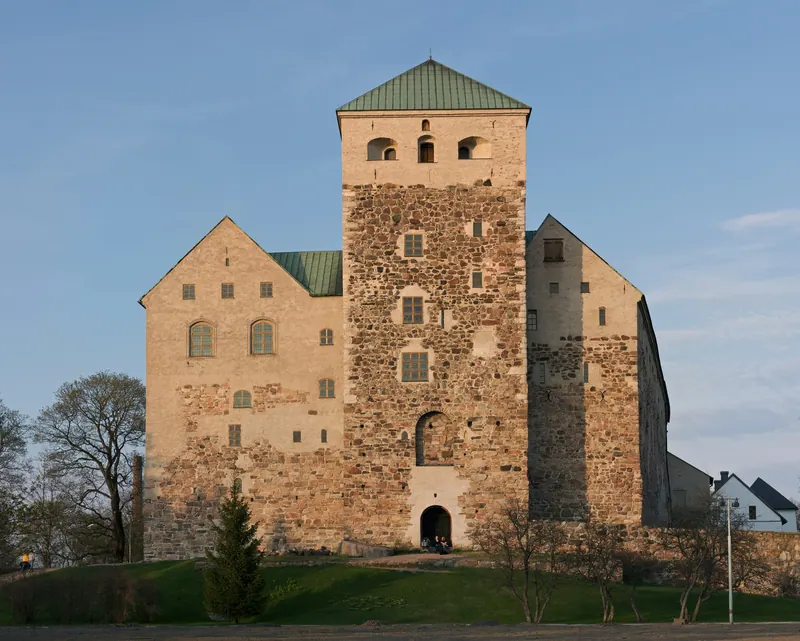
Turku Castle

Begun c. 1280; keep finished early 15th century; Renaissance bailey and floors 1556–63

Begun about 1280 at the mouth of the Aura and the largest surviving medieval building in Finland: a grey granite keep with a Renaissance bailey built around it in the 16th century. Find the Nun's Chapel in the old castle — it holds a 14th-century painting of the Virgin by the Master of Lieto, the oldest object in the building.

Good with children Works in the rain
Walking directions
Museum

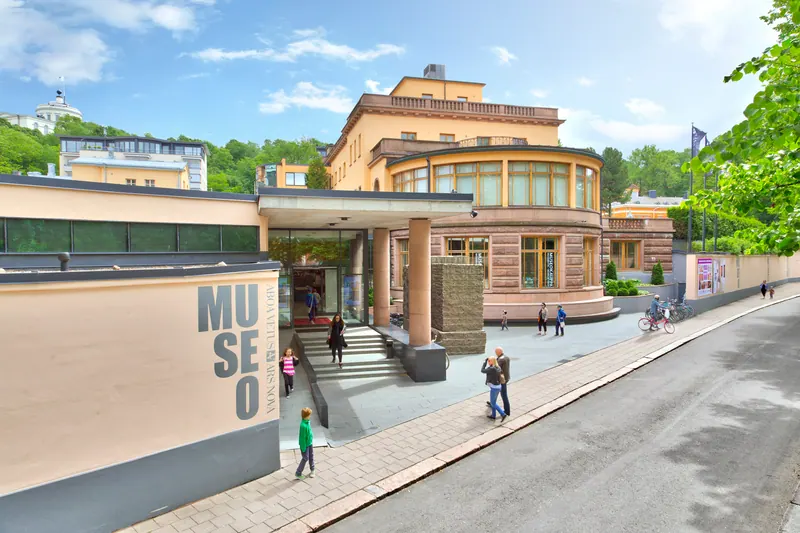
Aboa Vetus Ars Nova

Medieval Convent Quarter; merchant-house cellars of the 14th and 15th centuries, excavated in the early 1990s and shown in situ

The only archaeological museum in Finland: a block of medieval cellars and one of Turku's main medieval streets, excavated under the Rettig Palace and left exactly where they were found. Ask for the €14 Aboa Vetus-only ticket if you do not want the contemporary art half, and come on a Monday, when the castle and Luostarinmäki are shut and this is open.

Works in the rain Good with children
Walking directions
Church

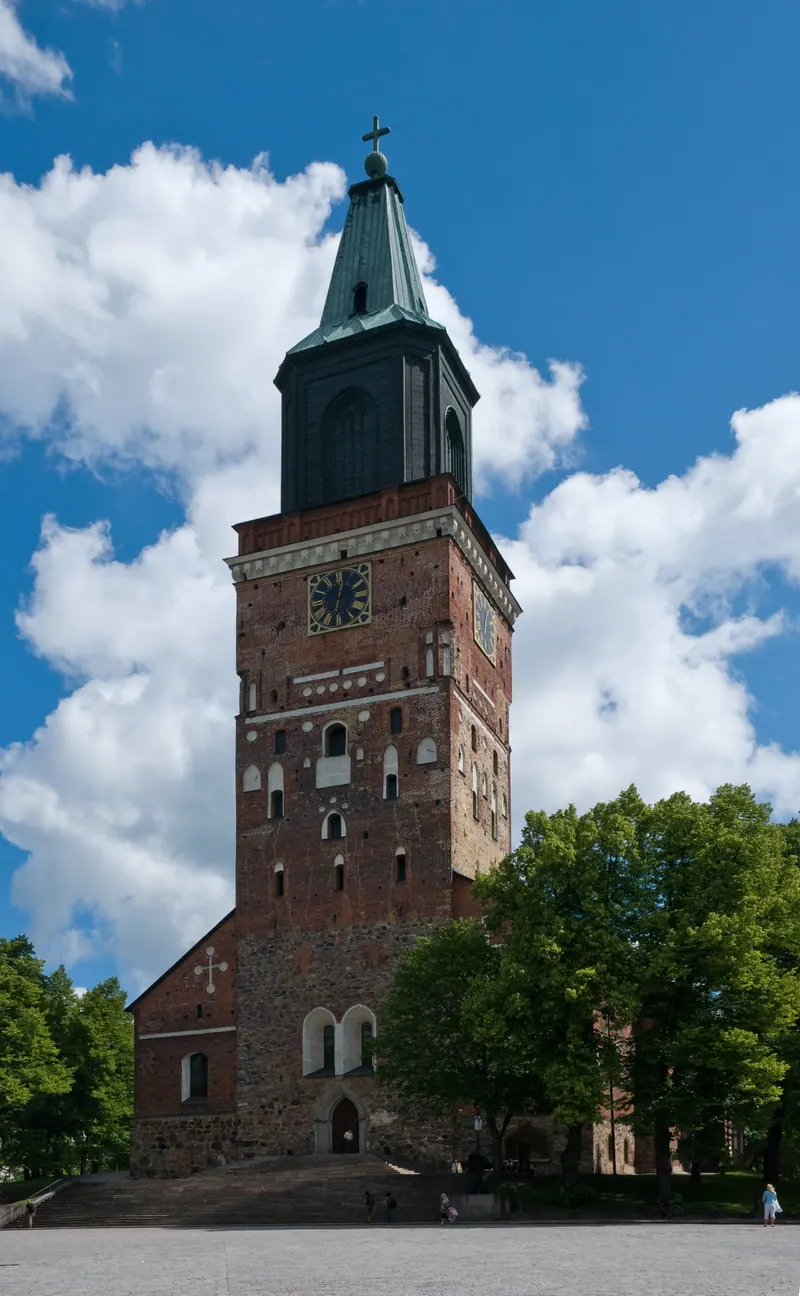
Turku Cathedral

Consecrated 17 June 1300; enlarged through the 15th century; tower rebuilt after the Great Fire of 1827

Finland's national shrine, consecrated on 17 June 1300, and closed. The whole building is shut to visitors from 9 February 2026 until 2 December 2028 for a full renovation, so plan on the outside of it and nothing more.

Free or cheap
Walking directions