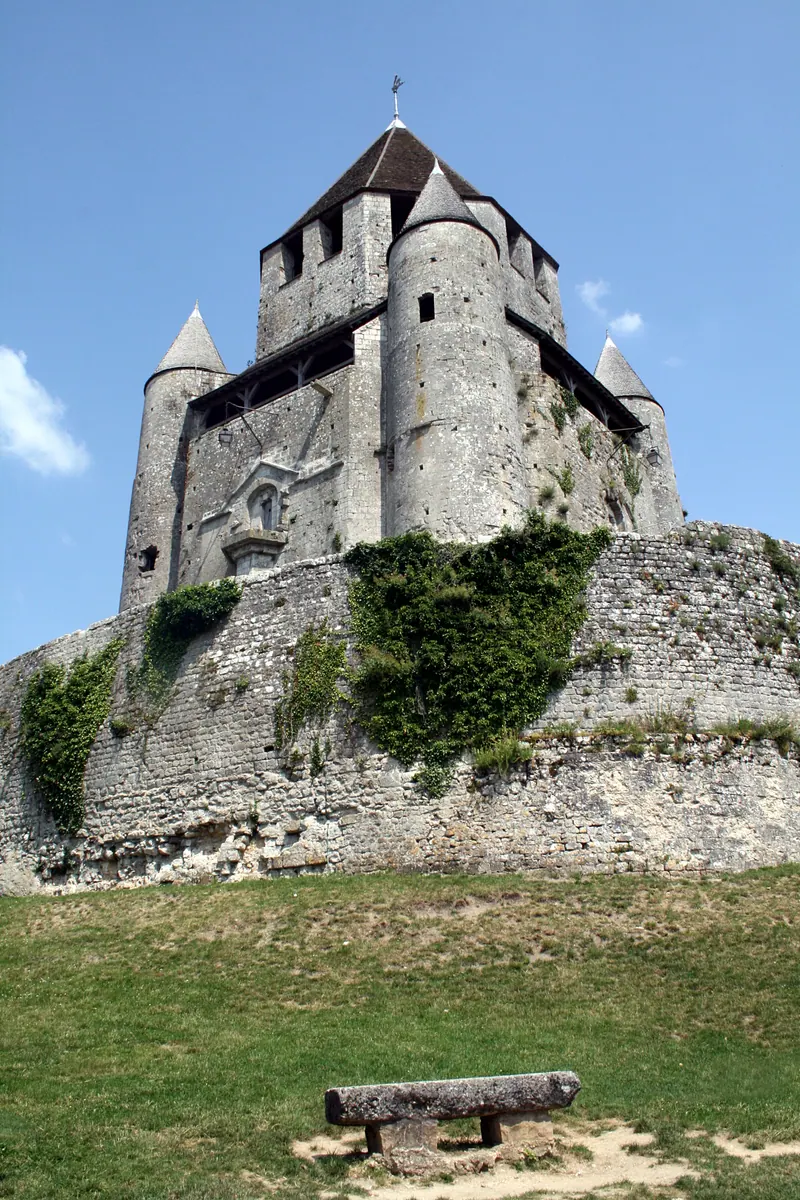
The counts of Champagne raised this keep in the 12th century, probably after 1150 under Henri le Libéral, as the strongpoint of the upper town and the visible sign of who collected the tolls at the fairs. Its shape is the thing specialists come for: a square base carrying an octagonal upper stage, with four corner turrets left standing on the corners of the square — the only donjon of that plan known. It was a watchtower, a refuge and a prison.
Inside, the route climbs through the building rather than round it. The lower hall is a vaulted store. Above it the salle des gardes is where every passage in the tower meets: from here the garrison could reach the turrets, the wall galleries and the cells. Look for the narrow corridors cut inside the thickness of the wall, and the openings down into the dungeons — prisoners were held in the dark, and the tower was still in use as a gaol long after it stopped being a fortress. One chamber was fitted out for the governor and has its own latrine, which is a good deal more comfort than the men below him got.
The tower has no medieval roof. It stood open to the sky until the 16th–17th century, when the present pyramid was put on; and in 1689, after the bell tower of the collegiate church of Saint-Quiriace collapsed, the bells were moved here. They still ring, from inside the building you are standing in, which is worth timing your visit around.
At the base is a broad skirt of masonry the townspeople call the pâté aux Anglais — an artillery casing thrown up around the keep by the English garrison that held Provins during the Hundred Years’ War, after the siege of 1432. It is the one part of the monument built by the occupiers.
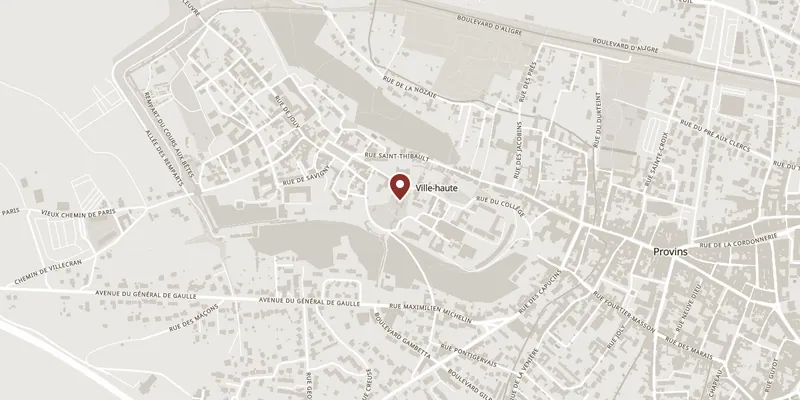
The visit takes about 35 minutes, with a QR-code audio guide of around 25 minutes. Access is from rue de la Pie, a two-minute walk from Place du Châtel. Dogs are not admitted.