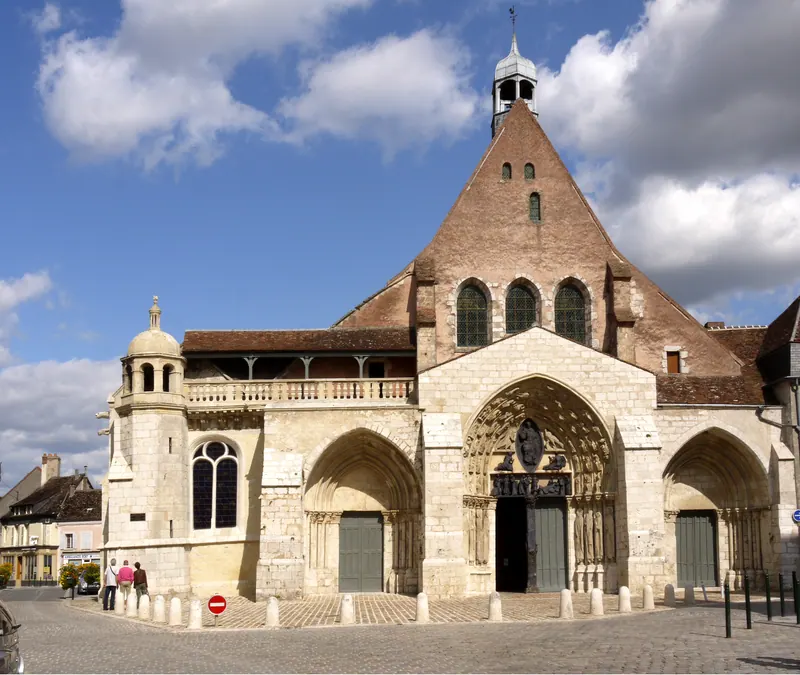
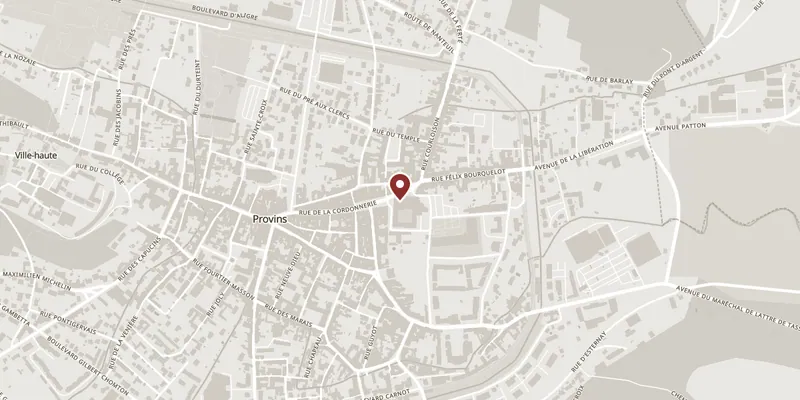
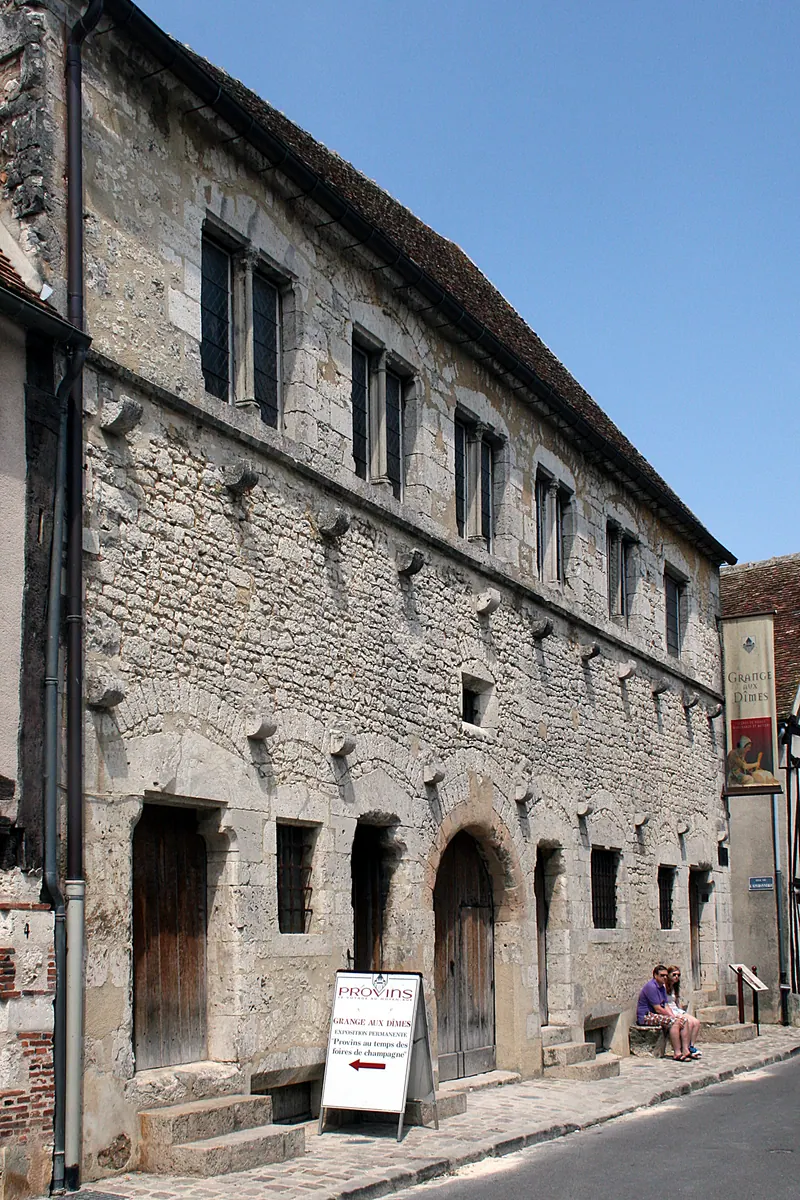
Provins ran two of the six Champagne fairs a year. The May fair was Saint-Quiriace’s, up in the walled town; the September fair was Saint-Ayoul’s, and it was held down here, around this priory, in the lower town by the Durteint. If you want to understand why Provins has two centres rather than one, this is the building that explains it.
The priory grew out of relics. Bones hidden in 845 were rediscovered in 996, identified as those of Saint Aigulphe — Ayoul — and a priory was founded in 1048, held as a dependency of the abbey of Montier-la-Celle near Troyes. Fire partly destroyed it in 1157 and it was rebuilt at once, which is why the surviving fabric is early Gothic.
In 1122 the priory sheltered its most famous guest. Peter Abelard, condemned the year before at the Council of Soissons and unable to stay at Saint-Denis, came to Provins under the protection of Count Thibaut of Champagne and was taken in by Robert, prior of Saint-Ayoul. From here he went on to found the Paraclete, the house he later handed to Héloïse. It is a good place to stand and think about how much of 12th-century intellectual life ran through the same network of patronage as the cloth trade.
The visit is self-guided with an audio guide and runs about 45 minutes. You get the cloister, with a view out over the lower town; the chapter house, with its architecture intact; the Benedictine chapel and its great apse, finished around 1280 and set off the axis of the church; the radiating chapels; wall paintings and painted finishes at the crossing; and a cut through the transept floor showing the soil layers from the 11th century to the 20th. There is a medieval medicinal plant garden. The church portal carries bronze sculpture by Georges Jeanclos, made 1985–88, and the modern glass is by Udo Zembok — both recent, both unmistakable, and worth ten minutes of the forty-five.
The ticket is valid for the whole of the day’s opening period, so you can go out and come back.