Medieval Booker

Church ◆ Óbidos

Capela de São Martinho

A private funerary chapel of 1331, built for the tombs of clergy and knights and dedicated to St Martin, the soldier-saint — the most complete piece of Gothic architecture in the town. Even if the door is locked, walk round it: two medieval tombs are set in the outside wall, one carved with heraldic shields.

Where and when

Where
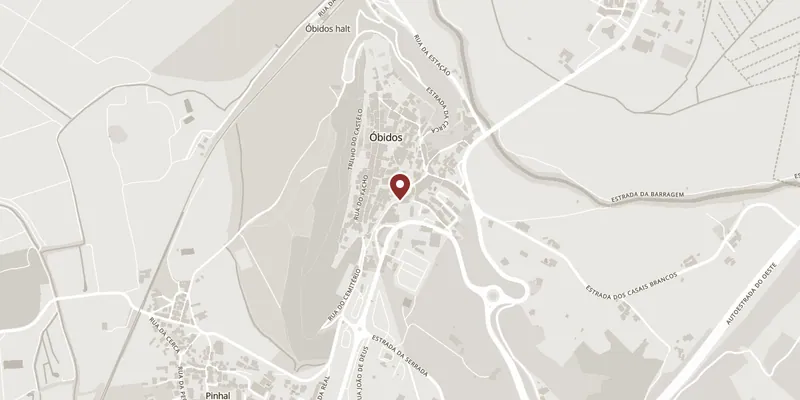
Largo de São Pedro, 2510-086 Óbidos (opposite the church of São Pedro, one street east of Rua Direita), Óbidos, Portugal Open in Google Maps Walking directions
Era
Founded 1331 by Padre Pêro Fernandes; Gothic throughout, with 14th-century tombs inside and out
Opening
No opening hours are published by the municipality or by Turismo de Portugal. The chapel belongs to the town, stands empty most of the year and opens irregularly for exhibitions and a Christmas crib. Assume the door is locked; the tourist office by the Porta da Vila (daily 09:30–13:00 and 14:00–17:30, tel. 262 955 500) is the place to ask (as of August 2026)
Price
Free. There is no ticket and no attendant; the two tombs in the outside wall are on the public square and visible at any hour (as of August 2026)
Best time
Ask about access at the tourist office when you arrive, not when you leave. The outside takes two minutes and can be done at any hour, including after dark when the rest of the town has emptied.
Good for
Quiet cornerFree or cheap
Official site
www.cm-obidos.pt
Map showing where Capela de São Martinho is
Open in Google Maps Walking directions © MapTiler © OpenStreetMap contributors

Checked

What is Capela de São Martinho?

This is the oldest thing in Óbidos you can put your hand on, and it stands on a small square off the main street that most visitors never turn into. Father Pêro Fernandes, vicar of Lourinhã and a beneficiary of Lisbon cathedral, founded it in 1331 as a family funerary chapel. The municipality calls it one of the most significant examples of Gothic architecture in the town, and notes that its architectural motifs resemble those at the abbey of Alcobaça, 40 km up the road.

The portal is the reason to stop: an ogival arch of three archivolts on columns with foliage capitals, with a Gothic inscription cut above it. It is small, it is not restored to a shine, and it is 1331.

Inside — when inside is possible — the single room is covered by a ribbed vault and holds three tombs set in ogival arcosolia, the arched recesses cut into the wall. One of them has a sword carved on it. The chapel was built to hold the remains of nobles and knights, which is very likely why it is dedicated to St Martin of Tours, a Roman cavalry officer before he was a bishop. Two further medieval tombs are set into the outside of the building, one of them carved with heraldic shields — and those you can see whenever you like, because they are on the street.

The chapel passed to the Visconde de Sacavém in 1913 and now belongs to the municipality. It is normally empty and is opened irregularly for exhibitions and for a Christmas crib. No official body publishes opening hours for it — not the municipality, not Turismo de Portugal — so treat the interior as a bonus and the exterior as the visit.

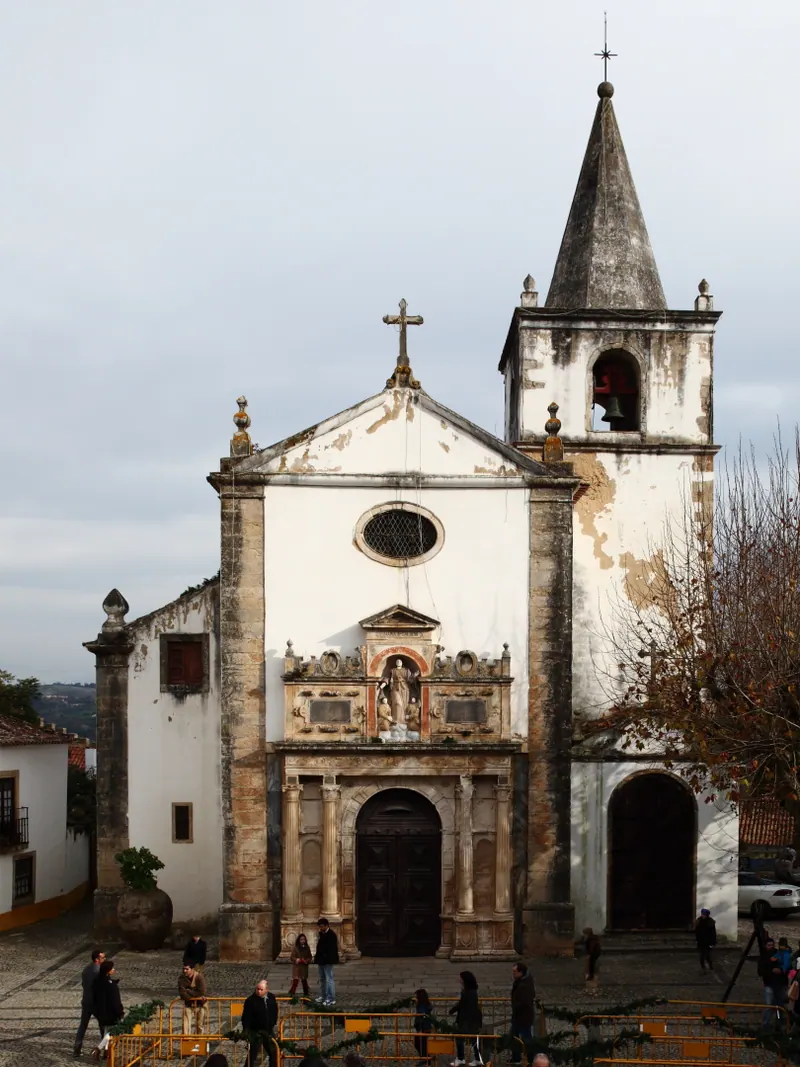
It faces the church of São Pedro across the square, which keeps fragments of a Gothic portal in its façade but was heavily damaged in 1755 and rebuilt; the painter Josefa de Óbidos asked to be buried in it, and nobody has ever established where under the floor she lies.
What visitors say

4.5 from 36 ratings

  • Marek Grzywacz

    5 out of 5 a year ago

    The Chapel of Saint Martin (Capela de São Martinho) in Óbidos is a uniquely significant structure primarily due to its Romanesque architectural style, making it one of the oldest and most authentic religious buildings within the town. What sets it apart is its striking simplicity and raw historical integrity. Unlike many other churches in Óbidos that have undergone extensive Baroque or Mannerist transformations, São Martinho largely retains its original medieval character. It features the characteristic rounded arches and sturdy, unadorned walls of Romanesque design, offering a direct glimpse into the architectural practices of the 12th and 13th centuries. Its small scale and unpretentious form speak to its early origins, providing a stark and beautiful contrast to the more decorative later buildings in the town. This unadorned authenticity makes it a truly special testament to Óbidos's earliest Christian heritage.

    Read this review on Google
  • P Don

    3 out of 5 2 years ago

    Small and ancient chapel worth seeing on a visit; inside are some tombs of people linked to the clergy; free access.

    Read this review on Google
  • Gheorghe Corobceanu

    4 out of 5 3 years ago

    Located right opposite the Church of St. Peter, this small Gothic chapel was built in 1331 as a private shrine to house the tombs of the clergy of Lisbon Cathedral. It is the only medieval building in Óbidos that has remained intact, as all the others were completely or partially destroyed during the earthquakes. It currently belongs to the Óbidos City Council.

    Read this review on Google

Ratings and reviews from Google. See all on Google Maps

Frequently asked questions

How old is the Capela de São Martinho in Óbidos?

It was founded in 1331 by Padre Pêro Fernandes, vicar of Lourinhã, as a private funerary chapel. It is the most complete piece of Gothic architecture in the town.

Can you go inside the Capela de São Martinho?

Not reliably. No opening hours are published; the chapel belongs to the municipality, stands empty most of the year and opens irregularly for exhibitions and a Christmas crib. Ask at the tourist office by the Porta da Vila.

What is inside the chapel?

A single room under a ribbed vault with three tombs set in pointed arched recesses, one of them carved with a sword. Two more medieval tombs are set into the outside wall, one bearing heraldic shields.

Why is the chapel dedicated to St Martin?

It was built to hold the remains of nobles and knights, and St Martin of Tours was a Roman cavalry officer before he became a bishop — the soldier-saint was the natural patron for a knights' burial chapel.

Where is the chapel?

On the Largo de São Pedro, opposite the church of São Pedro, one street east of Rua Direita between the Porta da Vila and Santa Maria. It is easy to walk past.

Festivals in Óbidos

Medieval festivals in Óbidos
Featured
Medieval Markets & Fairs Jousting & Tournaments +1

Mercado Medieval de Óbidos

Óbidos, Portugal

The Mercado Medieval de Óbidos takes over the castle grounds and lanes of the walled town for about 11 days each July, with a themed market, mounted tournaments, parades, street theatre and ticketed royal banquets. Organised by the municipality, it draws around 150,000 visitors a year.

Expected 2027
Family

More places in Óbidos

Places in Óbidos
View Start here

The Wall Walk (Muralhas de Óbidos)

Circuit 13th–14th century on Moorish and Roman foundations; repaired after the 1755 earthquake

A complete 13th–14th-century circuit around a town of 300 people, walkable end to end for nothing, with no ticket, no gate and no attendant. Read the safety note before you climb: there is no handrail, and this walk has killed people.

Free or cheap Quiet corner
Walking directions
Castle

Castelo de Óbidos

Rebuilt under King Dinis after 1282 on Moorish foundations; pousada since 1951; National Monument since 1910

The keep King Dinis rebuilt after 1282, and since 1951 a hotel — Portugal's first pousada inside a historic monument. You cannot tour it, so know what you are walking to: the Cerca do Castelo courtyard, the terrace and the outside of the keep are free and open, and everything past the front door needs a room booking or a restaurant reservation.

Free or cheap Good with children
Walking directions
Church

Igreja de Santa Maria

Mosque site consecrated after 1148; reworked under Queen Leonor c. 1490s; rebuilt from 1571; tomb by Chanterene c. 1526–28

The parish church on the site of the town mosque, consecrated after Afonso Henriques took Óbidos in 1148 and rebuilt from 1571 — where the nine-year-old Afonso V was betrothed to his cousin Isabel of Coimbra in 1441. Find two things: the Renaissance tomb by Nicolau Chanterene in the chancel wall, and the pillory outside with a shrimping net carved on it.

Free or cheap Works in the rain Quiet corner
Walking directions
All articles