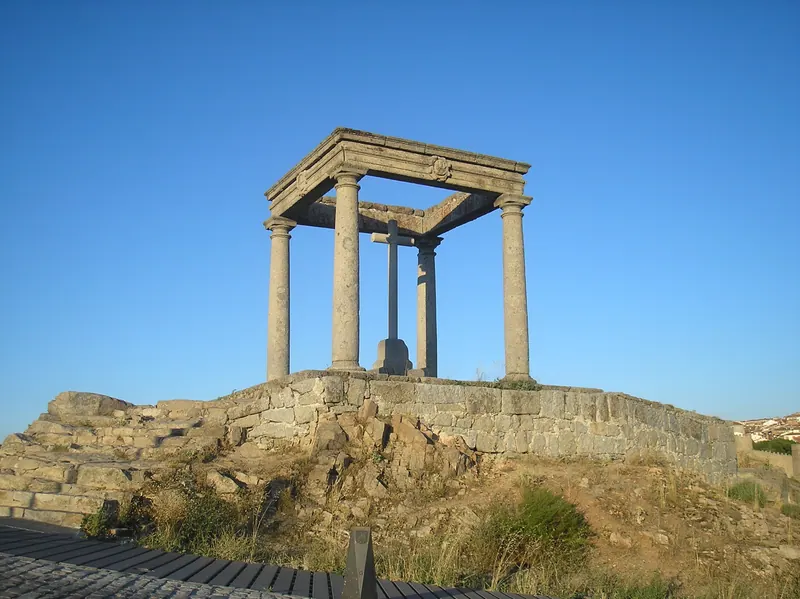
A humilladero is a wayside shrine: a cross on a platform set at the edge of a town, where travellers said a prayer on the way in or out. This one stands where the western road crossed the Adaja, and the structure you see was contracted in 1566 by the corregidor Rodrigo Dávila with the master mason Francisco de Arellano — four monolithic Doric columns about five metres high, carrying an architrave with the arms of the city, and a granite cross in the middle of the square they make.
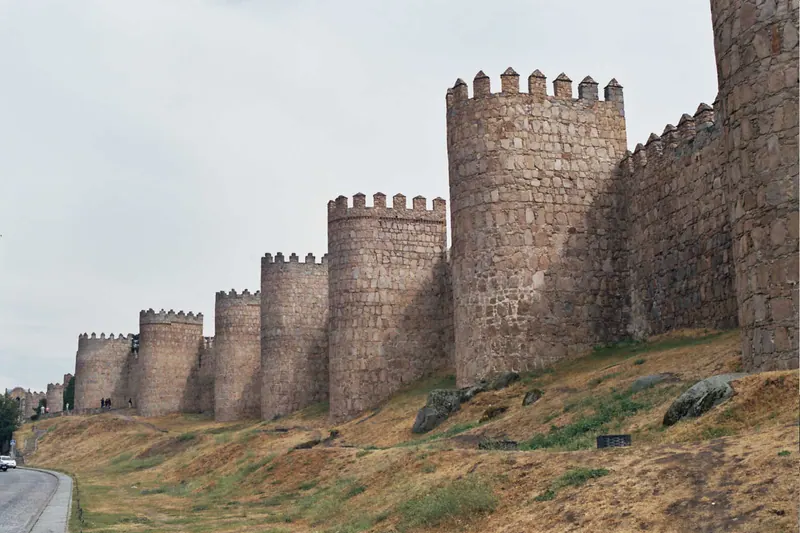
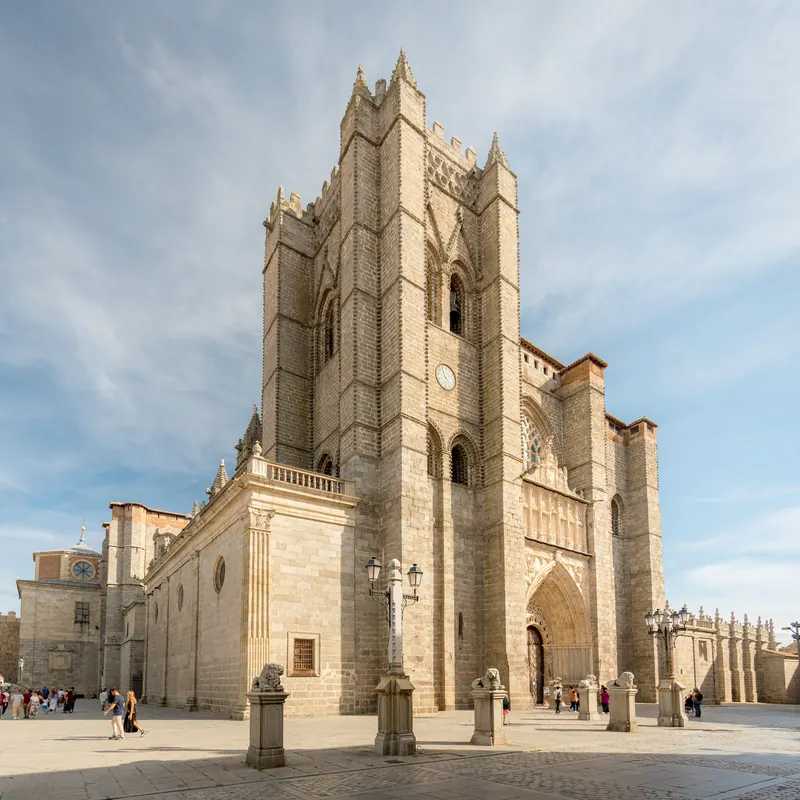
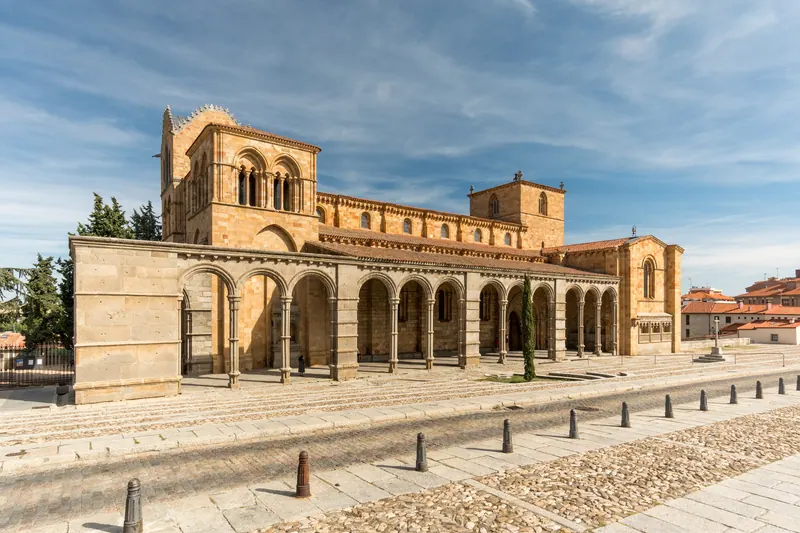
The reason to walk out here is the view back. From the platform you get the entire north face of the wall and the west front in one sweep, with the Puerta del Carmen, the cathedral’s cimorro breaking the skyline, San Vicente, San Segundo and San Martín, and the Adaja and its old bridge below. It is the composition on every photograph of Ávila ever taken, and it is not available from anywhere inside the town. Late afternoon puts the sun behind you and full on the granite; after dark the wall is lit the whole way round, which is the version most visitors remember.
The spot also carries the town’s best-known Teresa story. As children, Teresa de Cepeda — later Teresa of Ávila — and her brother Rodrigo are said to have run away to seek martyrdom among the Moors and to have been caught here by their uncle. The tourist office presents it as a tradition attached to the place rather than a documented event, and so should you.
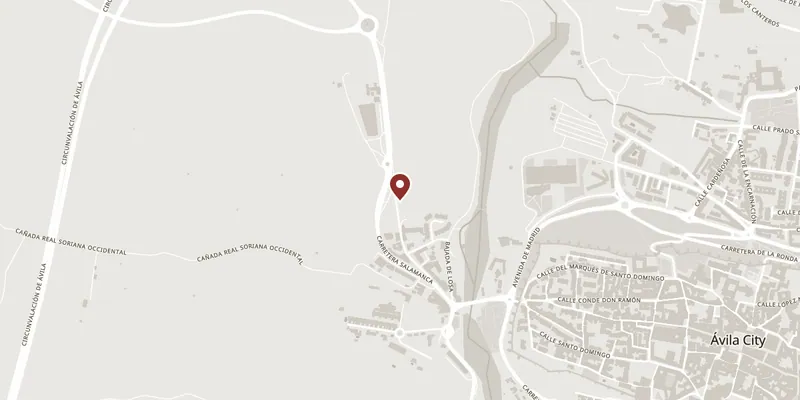
Getting there: a short walk from the Puerta del Puente on the west side. Down through the gate, over the Adaja by the old bridge, past the Molino de la Losa and up the far bank — about fifteen minutes at a stroll, steeper coming back, on a road with traffic. Drivers will find a lay-by beside the monument. There is nothing at the site but the columns, the cross and the view: no ticket, no gate, no hours and nowhere to buy a drink.