Medieval Booker

Medieval Markets & Fairs ◆ Spain

Las Bodas de Isabel de Segura

Las Bodas de Isabel de Segura is a four-day medieval festival in Teruel, Aragon, held from Thursday to Sunday on the weekend of the third Friday in February, in which the city re-enacts the legend of the Lovers of Teruel in its streets and squares. First held in 1997, it was declared a Fiesta of International Tourist Interest in December 2025.

When is Las Bodas de Isabel de Segura 2027?

Next edition
– 2027 Las Bodas de Isabel de Segura 2027 See all editions
Where
Teruel, Spain
Also called
Bodas de Isabel · Las Bodas de Isabel · The Weddings of Isabel de Segura · Wedding of Isabel de Segura
How often
Every year
Entry
Old-town scenes, camps and market free. Torneo del Rey (bullring) and some special events ticketed: tournament €15 + €1 fee in 2026, children up to 6 free, via entradasteruel.janto.es.
Family-friendly
Yes — bring the kids
Founded
1997
Attendance
~100,000 visitors

Checked · we re-check every festival twice a year.

Past and upcoming editions

Editions of Las Bodas de Isabel de Segura
EditionDatesStatusCalendar
Las Bodas de Isabel de Segura 2027 – – 2027 Google Calendar · .ics
Past editions (1)
  • 30th edition — 19–22 February 2026

What happens at Las Bodas de Isabel de Segura?

Las Bodas de Isabel de Segura is a four-day medieval festival in the historic centre of Teruel, the capital of Teruel province in Aragon, held from Thursday to Sunday on the weekend of the third Friday in February. It stages the legend of the Lovers of Teruel, set in 1217: Juan Diego de Marcilla leaves to make his fortune within five years, returns on the day Isabel de Segura has been married to Pedro de Azagra, begs her for a kiss, is refused and dies; at his funeral Isabel kisses him and dies too. The festival was first held in February 1997 and is run by the Fundación Bodas de Isabel; the 2026 edition, on 19 to 22 February, was the 30th. In December 2025 Spain’s tourism ministry declared it a Fiesta of International Tourist Interest.

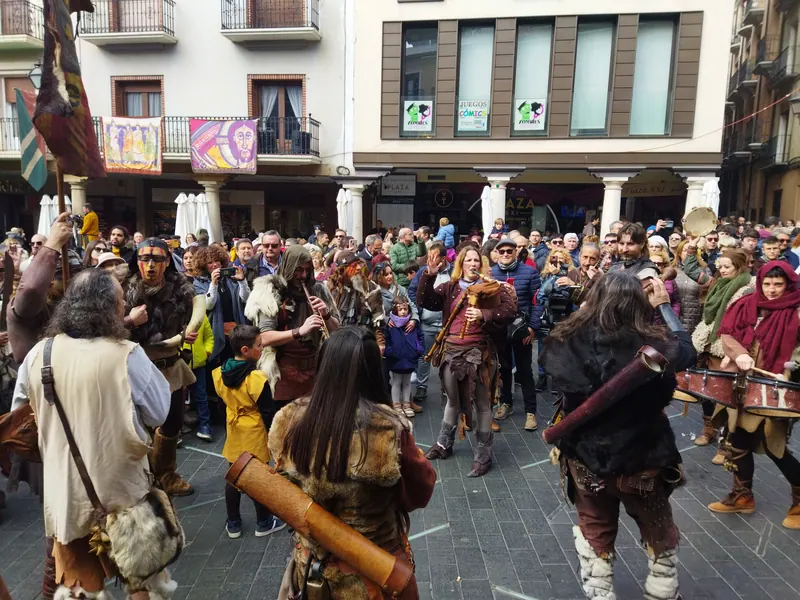
The story is played out in scenes across the old town by about 400 performers, among thousands of people in period dress. In 2026 the Friday brought Isabel’s wedding to Pedro de Azagra in the Plaza de la Catedral, the official opening speech from the town hall balcony, and in the evening the reception of King Jaime I, with a parade, homage in the Plaza del Torico and a fire show. On Saturday evening the troops of Aragon entered the city with Diego, followed by the central scene in the Plaza del Torico: the request for the kiss, Diego’s death and Isabel’s lament. On Sunday at midday a funeral procession led to the Plaza de la Catedral for Diego’s exequies and Isabel’s death, the festival’s closing scene.

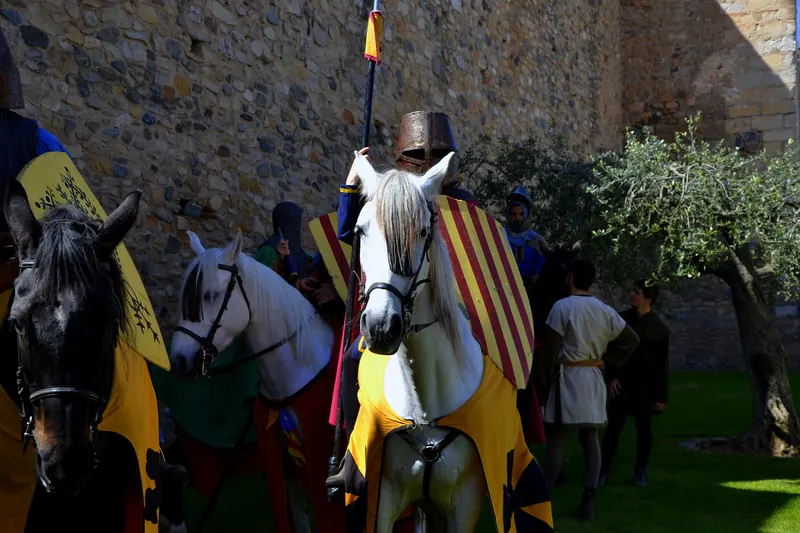
Between the scenes, the camps of the costumed groups (more than 150, according to local press) and a medieval market open across the centre from 10am on Friday to Sunday, with dances, falconry displays, concerts and craft demonstrations. On the Saturday afternoon the Torneo del Rey, a horseback tournament by the Caballeros del Rey Jaime I, is held in the bullring. Earlier that afternoon the Toro Nupcial, a bull held on a rope, is run through the Tozal and the Plaza del Torico; the programme warns that it is dangerous, and the custom has been criticised on animal-welfare grounds.

The scenes, camps and market in the old town are free; tickets are needed only for the Torneo del Rey and some special events. In 2026 tournament tickets cost €15 plus a €1 booking fee, with children up to 6 free, sold through entradasteruel.janto.es. The organisers count close to 100,000 visitors, about three times the city’s population, so book rooms well ahead.

Teruel stands at 915 metres and February evenings are cold, so dress warmly for the night scenes. The city is on the motorway between Zaragoza and Sagunto and has a railway station on the Zaragoza to Valencia line. Through the rest of the year the Mausoleum of the Lovers, next to the church of San Pedro, displays the remains said to be Diego’s and Isabel’s, and the Fundación stages a second event in October, La Partida de Diego, which re-enacts Diego’s departure five years earlier.
Frequently asked questions

When is Las Bodas de Isabel de Segura 2027?

From Thursday 18 to Sunday 21 February 2027, the dates given in the Fundación Bodas de Isabel's call for market stallholders. The festival is held on the weekend of the third Friday in February (19 to 22 February in 2026).

Is it free?

Mostly. The scenes, camps and market in the old town are free; tickets are needed for the Torneo del Rey and some special events. In 2026 the tournament cost €15 plus a €1 fee, with children up to 6 free.

What is the story behind the festival?

The legend of the Lovers of Teruel, set in 1217. Diego de Marcilla returns after five years to find Isabel de Segura married that day to Pedro de Azagra; refused a kiss, he dies, and Isabel dies kissing him at his funeral.

Which scenes should I not miss?

The Saturday-evening scene in the Plaza del Torico (the kiss, Diego's death and Isabel's lament) and the Sunday-midday funeral in the Plaza de la Catedral, where Isabel dies. In 2026 they began at 8pm and 12:30pm.

Is it suitable for children?

Largely, yes: the market, camps, dances and falconry suit families, and under-7s enter the tournament free. Keep clear of the Saturday-afternoon roped-bull run (Toro Nupcial) in the Tozal and Plaza del Torico, which the programme flags as dangerous.

How do I get to Teruel?

By road on the motorway between Zaragoza and Sagunto, or by train on the Zaragoza to Valencia line. With close to 100,000 visitors, book rooms early.

More medieval festivals in Spain

Same country, upcoming first.

All festivals in Spain
  • Medieval Markets & Fairs Jousting & Tournaments +1

    Setmana Medieval de Montblanc

    Montblanc, Spain

    Montblanc's Setmana Medieval de la Llegenda de Sant Jordi turns the walled Catalan town into a medieval fair over the two weekends around Saint George's Day (23 April), with a free daily market and camp, parades, a night-time dragon show projected on the 14th-century walls and an open-air staging of the Saint George legend, which local tradition sets in Montblanc. Founded in 1987 and declared a festival of national tourist interest, it reached its 39th edition in April 2026.

    – 2027
    Family
  • Featured
    Historic City Celebrations

    Corpus Christi in Toledo

    Toledo, Spain

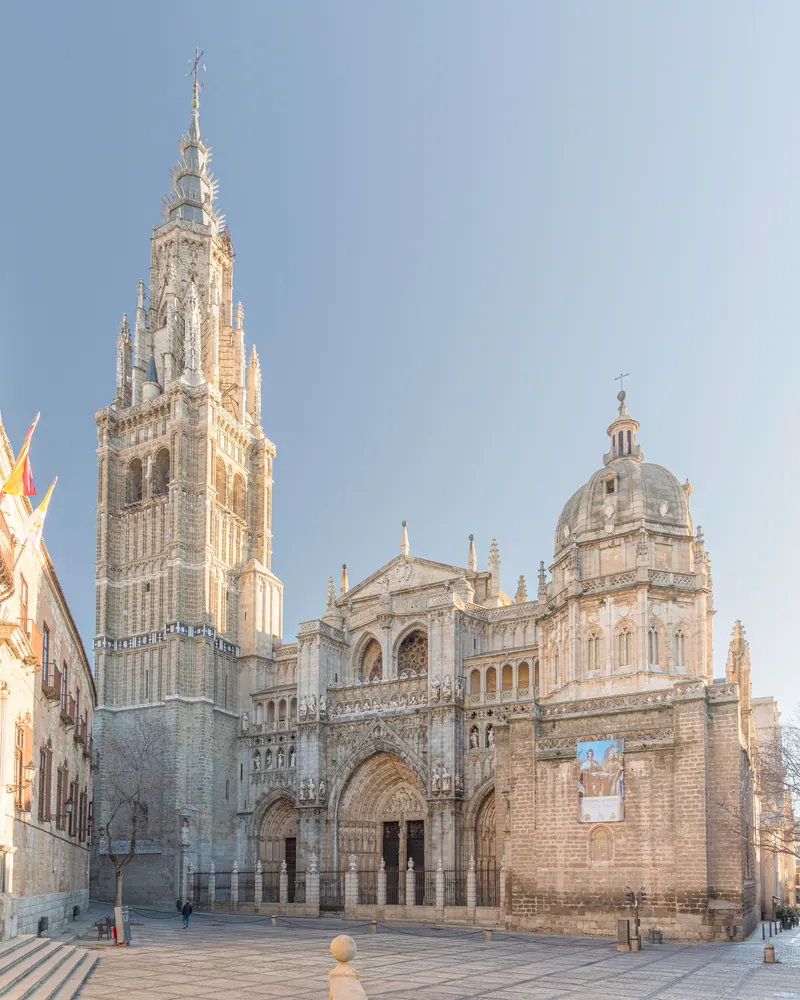
    On Corpus Christi the 16th-century Custodia de Arfe, a three-metre Gothic tower of gilded silver, is carried out of Toledo Cathedral and through two kilometres of streets hung with awnings and tapestries and strewn with thyme, behind the banners of the city's old confraternities and guilds. Toledo keeps the feast on its traditional Thursday, sixty days after Easter: 4 June in 2026, and 27 May expected in 2027.

    2027
    Family
  • Featured
    Medieval Markets & Fairs Jousting & Tournaments +1

    Jornadas Medievales de Ávila (Mercado de las Tres Culturas)

    Ávila, Spain

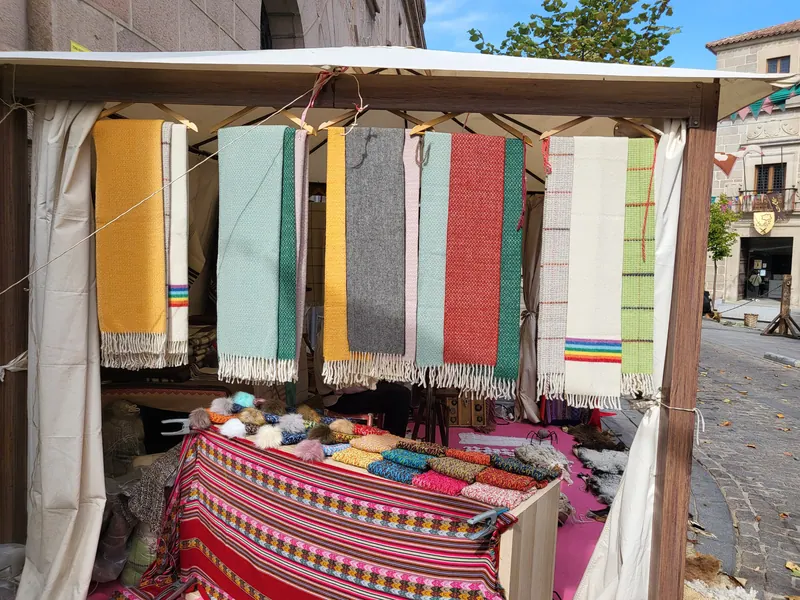
    Ávila's Jornadas Medievales turn the walled UNESCO city into the 'Market of the Three Cultures' for four days on the first weekend of September, with more than 300 stalls, around 150 free shows, nine mounted tournaments and a grand parade recalling the town's Christian, Jewish and Muslim past. Held since 1997 and declared a Festival of National Tourist Interest, it drew about 130,000 visitors in 2025.

    Expected 2027
    Family

Other medieval markets and fairs

All medieval markets and fairs
  • Medieval Markets & Fairs Medieval Christmas

    Munich Medieval Christmas Market at Wittelsbacherplatz

    Munich, Germany

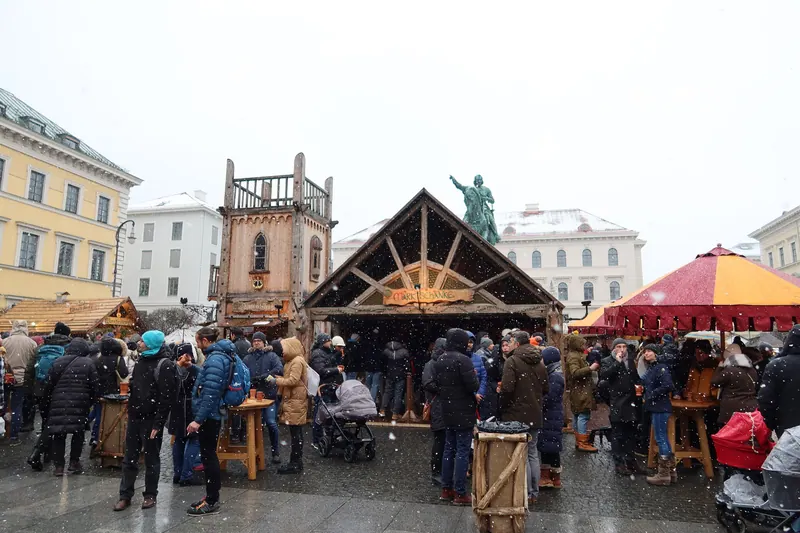
    The Mittelalterlicher Weihnachtsmarkt am Wittelsbacherplatz, billed by the city as the Münchner Adventsspektakel, has filled the square north of Odeonsplatz with costumed traders, historical crafts, medieval music and staged sword fights every Advent since 2005. The 2026 market runs 20 November – 23 December, daily 11:00–21:00, closed on Totensonntag (22 November); entry is free.

    On now until
    Free Family
  • Medieval Markets & Fairs Medieval Christmas

    Siegburg Medieval Christmas Market

    Siegburg, Germany

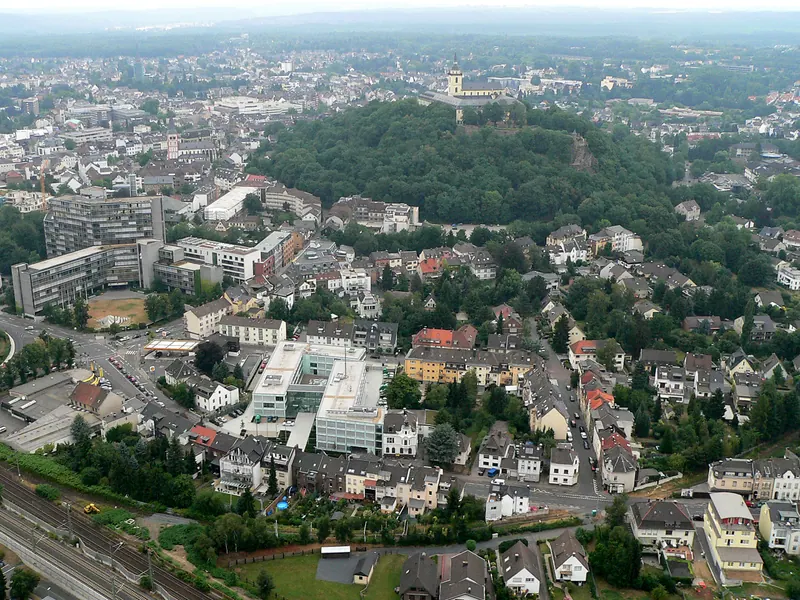
    The Mittelalterlicher Markt zu Siegburg turns the market square below the Michaelsberg abbey into a medieval town market for the whole of Advent, with costumed traders, working craftspeople, jesters and musicians and a night watchman's call every evening; the 2026 market runs 20 November – 22 December. Held since 1991, it is free to enter, and the organiser has already published the 2027 dates, 19 November – 22 December.

    On now until
    Free Family
  • Medieval Markets & Fairs Medieval Christmas

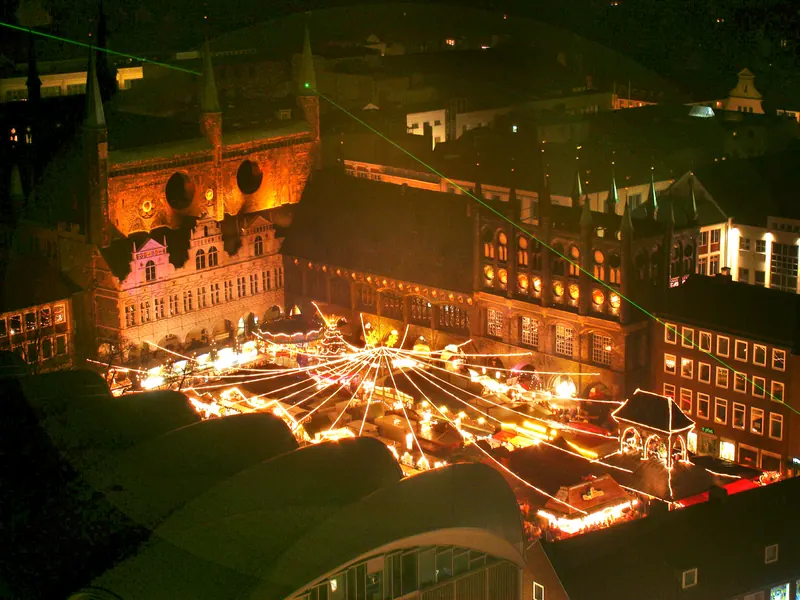
    Lübeck Historical Christmas Market on the Marienkirchhof

    Lübeck, Germany

    The Historischer Weihnachtsmarkt on the Marienkirchhof, the churchyard between St Mary's and the Rathaus in Lübeck's UNESCO-listed old town, is the medieval-styled one of the Hanseatic city's eleven Christmas markets: craftspeople showing forgotten trades, coppersmiths, silversmiths and pewter casters, walk-acts and musicians in historical dress under candles and a canopy of red paper stars. The 2026 market runs 23 November – 23 December and is free to enter.

    On now until
    Free Family